




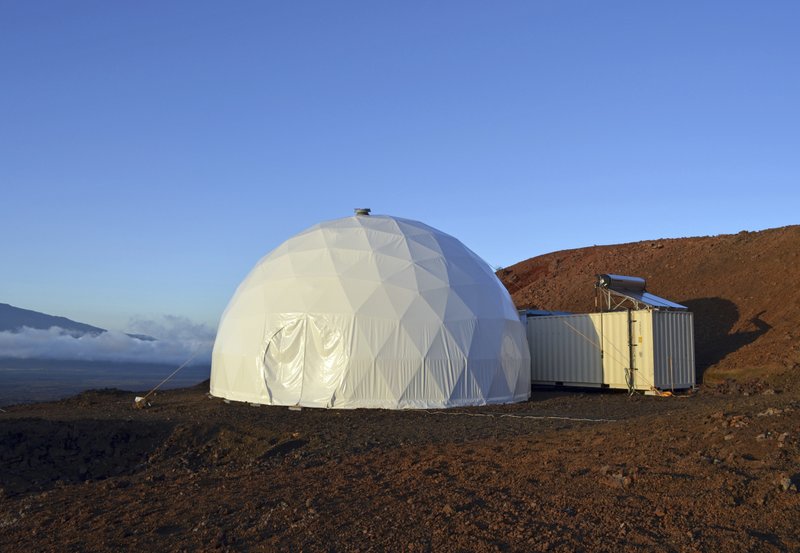
Six carefully selected scientists have entered a man-made dome on a remote Hawaii volcano as part of a human-behavior study that could help NASA as it draws up plans for sending astronauts on long missions to Mars.
The four men and two women moved into their new simulated space home Thursday afternoon on Mauna Loa, settling into the vinyl-covered shelter of 1,200 square feet, or about the size of a small, two-bedroom home, for an eight-month stay.
They will have no physical contact with people in the outside world and will work with a 20-minute delay in communications with their support crew, or the time it would take for an email to reach Earth from Mars.
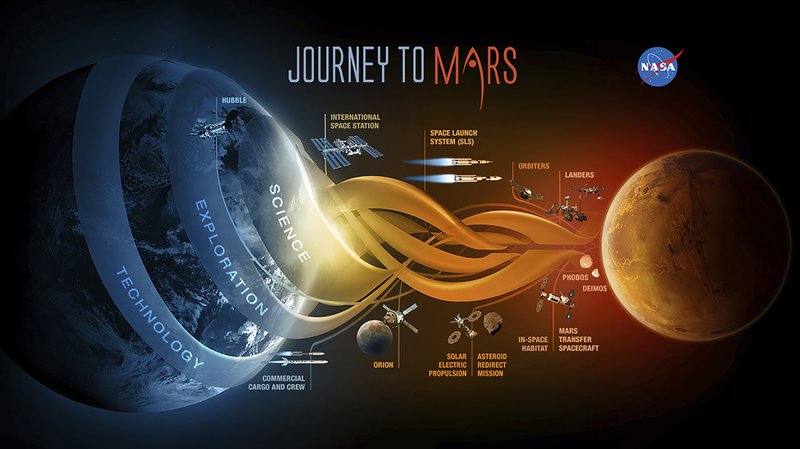
The NASA-funded project will study the psychological difficulties associated with living in isolated and confined conditions for an extended period.
“We’re hoping to figure out how best to select individual astronauts, how to compose a crew and how to support that crew on long-duration space missions,” said principal investigator Kim Binsted, a University of Hawaii science professor.
NASA hopes to send humans to an asteroid in the 2020s and Mars by the 2030s.
The team members on the dome project include engineers, a computer scientist, a doctoral candidate and a biomedical expert. They were selected from 700 applicants who were subjected to personality tests, background checks and extensive interviews.
“When I started, my biggest fear was that we were going to be that crew that turned out like Biosphere 2, which wasn’t a very pretty picture,” said mission commander James Bevington, a space scientist.
Biosphere 2 was a 1990s experimental greenhouse-like habitat in Arizona that became a debacle. It housed different ecosystems and a crew of four men and four women in an effort to understand what would be needed for humans to live on other planets. The participants were supposed to grow their own food and recycle their air inside the sealed glass space.
But the experiment soon spiraled out of control, with the carbon dioxide level rising dangerously and plants and animals dying. The crew members grew hungry and squabbled so badly during the two years they spent cooped up that by the time they emerged, some of them weren’t speaking to each other.
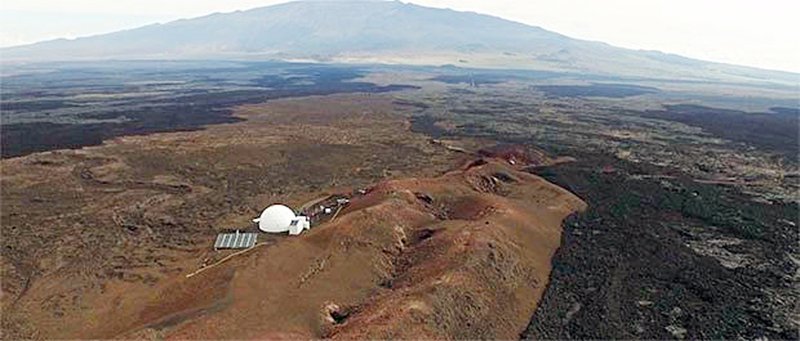
The University of Hawaii operates the dome, called Hawaii Space Exploration Analog and Simulation, or HI-SEAS, and NASA has dedicated over $2 million to the various studies at the facility.
Scientists previously lived in the dome for two other long-term NASA-funded stays — one of them lasting a year, the other eight months — to study food requirements and crew cohesion.
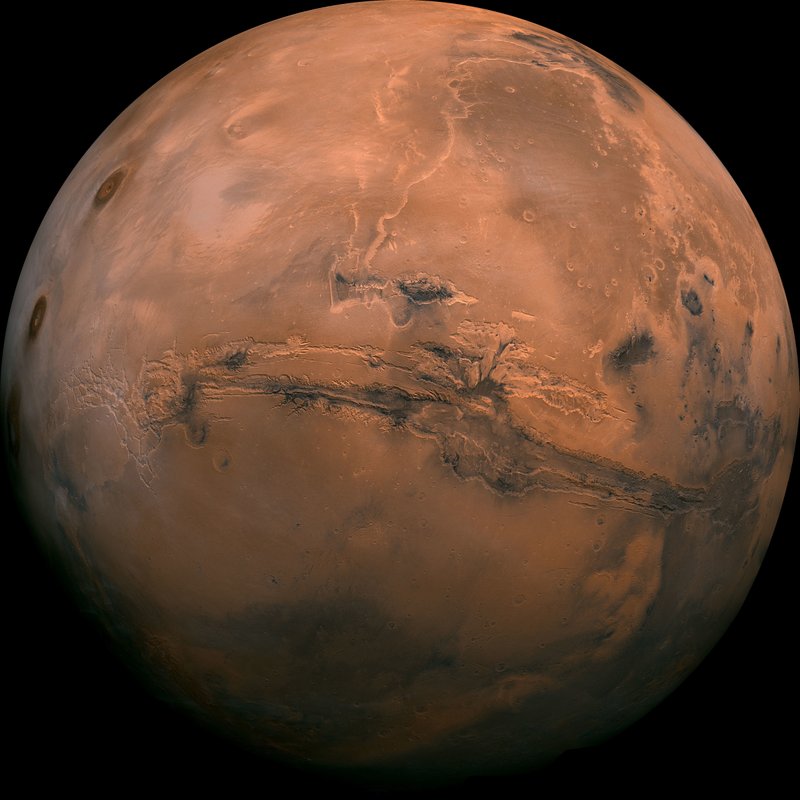
There are a number of other Mars simulation projects around the world, but one of the chief advantages of the one in Hawaii is the rugged, Mars-like landscape, on a rocky, red plain below the summit of the world’s largest active volcano.
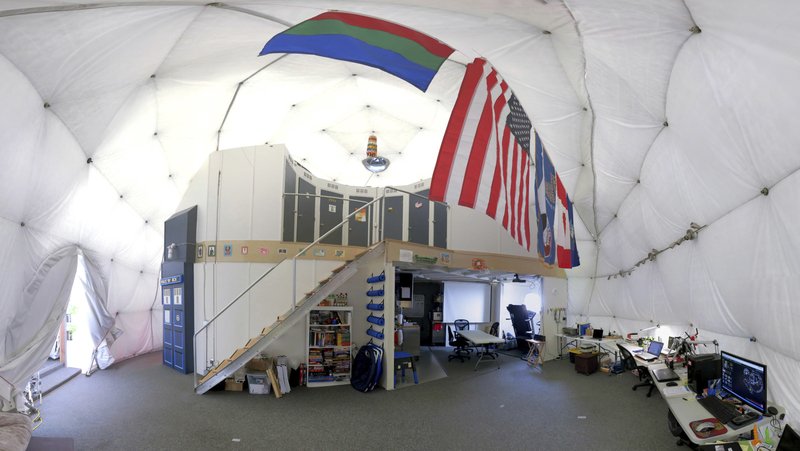
The dome has small sleeping quarters for each member as well as a kitchen, laboratory and bathroom. Unlike the Biosphere 2, it will be an opaque structure, not a see-through one, and it will not be airtight.
Also, the crew will eat mostly freeze-dried foods, with some canned goods and snacks brought in, including one of Hawaii’s favorites, Spam. To maintain the crew’s sense of isolation, bundles of food will be dropped off at a distance from the dome, and the team members will send out a robot to retrieve them.
The participants will not be confined to the dome but will wear spacesuits whenever they step outside for geological expeditions, mapping studies or other tasks.
They will also wear instruments around their necks that measure their moods and proximity to other team members, and will use virtual reality devices to simulate familiar and comforting surroundings and help them get through the mission.
Ask me anything
Explore related questions