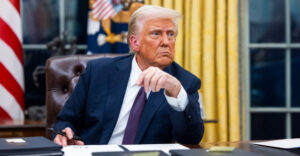





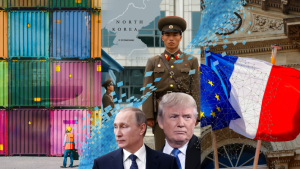
Trade will be at the forefront of many leaders’ minds this quarter as a new U.S. administration settles into the White House. Though U.S. President Donald Trump continues to be bogged down by congressional battles and allegations of inappropriate ties to Russia, his team will try to draw the public’s attention back to its trade agenda. To that end, Washington will work to clarify its strategy for cracking down on currency manipulation abroad, tightening the enforcement of existing trade laws and preparing to renegotiate NAFTA. But the uncertainty surrounding the White House’s intentions will linger, prompting the United States’ biggest trade partners to look for new economic relationships elsewhere.
At the same time, some will leverage security cooperation and promises of investment to get on Washington’s good side — or, at the very least, to try to fend off its punitive trade measures. China will be one of them as it uses its economic heft with Pyongyang, and the growing sense of urgency surrounding North Korea’s nuclear program, to its advantage in tense trade talks with the United States. The White House will do what it can to push for secondary sanctions against China’s stubborn neighbor, perhaps even threatening to step up its military aid to Taiwan to compel Beijing’s buy-in. But even if Washington has its way, a heavier sanctions regime will do little to slow the progress of Pyongyang’s nuclear program. The United States will have no choice, then, but to build a credible military deterrent against North Korea — a move that will only widen the rift between Washington and Beijing.
The Trump administration’s attack on a Syrian air base was designed in large part to underscore to Beijing and Pyongyang that this White House is willing to take military action if so compelled. Though the attack sent a strong signal to U.S. adversaries, it also has created complications for the United States on the Syrian battlefield with Russia. Moscow will try to use the heightened risk of collisions on the Syrian battlefield and the fight against the Islamic State to bring Washington to the negotiating table, but the United States will be limited in any concessions it would give to Russia in return. The Kremlin will be even less inclined to trust in dialogue with the West as its problems pile up at home, though arms control may be one policy area in which the two can begin to negotiate without encountering much political blowback.
As the United States and Russia box Turkey in on the Syrian battlefield, Ankara will devote more attention to northern Iraq, where a conflict is brewing between Arab and Kurdish forces. The highly prized, oil-rich region of Kirkuk remains a key flashpoint in Turkey’s competition with Iran for influence — and Iraq’s rival Kurdish factions are caught in the middle. Washington will lend support to Sunni states, led by Saudi Arabia, seeking to balance against Shiite Iran as proxy battles throughout the Middle East escalate, though its nuclear deal with Tehran will remain intact.
In the meantime, Saudi Arabia and its Gulf Cooperation Council allies will shoulder most of the burden of maintaining OPEC’s oil production cuts for another six months. Steady oil prices will buy Venezuela’s cash-strapped government some time to get its finances in order, but not much. Caracas’ risk of default will spike in the second half of the year, and the ruling party will have to spend the second quarter consolidating power in preparation for the turmoil that no doubt lies ahead.
Venezuela isn’t the only state heading toward single-party rule. On the other side of the globe, Indian politics are swinging to the right — a trend Prime Minister Narendra Modi and his center-right Bharatiya Janata Party have been able to use to their advantage. This quarter, they will focus on passing a state-level version of a massive tax overhaul that cleared Parliament earlier in the year, a feat that will be more feasible as the growing power of the country’s Hindu nationalists gives the ruling party the political capital to push through much-needed structural reforms.
Nigeria will have less luck passing its most pressing reforms as an intensifying power struggle in Abuja brings the government to a near-standstill. Concerns over President Muhammadu Buhari’s health have raised questions about who his successor will be — a transition South Africa’s own leader, Jacob Zuma, is making preparations for as well. Zuma is working quickly to consolidate power and cater to his ethnic Zulu base with a populist platform of black empowerment before he steps down, alienating investors in the process.
Europe’s entrenched rulers face a growing threat to their power as well, albeit of a very different kind. France is preparing to hold elections that will pit the country’s traditional political elite against an up-and-coming Euroskeptic contender, and Italy may not be far behind. Though the French electoral system is designed to keep fringe parties out of power, the possibility of a Euroskeptic win cannot be discounted — an outcome that could bring the eurozone to its knees and send shocks through global markets.
Click here to see the forecasts by region.
Ask me anything
Explore related questions