

×
GreekEnglish

×
  • Politics
  • Diaspora
  • World
  • Lifestyle
  • Travel
  • Culture
  • Sports
  • Cooking
Wednesday
14
Jan 2026
weather symbol
Athens 8°C
  • Home
  • Politics
  • Economy
  • World
  • Diaspora
  • Lifestyle
  • Travel
  • Culture
  • Sports
  • Mediterranean Cooking
  • Weather
Contact follow Protothema:
Powered by Cloudevo
> Science

This NASA photo of Saturn’s moon shows clouds you’ve never seen on Earth

Each pixel of the image equals roughly 2 miles!

Newsroom May 11 11:30

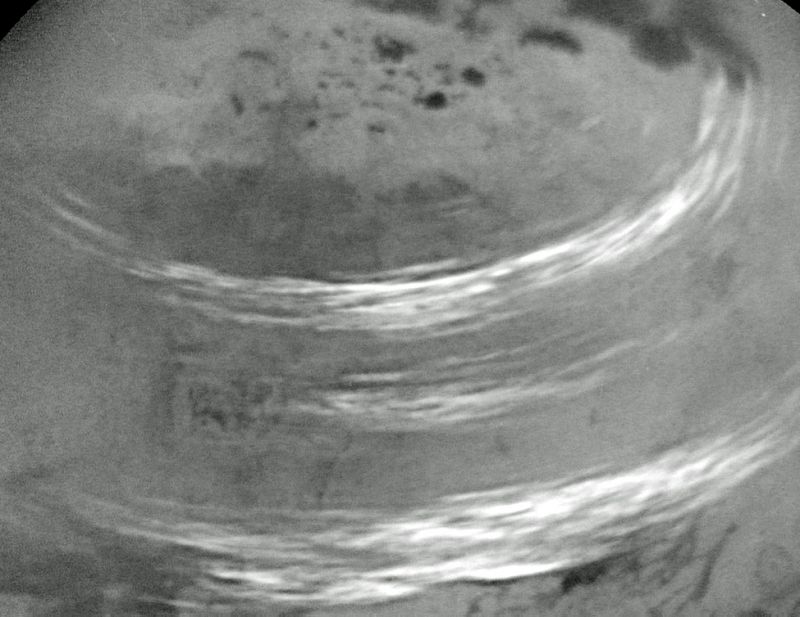
NASA’s Cassini spacecraft is currently conducting a series of elaborate dives in which it repeatedly comes closer to Saturn than ever before. But during its slower periods, NASA is still using the craft’s fantastic photography equipment to grab images of Saturn’s nearby bodies, such as the moon Titan. The latest photo from the agency shows Titan in all its glory, complete with some very volatile cloud cover.

pia21450_combo

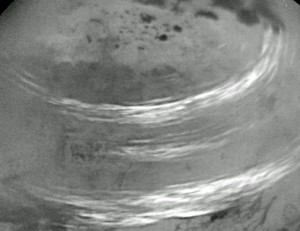
The new images, which were captured by Cassini on May 7th but not released immediately, show Titan in impressive detail, with long, feathery streaks of clouds obscuring portions of the landscape. But unlike the clouds we’re used to here on Earth — which are made of extremely tiny water droplets or bits of crystalized ice — the clouds you see in the Titan photos are actually made of methane.

In addition to Titan’s wealth of atmospheric methane, the planet also has vast lakes thought to be primarily made up of liquid ethane and methane, along with nitrogen. That’s an extremely hostile combination, at least in terms of Earth-like life. However, NASA isn’t ruling out the possibility that there may actually be methane-based life on the large moon, and even has some theories as to how it might survive.
>Related articles

Erich von Däniken, Swiss bestselling author who linked ancient civilizations to extraterrestrials, dies at 90

Sick astronaut on mission – NASA considers early return of International Space Station crew

Who were the predators on Earth before the dinosaurs

methane

According to NASA, these new photos were snapped at a distance of about 316,000 miles, which means that each pixel of the image equals roughly 2 miles. With that scale in mind, take a look at the dark splotches dotting the top of the image. Those are the huge methane-filled seas, which may or may not be home to huge, methane-filled whales.

Source

Ask me anything

Explore related questions

#Cassini#earth#methane#nasa#nature#Saturn
> More Science

Follow en.protothema.gr on Google News and be the first to know all the news

See all the latest News from Greece and the World, the moment they happen, at en.protothema.gr

> Latest Stories

What farmers gained from the meeting with Mitsotakis: The package for electricity, fuel, and income support – The message to the “hardliners” at the roadblocks

January 13, 2026

“Digital noise” from outdated technology caused chaos in the Athens FIR – What the committee’s findings say

January 13, 2026

JPMorgan: Greece one of the most attractive markets for the Emerging Europe category

January 13, 2026

Kimon arrives at Faliro as Europe’s heavily armed frigate enters Greek waters

January 13, 2026

ELSTAT: Inflation up to 2.6% in December

January 13, 2026

Spain aims to control deepfakes created with AI

January 13, 2026

Le Pen’s party’s appeal to decide her presidential future begins

January 13, 2026

Pyrgos: man attacked his wife with a knife and then threatened to kill himself

January 13, 2026
All News

> Culture

Tuesday the 13th: Why everyone thinks it’s bad luck

Bad luck and tradition: Why we are afraid of Tuesday and 13, the historical and folkloric interpretation

January 13, 2026

Agatha Christie’s 1958 visit to the Acropolis captured in unpublished photo

January 12, 2026

Erich von Däniken, Swiss bestselling author who linked ancient civilizations to extraterrestrials, dies at 90

January 12, 2026

Golden Globes: Paul Thomas Anderson’s ‘One Battle After Another’ and Netflix’s ‘Adolescence’ dominate the awards

January 12, 2026

Bob Weir, co-founder of the Grateful Dead, dies at 78

January 11, 2026
Homepage
PERSONAL DATA PROTECTION POLICY COOKIES POLICY TERM OF USE
Powered by Cloudevo
Copyright © 2026 Πρώτο Θέμα