




By Constantine Tzanos, Contributor Nuclear engineer, PhD*
July 7, 2017, marked the failure of another effort to solve the over 40-year-old problem of the division of Cyprus. Turkey, in defiance of the international law, refused to terminate its military occupation of Northern Cyprus.
In 1960, Cyprus was granted independence from British rule under the imposed Treaties of Guarantee, Alliance and Establishment and an imposed unworkable constitution, which made the conflict between its two main communities (77% Greek, 18% Turkish – many of them forcibly Islamized Greeks – and 5% other) unavoidable.
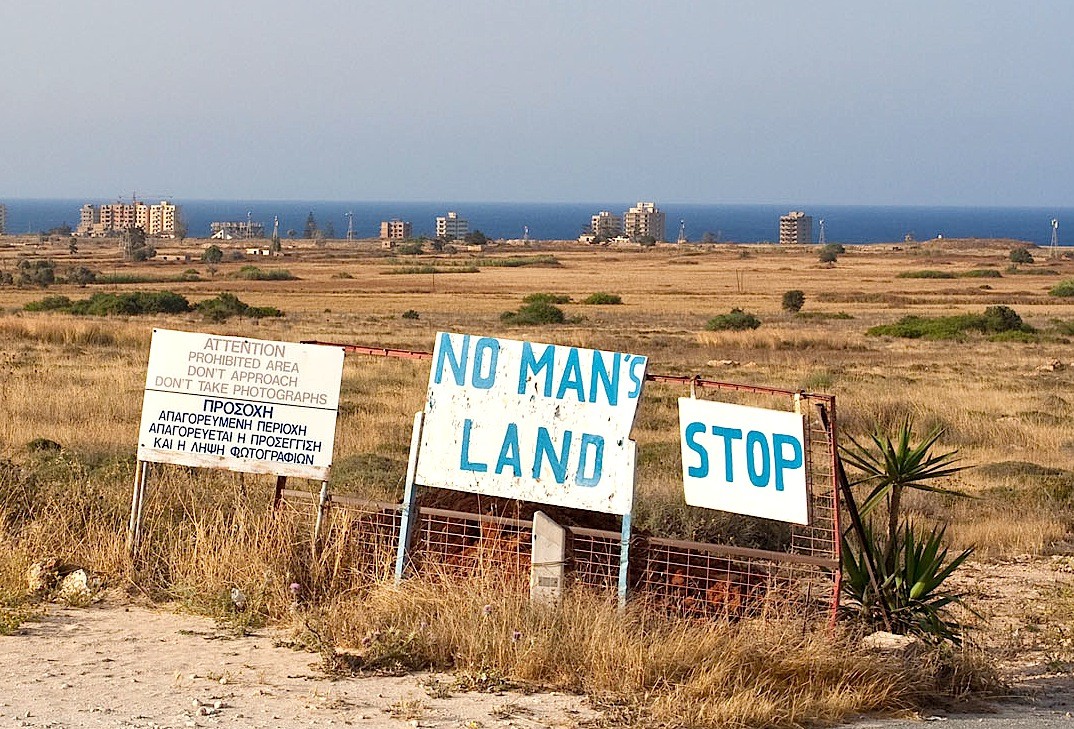
On 20 July 1974, Turkey, a United Nations (UN) member state, in violation of the UN charter, using as an excuse the Treaty of Guarantee, invaded Cyprus, another UN member state, and defying the UN Security Council quickly occupied 37% of the island, and forced the geographic separation of the Greek and Turkish Cypriots.
In violation of the Fourth Geneva Convention, Turkey has settled in the occupied Northern Cyprus about 150,000 – 160,000 of its own nationals, who enjoy the houses and properties of about 200,000 Greek Cypriots forced out of their land by the Turks.
Since August 1974, at the urging of the Security Council, the two Cypriot communities have engaged in a lengthy series of heavily asymmetric negotiations – on the one side the Republic of Cyprus, represented by the Greek Cypriots, pressured from many sides to compromise, and on the other side the leadership of the Turkish Cypriots, supported by 40,000 Turkish troops in the occupied territories, committed or pressured to pursue the Turkish objective to partition the island. A walk through the many resolutions of the UN Security Council and reports of the UN Secretary-General reveals that the international justice system has left the victim, the Republic of Cyprus, to negotiate the settlement of the “case” by accommodating its assailant, Turkey.
The latest failed round of talks was initiated on 11 February 2014. Under the auspices of the UN, the President of the Cyprus Republic Nicos Anastasiades and the then leader of the Turkish Cypriot Community Dervis Eroglu agreed to re-launch negotiations. In their joint communique, the two leaders affirmed that a “united Cyprus, as a member of the United Nations and of the European Union, shall have a single international legal personality and a single sovereignty, which is defined as the sovereignty which is enjoyed by all member States of the United Nations under the UN Charter…”
On 7 July 2017, Turkey scuttled the negotiations by refusing to terminate its occupation of Northern Cyprus and accept a unified Cyprus as a sovereign state. The Turkish Foreign Minister Mevlut Cavusoglu, dismissing the guarantees provided by the UN and the European Union, insisted on the retention of the Treaty of Guarantee – that gave the excuse to Turkey to invade Cyprus – and on keeping Turkish troops on the island.
Articles 41 and 42 of the UN Charter empower the Security Council to take measures “to give effect to its decisions.” They include “complete or partial interruption of economic relations …” and if these would “have proved to be inadequate, it may take such action by air, sea, or land forces as may be necessary to maintain or restore international peace and security.
“ In the 1960’s the UN intervened militarily in Congo, and since 1966 the Security Council has imposed sanctions against a number of states.
In 1990 the Security Council authorized the use of force against Iraq, which had invaded the small, but oil rich, country of Kuwait.
Through a number of resolutions the Security Council has imposed sanctions and an arms embargo on North Korea for its refusal to cease its military nuclear program.
In 2006, the UN Security Council imposed sanctions against Iran for its refusal to suspend its uranium enrichment program.
The sanctions were lifted in 2016, after Iran agreed to limit its nuclear program to verifiable peaceful applications.
After Russia illegally annexed Crimea and started to interfere in Eastern Ukraine, the European Union, the United States, Canada, and other Western countries imposed economic sanctions on Russia.
In 1975, the U.S. imposed an embargo on arms sales and military aid against Turkey for the illegal use of U.S. supplied arms in the invasion of Cyprus. The embargo was lifted in 1978 at the request of President Carter who stated that the lifting “created fresh opportunities for progress on the Cyprus issue.” The facts have proven that this was a naïve belief.
For years Turkey is acting as the bully of the Aegean and Eastern Mediterranean by daily violating Greece’s airspace and territorial waters, and by threatening Cyprus for exercising its rights over its Exclusive Economic Zone. Turkey is oppressing its Kurdish people, who comprise over 20 percent of its population, in an effort to turkify them, and is systematically violating its obligations under the UN Charter and a host of other International Treaties that has signed.
In November 2015, Russian President Vladimir Putin imposed sweeping economic sanctions against Turkey after Turkey shot down a Russian warplane over its border with Syria and refused to apologize. Turkish President Erdogan said at the time: “I think if there is a party that needs to apologize, it is not us.”
However, under the pressure of the sanctions, the Turkish despot had to swallow his pride, and in June 2016 apologized for the downing of the Russian warplane and called for Russia and Turkey to mend their bilateral relationship. Clearly the language that Turkey understands is not that of civility and legality, but that of brute force.
The imposition by the international community of effective sanctions against Turkey for its invasion and continuing occupation of Northern Cyprus in defiance of the international law is over 40 years overdue. History teaches that the selective enforcement of the international law – as short term interests dictate – and the appeasement of thugs encourage the defiance of the law with catastrophic consequences (e.g., Second World War, the ongoing human tragedy in the Middle East).
* EDUCATION Ph.D., Nuclear Engineering, Massachusetts Institute of Technology Diploma, Chemical Engineering, National Technical University of Athens, Greece EMPLOYMENT HISTORY Argonne National Laboratory, Science Applications, Inc., Greek Atomic Energy Commission, University of Massachusetts Lowell, HUFFINGTON POST
Source: mignatiou.com
Ask me anything
Explore related questions