




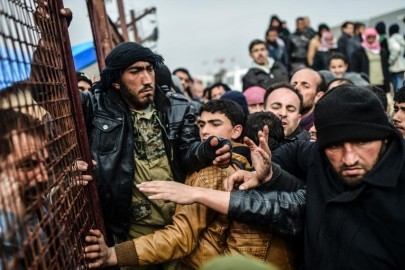
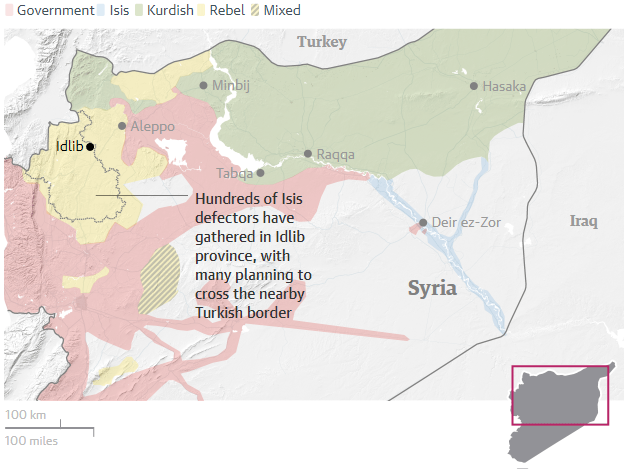
Hundreds of defectors from Islamic State have massed in Syria’s Idlib province, with many planning to cross the nearby Turkish border and find ways back to the Middle East, North Africa and Europe.
Several dozen former fighters have already made it across the heavily patrolled frontier to towns and cities in Turkey’s south in recent weeks, the Guardian has confirmed. Four Saudi Arabian extremists arrived in a southern Turkish community in early September after paying smugglers $2,000 each for the perilous journey past border guards who have shot dead scores of infiltrators this year alone.
The exodus of fighters from areas controlled by Isis to other parts of Syria and Iraq has continued throughout the past year, as the terror group has lost much of its former heartland to a concerted assault by Iraqi troops, forces allied to the Syrian regime and a US-led air coalition in both countries.
However, large numbers of militants and their families are now trying to leave the war-battered states altogether – posing significant challenges to a global intelligence community that, for the most part, views them as a hostile and unmanageable threat, and sees limited scope for their reintegration.
A Saudi national who fled Syria in late August told the Guardian that as many as 300 former Isis members, many of them Saudis, had established a community north of Idlib city, which is now dominated by the al-Qaida affiliate, Jabhat al-Nusra.
“Most want to leave, like me,” said the 26-year-old, who called himself Abu Saad. “A lot of them realise that the group they were with tricked them. Others don’t trust Nusra. There are not many who believe that the people that they were with were on the right path.”
Abu Saad said the Saudi nationals, as well some Europeans, Moroccans and Egyptians, had gathered together as a buffer against al-Nusra, which has exerted its influence across Idlib and the surrounding countryside by toppling its rivals. Isis has not had an organised presence in the area since early 2014 when it was ousted by a rebel assault that saw its members flee east to the town of al-Bab in the Aleppo hinterland and further into Minbij, Tabqa, Raqqah and Deir Azzour.
Former members of the group, however, have steadily been returning to Idlib and seeking refuge since late 2015. “That was when I left,” said Abu Saad, speaking days after he arrived in southern Turkey. “Others joined me later, and more are coming now.”
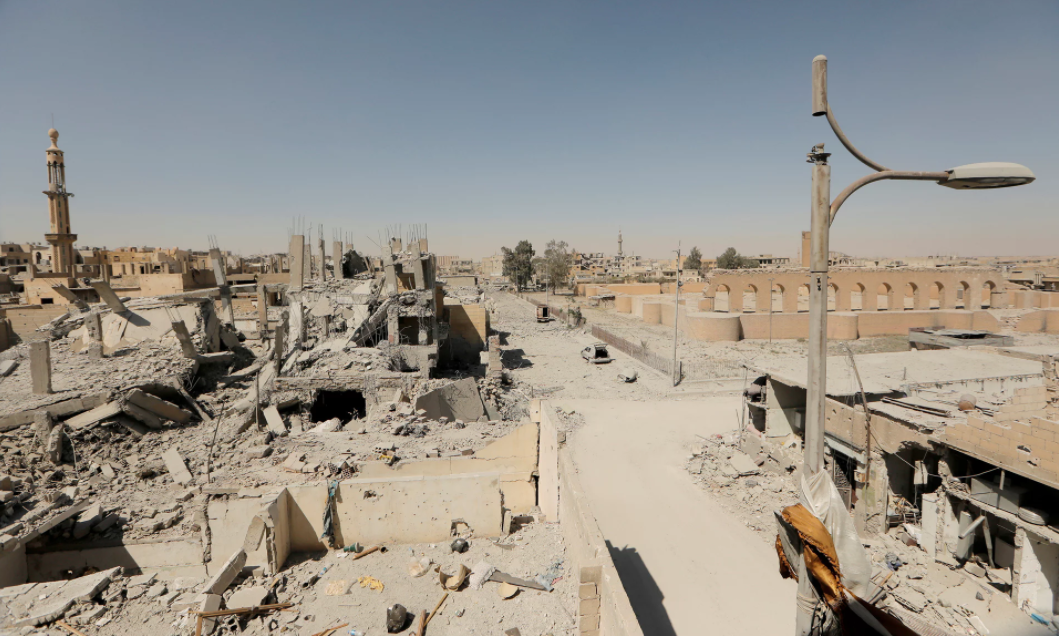
The full scale of the extremist exodus from Isis-held parts of Iraq and Syria remains unclear, with most of the land it conquered having been recaptured, leaving a divided and demoralised rump with next to nowhere to hide. One of Isis’s two main centres of power – Mosul in Iraq – fell in February, and the other – Raqqa in Syria – is slipping further into the hands of US-backed Kurdish forces who had already hounded the group from most of Syria’s northeast.
Tens of thousands of Isis fighters are believed to have been killed in the battle to retain territory it seized from mid-2014, and thousands more homegrown extremists are believed to have returned to their communities.
But the numbers of foreign fighters who have survived and are looking to return to their homes have been more difficult to gauge. So too have the true intentions of men who had allied themselves to the world’s most feared terror group during its ascendancy, but claim no further part of it as its reach and influence dwindles.
French officials have said privately that they would rather that nationals who travelled to join Isis died on battlefields and have no plans to support those who now want to return. Other European states have expressed similar sentiments.
Isis defectors had at one point been of high interest to intelligence agencies who had made little ground in penetrating the group as it consolidated a hold on swaths of Syria and Iraq and plotted attacks in Europe and beyond.
As the group has capitulated, MI6, the CIA and France’s DGSE have had increasing access to informants whom they have met within Kurdish controlled areas of Syria’s north-east and in northern Iraq. The increased access to informants with real-time information has left those who fled earlier with less leverage over governments who might otherwise have agreed to talk with them.
“It’s a lot better than it used to be,” said one intelligence official. “We have a more complete picture than we did.”
Abu Saad said he would not return to Saudi Arabia if doing so meant a prison sentence. “A rehabilitation programme? Maybe,” he said. “I went to Syria some time in 2012. I went to support the Syrian people and in the first few months I was with the Muhajirin (an auxiliary group of foreign fighters).
“It wasn’t until early the next year that my unit swore allegiance to Isis. It was a poisoned flower. It wasn’t what I expected.”
As the group’s fate worsened, tensions increased within its ranks, Abu Saad claimed. Summary executions were carried out on increasingly flimsy pretexts, such as insubordination, or making contact with Syrian opposition groups, he said. Over time, arguments about the ideology and theology also intensified.
“They don’t understand the Tawheed (the oneness of God). They are always arguing about it. I saw no justice with them. I saw cruelty. But how could I disagree? It had such a hierarchy. Everyone has a boss who they are afraid of. And above them all was [Isis leader Abu Bakr al-Baghdadi]. He was the ultimate authority and no one could argue with him about religious law. If you tried to defy them about anything, you put yourself in danger.
“My job was to inspect prisons. If there were abuses then I would report on them. One time in Minbij, there was a lady in a cell for 13 days with no toilet and no water for cleaning. She was there because she threatened to kill a man who had killed her husband. There was worse than that though. There were people in prison who had done nothing wrong at all.
“In Idlib, there are around 300 people trying to escape. Many of them are Saudis. Some want to see their families one last time and they say they will accept what’s coming to them. I don’t know any of them who believe in the [Islamic] State. They all ran away for a reason.”
Source: theguardian.com
Ask me anything
Explore related questions