
×
GreekEnglish

×
  • Politics
  • Diaspora
  • World
  • Lifestyle
  • Travel
  • Culture
  • Sports
  • Cooking
Thursday
15
Jan 2026
weather symbol
Athens 12°C
  • Home
  • Politics
  • Economy
  • World
  • Diaspora
  • Lifestyle
  • Travel
  • Culture
  • Sports
  • Mediterranean Cooking
  • Weather
Contact follow Protothema:
Powered by Cloudevo
> technology

Scientists think life on Earth may have come from outer space

Some have even suggested the first microorganisms could have come from an asteroid which impacted with Earth or another planet such as Mars

Newsroom November 22 02:17

Scientists have suggested that interstellar dust capable of transporting micro-organisms across the universe is the source of life on Earth.

A study led by the University of Edinburgh’s Professor Arjun Berera has posited that bacteria and micro-animals, capable of surviving hazardous journeys through space, could be the source of life on our little blue planet.

An example of this remarkable space travel can be seen in Saturn’s rings, where scientists at the European Space Agency say they have found evidence that of materials that originated on the neighbouring moon Enceladus.

According to Berera’s study, hypervelocity space dust, which can travel at up to 70km per hour, is ‘constantly bombarding the Earth’.

In the study Berera explained how the dust could be responsible for bringing life to Earth, and life on Earth to other planets.
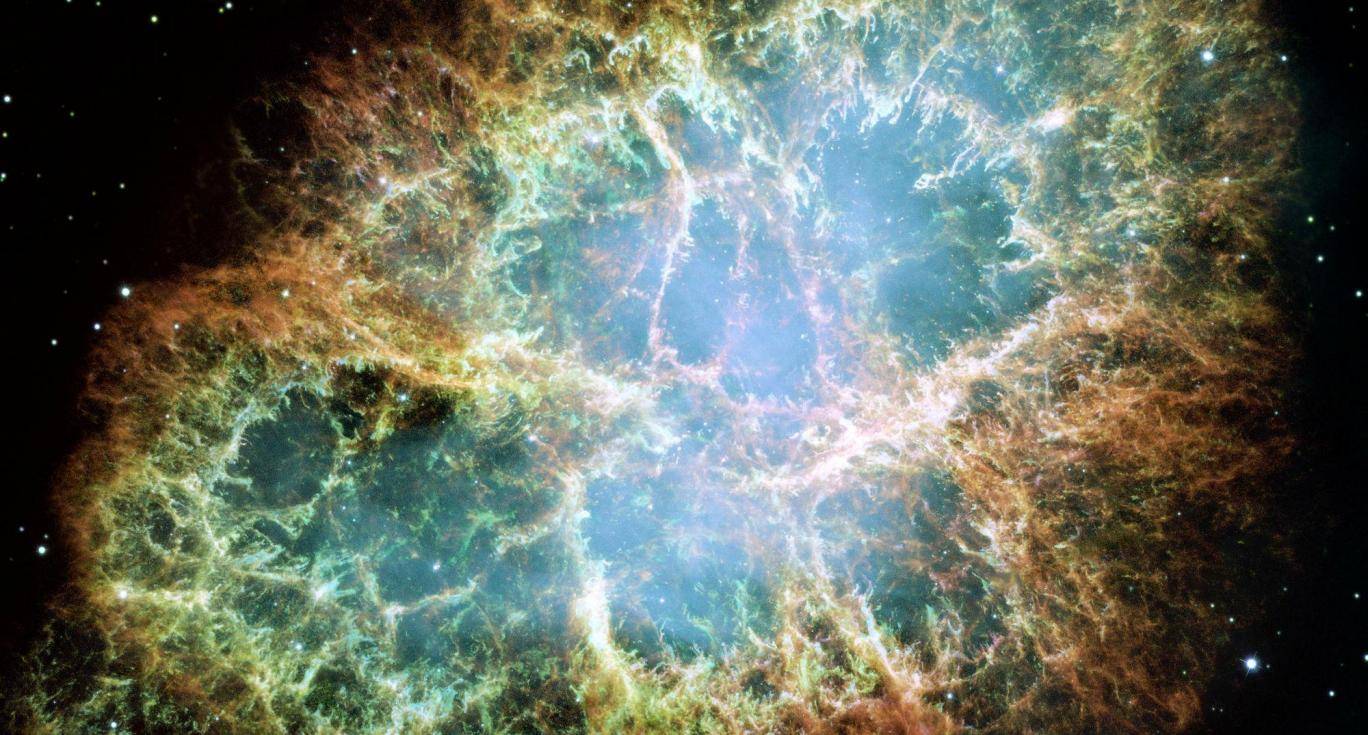
430453main-crabmosaic-hst-big-full

The proposition that space dust collisions could propel organisms over enormous distances between planets raises some exciting prospects of how life and the atmospheres of planets originated.

The streaming of fast space dust is found throughout planetary systems and could be a common factor in proliferating life.

The possibility that life on Earth is technically alien life from outer space has been explored in the past by other scientists.

In 2013 biochemist Steven Benner presented a paper positing that Earth life originated on Mars, in the form of organic compounds.

Some have even suggested the first microorganisms could have come from an asteroid which impacted with Earth, or another planet such as Mars.

>Related articles

Elon Musk: Don’t save for retirement – It won’t matter

Erich von Däniken, Swiss bestselling author who linked ancient civilizations to extraterrestrials, dies at 90

Sick astronaut on mission – NASA considers early return of International Space Station crew

Analysis of a Martian meteorite recently showed that there was boron on Mars; we now believe that the oxidized form of molybdenum was there, too.

Boron and molybdenum are part of the building blocks of life, and according to Benner the Earth, whose surface may once have been 100 per cent water, would have struggled to produce boron by itself, suggesting therefore that it came from space.

Source: indy100.com

Ask me anything

Explore related questions

#Alien#earth#galaxy#hypervelocity space dust#life#nasa#outer space#planets#science#space#stardust#study#technology
> More technology

Follow en.protothema.gr on Google News and be the first to know all the news

See all the latest News from Greece and the World, the moment they happen, at en.protothema.gr

> Latest Stories

“You think you are descendants of Plato and Aristotle, but you’re not” – Rama’s tirade against Greek journalist, watch video

January 15, 2026

“Aunt Pecu,” who lived outside all protocol: Who the unconventional and eccentric princess Irene was

January 15, 2026

High-tech fraud – SMS blaster attack: Bank data stolen using special equipment installed in a car’s trunk

January 15, 2026

Ballistic missile strike hits pier in Ukraine

January 15, 2026

Ursula von der Leyen from the Green Line: Pushing for a solution to the Cyprus issue is a priority

January 15, 2026

The ordeal of a 28-year-old Greek man in Australia: He went on holiday to visit relatives, was injured at a beach, and is at risk of quadriplegia

January 15, 2026

Princess Irene dies at the age of 83

January 15, 2026

Scientists uncover why the moon has a “two-faced” nature

January 15, 2026
All News

> Greece

“Aunt Pecu,” who lived outside all protocol: Who the unconventional and eccentric princess Irene was

Princess Irene, the younger sister of Queen Sofía of Spain, will be laid to rest at Tatoi on a date to be announced by the Spanish royal household

January 15, 2026

High-tech fraud – SMS blaster attack: Bank data stolen using special equipment installed in a car’s trunk

January 15, 2026

Ursula von der Leyen from the Green Line: Pushing for a solution to the Cyprus issue is a priority

January 15, 2026

Princess Irene dies at the age of 83

January 15, 2026

Commander Ioannis Kizanis leads Greece’s newest Frigate “Kimon”

January 15, 2026
Homepage
PERSONAL DATA PROTECTION POLICY COOKIES POLICY TERM OF USE
Powered by Cloudevo
Copyright © 2026 Πρώτο Θέμα