




China’s first space lab will crash down to earth in the coming months, but don’t worry: The odds of any debris hitting a person are astronomically small.
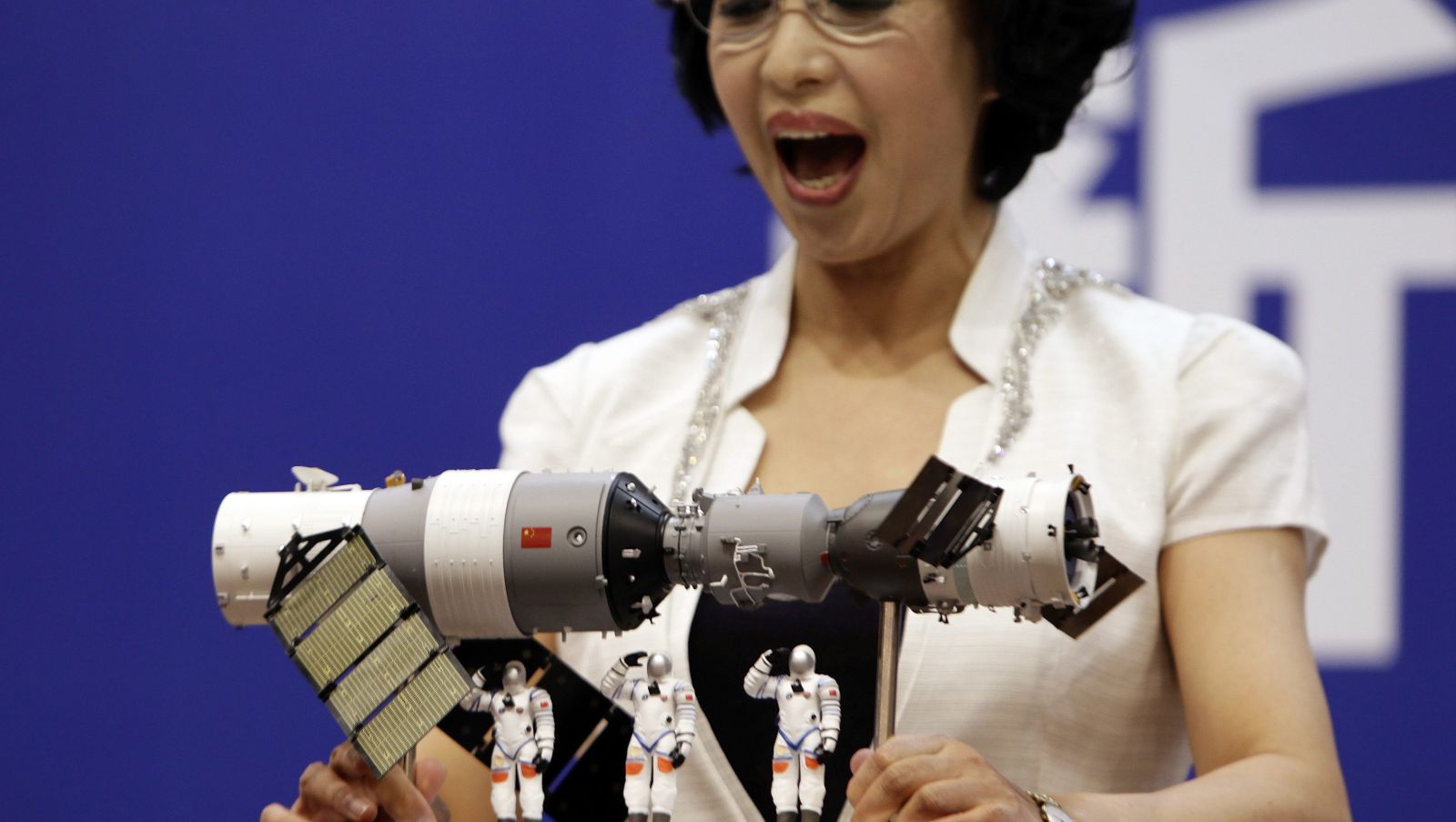
The Aerospace Corporation, a California nonprofit, estimates the Tiangong-1 will enter the atmosphere in mid-March. Sent up in 2011, the “Heavenly Palace,” as it’s also known, has witnessed a number of milestones as China races to become a space superpower. For example in 2012 the country sent its first female astronaut, Liu Yang, as part of the team behind the first successful manual docking with the lab.
The station was designed with a two-year lifespan, but authorities extended its service life by two and a half years to conduct more experiments.
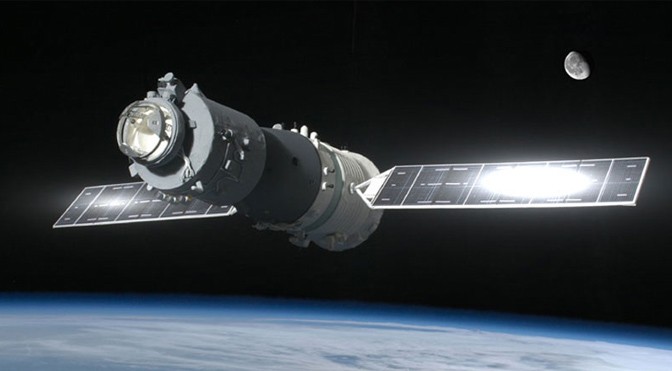
In September 2016, China’s Manned Space Engineering Office announced that the Tiangong-1 would re-enter the atmosphere around the latter half of 2017, which many interpreted to mean the lab had fallen into an uncontrolled orbit. (Satellite trackers suggest the lab has been that way since at least June 2016, notes the Aerospace Corporation.)
The agency said most of the lab would burn up in the fall, adding that it would release its updated forecasts of the descent, internationally if necessary.
Although it’s hard to predict where surviving pieces might land, based on Tiangong-1’s inclination, the Aerospace Corporation estimates the station will re-enter somewhere between the latitudes of 43° N and 43° S, an area largely covered by ocean, but also traversing countries including the US, Brazil, and China itself. According to the latest available trajectory data (link in Chinese), the Tiangong-1 is orbiting at an average height of 287 km (178 miles), about 100 km lower than it was in September 2016.
Though it’s not uncommon for spacecraft and satellites to re-enter the atmosphere, rarely does it lead to injury or destruction of property. The largest manmade object to re-enter was Russia’s Mir space station, with surviving fragments falling into the Pacific east of New Zealand in 2001. Whereas the Tiangong-1 weighs 8,500 kg (18,739 lbs), the Mir weighed 120,000 kg.

The Mir, though, was still under control when it entered the atmosphere. Letting objects enter uncontrolled is not considered a best practice.
One (still remote) danger from the Tiangong-1, according to the Aerospace Corporation, is that someone will find and pick up a piece of its debris that’s covered in a corrosive substance.
While the odds of getting hit by space debris are absurdly remote, it happened to at least one woman. In 1997 Lottie Williams was strolling through a park in Tulsa, Oklahoma when a piece of light metal measuring about 6 inches (15.2 cm) glanced off her shoulder. NASA later confirmed the timing and location were consistent with the re-entry and breakup of a second-stage Delta rocket, the main wreckage of which was found a few hundred miles away in Texas. Williams wasn’t injured, but she’s thought to be the only person ever hit by space debris.
You won’t likely become the second.
Source: qz.com
Ask me anything
Explore related questions