





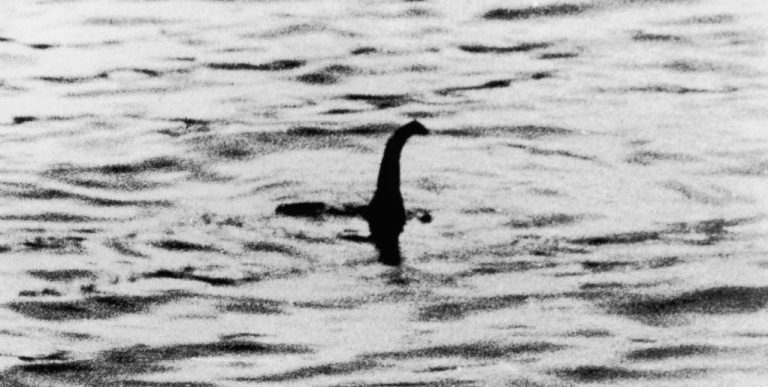
A small column in a local newspaper 86 years ago inspired a monstrous myth. The May 1933 Inverness Courier article explains how a well-known businessman and his wife were driving along the north shore of Loch Ness when they witnessed a “tremendous upheaval” in the water.
Upon stopping, they saw an enormous creature with a “body resembling a whale” sending out “waves that were big enough to have been sent out by a passing steamer.” Stunned, the couple waited around almost half-an-hour in the “hope that the monster (if such it was) would come to the surface again.”
It didn’t, but the modern legend of the Loch Ness Monster was born.
Over the years, the obsessive search for a long-necked, dinosaur-looking aquatic creature with has turned up only doctored photographs, murky water, and movie props. But earlier this fall, the mystery got a new wrinkle when a long-awaited study using environmental DNA made a splash with some surprising conclusions about what actually may be in the loch.
“Environmental DNA is a powerful new tool to understanding our world,” Neil Gemmell, University of Otago geneticist and team leader for the project Loch Ness Hunters, tells Popular Mechanics, “And we are building a relatively accurate picture of life in the loch. While no reptiles were found, it is plausible that there are [other creatures] of unusual size in there.”
Ancient Origins
The Loch Ness is a murky 22-square-mile loch (Scottish Gaelic for “lake”) with an official maximum depth of 754 feet in the remote Scottish Highlands. That makes it the largest body by volume of freshwater in Great Britain. But unexplained phenomena involving Loch Ness predates that fateful drive in 1933. In fact, humans have seen something lurking in its depths for millennia.
A first-century Pictish stone carving depicts a large-headed animal with flippers that some have said looks like a swimming elephant. “The way humanity works is that we rationalize and revise mythologies,” says Adrian Shine, leader of the Loch Ness Project and long-time researcher.
In various 1,500-year-old texts, sea serpents, water horses, and water kelpie were all observed in Scotland’s waterways. The earliest written sighting comes from a 7th century biography of the missionary St. Columba, the saint responsible for converting Scotland to Christianity in the mid-6th century. In this text, St. Columba meets a group of locals burying a companion killed by a water beast. By tapping his staff, St. Columba brought the man back to life. Then, the saint ordered one of his disciples to swim across the loch to retrieve a boat for the men. As the disciple swam, he was pursued by the same water beast.
Read more: popular mechanics
Ask me anything
Explore related questions