The hydra is a simple creature. Less than half an inch long, its tubular body has a foot at one end and a mouth at the other. The foot clings to a surface underwater — a plant or a rock, perhaps — and the mouth, ringed with tentacles, ensnares passing water fleas. It does not have a brain, or even much of a nervous system.
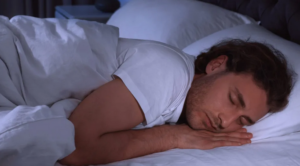
And yet, new research shows, it sleeps. Studies by a team in South Korea and Japan showed that the hydra periodically drops into a rest state that meets the essential criteria for sleep.
On the face of it, that might seem improbable. For more than a century, researchers who study sleep have looked for its purpose and structure in the brain. They have explored sleep’s connections to memory and learning. They have numbered the neural circuits that push us down into oblivious slumber and pull us back out of it. They have recorded the telltale changes in brain waves that mark our passage through different stages of sleep and tried to understand what drives them. Mountains of research and people’s daily experience attest to human sleep’s connection to the brain.
But a counterpoint to this brain-centric view of sleep has emerged. Researchers have noticed that molecules produced by muscles and some other tissues outside the nervous system can regulate sleep. Sleep affects metabolism pervasively in the body, suggesting that its influence is not exclusively neurological. And a body of work that’s been growing quietly but consistently for decades has shown that simple organisms with less and less brain spend significant time doing something that looks a lot like sleep. Sometimes their behavior has been pigeonholed as only “sleeplike,” but as more details are uncovered, it has become less and less clear why that distinction is necessary.
It appears that simple creatures — including, now, the brainless hydra — can sleep. And the intriguing implication of that finding is that sleep’s original role, buried billions of years back in life’s history, may have been very different from the standard human conception of it. If sleep does not require a brain, then it may be a profoundly broader phenomenon than we supposed.
Recognizing Sleep
Sleep is not the same as hibernation, or coma, or inebriation, or any other quiescent state, wrote the French sleep scientist Henri Piéron in 1913. Though all involved a superficially similar absence of movement, each had distinctive qualities, and that daily interruption of our conscious experience was particularly mysterious. Going without it made one foggy, confused, incapable of clear thought. For researchers who wanted to learn more about sleep, it seemed essential to understand what it did to the brain.
Barcelona: The possibility of Aguero retiring for health reasons is open
And so, in the mid-20th century, if you wanted to study sleep, you became an expert reader of electroencephalograms, or EEGs. Putting electrodes on humans, cats or rats allowed researchers to say with apparent precision whether a subject was sleeping and what stage of sleep they were in. That approach produced many insights, but it left a bias in the science: Almost everything we learned about sleep came from animals that could be fitted with electrodes, and the characteristics of sleep were increasingly defined in terms of the brain activity associated with them.
This frustrated Irene Tobler, a sleep physiologist working at the University of Zurich in the late 1970s, who had begun to study the behavior of cockroaches, curious whether invertebrates like insects sleep as mammals do. Having read Piéron and others, Tobler knew that sleep could be defined behaviorally too.
She distilled a set of behavioral criteria to identify sleep without the EEG. A sleeping animal does not move around. It is harder to rouse than one that’s simply resting. It may take on a different pose than when awake, or it may seek out a specific location for sleep. Once awakened it behaves normally rather than sluggishly. And Tobler added a criterion of her own, drawn from her work with rats: A sleeping animal that has been disturbed will later sleep longer or more deeply than usual, a phenomenon called sleep homeostasis.
Read more: Quanta Magazine
Ask me anything
Explore related questions