

×
GreekEnglish

×
  • Politics
  • Diaspora
  • World
  • Lifestyle
  • Travel
  • Culture
  • Sports
  • Cooking
Friday
16
Jan 2026
weather symbol
Athens 15°C
  • Home
  • Politics
  • Economy
  • World
  • Diaspora
  • Lifestyle
  • Travel
  • Culture
  • Sports
  • Mediterranean Cooking
  • Weather
Contact follow Protothema:
Powered by Cloudevo
> Culture

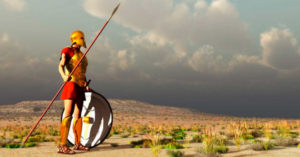
Soldiers of Bronze: The Greek Hoplite, the Phalanx & the battle that defined them

A quick guide

Newsroom July 4 03:23

Hoplite comes from the Greek word “ ta hopla ,” which means “tool” or “equipment,” and was the name given to legions of citizen soldiers who were tasked with protecting their territories from outside challengers. With the exception of Sparta, which had a permanent professional army, ancient Greek civilizations only called up soldiers when absolutely necessary. Greek hoplites, armed with a variety of weapons and bronze armor, were an incredibly strong military force and innovators of a battlefield formation known as the phalanx. The phalanx remains one of the most effective tactics ever conceived and was responsible for one of the least likely victories ever accomplished at the Battle of Marathon in 490 BC.

See Also:

Erdogan’s aide Erhan says Aegean islands belong to Turkey (video)

>Related articles

Why seasonal flu is so “aggressive” this year: An infectious disease specialist from “Sotiria” explains the two main causes

Mitsotakis attends the inauguration of the renovated Emergency Department at Red Cross Hospital

“Aunt Pecu,” who lived outside all protocol: Who the unconventional and eccentric princess Irene was

The Hoplite Armory

Hoplites or Greek citizen soldiers, were usually armed with three different types of weapons, and each would serve different functions. The first, which enabled hoplites to thrust from a distance, was a long wooden spear, called a doru, which had an average length of 2.5 meters (8.2 feet) and was tipped with a bronze or iron blade and surrounded by a four-pronged spike on its sides called a sauroter. For more close combat use, they were also equipped with a short-sword called a machaira or kopis which was conventionally just under 60 centimeters (2 feet) long. An additional dagger, called an encheiredon, would ensure that the hoplite could still protect himself if he found himself in a tricky situation on the battlefield and was unable to use his two main weapons.

Read more: Ancient Origins

Ask me anything

Explore related questions

#ancient greece#archaeology#battle#culture#greece#history#Hoplite#phalanx#soldiers#war#warriors#world
> More Culture

Follow en.protothema.gr on Google News and be the first to know all the news

See all the latest News from Greece and the World, the moment they happen, at en.protothema.gr

> Latest Stories

The historic cafes of Athens: 12 legendary hangouts lost to time

January 16, 2026

Why seasonal flu is so “aggressive” this year: An infectious disease specialist from “Sotiria” explains the two main causes

January 16, 2026

Mitsotakis attends the inauguration of the renovated Emergency Department at Red Cross Hospital

January 16, 2026

Where insects go in winter

January 16, 2026

Zelensky: If an agreement is reached, we are ready to sign even next week

January 16, 2026

Actress Melpo Zarokosta dies at 93

January 16, 2026

11 Iconic meze dishes from Volos

January 16, 2026

Sports broadcasts: Where to watch the Conference League play-off draw, the derby in volleyball, and the EuroLeague

January 16, 2026
All News

> World

Zelensky: If an agreement is reached, we are ready to sign even next week

Zelensky says agreements could be finalized soon, stressing the need for long-term security guarantees beyond political cycles

January 16, 2026

The billionaire behind Trump’s Greenland decisions convinced him that the U.S. should acquire it

January 16, 2026

Why Trump hasn’t “pressed the button” to attack Iran: White House and allies doubt it will weaken the Iranian regime

January 16, 2026

“Denmark escalates military tensions in the Arctic”, Russia says of troop deployment in Greenland

January 16, 2026

Archaeologists opened a cave in Gibraltar that had been sealed for 40,000 years and made a major discovery

January 16, 2026
Homepage
PERSONAL DATA PROTECTION POLICY COOKIES POLICY TERM OF USE
Powered by Cloudevo
Copyright © 2026 Πρώτο Θέμα