

×
GreekEnglish

×
  • Politics
  • Diaspora
  • World
  • Lifestyle
  • Travel
  • Culture
  • Sports
  • Cooking
Friday
16
Jan 2026
weather symbol
Athens 16°C
  • Home
  • Politics
  • Economy
  • World
  • Diaspora
  • Lifestyle
  • Travel
  • Culture
  • Sports
  • Mediterranean Cooking
  • Weather
Contact follow Protothema:
Powered by Cloudevo
> World

Between 60 and 80 percent of tweets are pro-Ukraine bots, research from the University of Adelaide study finds

The researchers analysed 5,203,764 tweets, retweets, quote tweets, and replies posted to Twitter between 23 February 2022, and 8 March 2022

Newsroom November 24 11:40

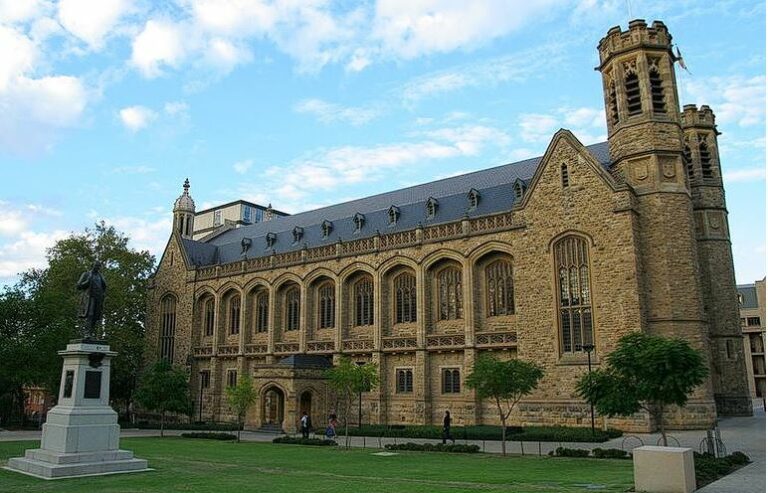
Researchers from the University of Adelaide have found bots have had a major online presence during the war between Russia and Ukraine.

The researchers analysed 5,203,764 tweets, retweets, quote tweets, and replies posted to Twitter between 23 February 2022, and 8 March 2022, containing the hashtags
#(I)StandWithPutin, #(I)StandWithRussia, #(I)SupportRussia, #(I)StandWithUkraine, #(I)StandWithZelenskyy and #(I)SupportUkraine.

“We found that between 60 and 80 percent of tweets using the hashtags we studied came from bot accounts during the first two weeks of the war,” said co-lead researcher Joshua Watt, an MPhil candidate in Applied Mathematics and Statistics from the University of Adelaide’s School of Mathematical Sciences.

“This drove more angst in the online discourse and even impacted discussions surrounding people’s decision to flee or stay in Ukraine.

“We observed increases in words such as ‘shame’, ‘terrorist’, ‘threat’, and ‘panic’.

“Pro-Russian human accounts were having the largest influence on discussions of the war – particularly on accounts which were pro-Ukraine.

“To our knowledge, this is the first body of published work which addresses online influence operations in the context of Russia’s invasion of Ukraine in 2022.

“In the past, wars have been primarily fought physically, with armies, air force and navy operations being the primary forms of combat.

“However, social media has created a new environment where public opinion can be manipulated at a very large scale. As a result, these environments can be used to manipulate discussion, as well as cause disruption and overall public distrust.”

Fellow co-lead researcher, Bridget Smart, a Masters student in Applied Mathematics and Statistics, added: “Our research identifies that this is happening during the Russia-Ukraine war and provides a statistical framework which quantifies the extent to which this is happening.

“This work extends and combines existing techniques to quantify how bots are influencing people in the online conversation around the Russia-Ukraine invasion.

>Related articles

Bloomberg: Trump’s son-in-law and Steve Whitcoff plan to meet with Putin in Moscow

What lies behind Russia’s offensive tactics against Patriarch Bartholomew

Russia declares war on the Ecumenical Patriarch: “He is dismantling the Body of the Church, has nationalist and neo-nazi allies”

“It opens up avenues for researchers to understand quantitatively how these malicious campaigns operate, and what makes them impactful. This research has identified that social media organisations may need to be better equipped for detecting and handling the use of bots on their networks.

“It has identified that governments may need to have stricter policies on social media organisations, and that social media can be a vital tool during conflict.”

source adelaide.edu.au

Ask me anything

Explore related questions

#online#russia#social media#Ukraine war
> More World

Follow en.protothema.gr on Google News and be the first to know all the news

See all the latest News from Greece and the World, the moment they happen, at en.protothema.gr

> Latest Stories

Cold wave from Ukraine to hit Greece: Temperatures drop to 10°C, Gale-Force winds in the Aegean and Ionian Seas

January 16, 2026

The billionaire behind Trump’s Greenland decisions convinced him that the U.S. should acquire it

January 16, 2026

A treat for readers: Dior, bags, and literature

January 16, 2026

Greek firms secure key roles in Libya’s reconstruction

January 16, 2026

Why Trump hasn’t “pressed the button” to attack Iran: White House and allies doubt it will weaken the Iranian regime

January 16, 2026

Latsis Group: This is the new project of Aura Residential’s 219 apartments in Elliniko

January 16, 2026

Marinakis: Anestidis has no place in a meeting with Mitsotakis; The video with insults crosses the line of decency

January 16, 2026

Mercosur agreement sparks concern over olive export tariffs: Greek and European producers face 12.6% duty

January 16, 2026
All News

> Economy

Greek firms secure key roles in Libya’s reconstruction

21 Memoranda of Understanding in Benghazi with the Reconstruction Fund - Metlen, TERNA, ADMIE, Archirodon, THEON, TTSA, SALFO, HILLCON and the Greek business footprint in energy, networks, infrastructure, health, pharmaceuticals, food, education and digital projects

January 16, 2026

Latsis Group: This is the new project of Aura Residential’s 219 apartments in Elliniko

January 16, 2026

Industry: Energy deadlock after Commission’s “no” to Italian pricing model

January 16, 2026

ENFIA discounts explained: How home insurance unlocks up to 20% off – 21 answers from AADE

January 16, 2026

Tourism: Greece, Athens, and Attica lead with over 4.75 billion euros in revenue by 2019—Doubling previous figures

January 15, 2026
Homepage
PERSONAL DATA PROTECTION POLICY COOKIES POLICY TERM OF USE
Powered by Cloudevo
Copyright © 2026 Πρώτο Θέμα