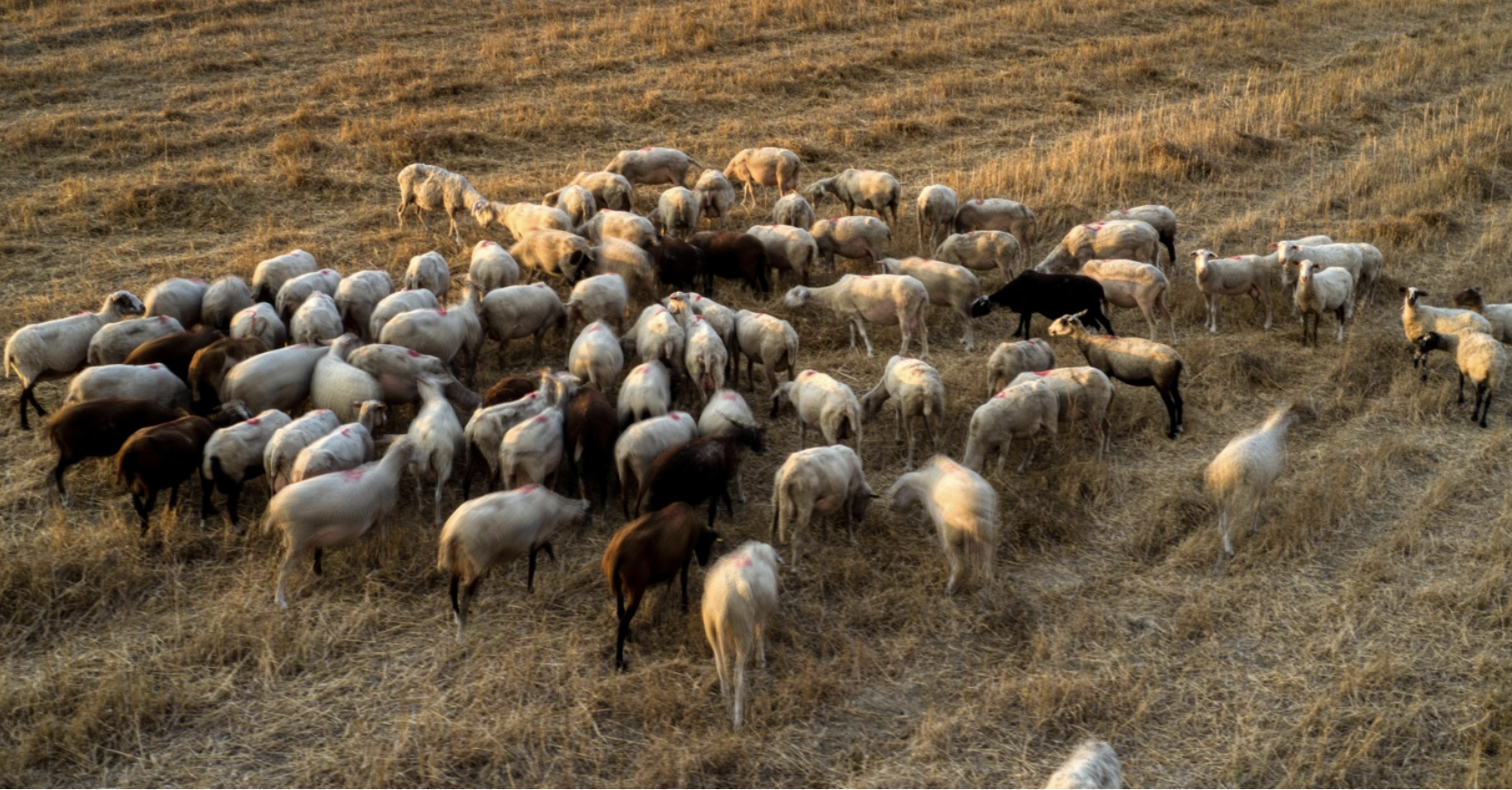
It is crucial to contain the spread of the disease, which was detected yesterday in Domentiko Elassonas after initially appearing in Kalampaka. A meeting chaired by K. Tsiaras is being held in Larissa. The regional governor, D. Kouretas, has called for Thessaly to be declared in a state of emergency.
Serious and potentially devastating consequences for livestock could result from the plague in sheep and goats. Following the confirmed cases in parts of Thessaly, an alert has been raised to implement measures to control the spread of the disease. The disease emerged a few days ago in Kalampaka and was confirmed yesterday in Domentiko Elassonas, a significant area with many small ruminant units. Immediate action is required to contain the disease to prevent a larger problem. To this end, the Minister of Rural Development, Kostas Tsiaras, is chairing a meeting in the region of Thessaly, with regional governor Dimitris Kouretas requesting that Thessaly be declared in a state of emergency to streamline the implementation of decided measures.
What is the plague in small ruminants? Experts explain through 12 questions and answers that it is a zoonosis not transmitted to humans.
They clarify that meat and milk from these animals are completely safe if processed. Specifically, milk is safe for human consumption after undergoing high-temperature pasteurization, and meat is safe to eat only after thermal processing.
The 12 Questions and Answers About the Plague in Sheep and Goats:
- What is the plague in small ruminants?
- It is a contagious viral disease affecting goats and sheep.
- Is it transmitted to humans?
- It is a zoonosis and not a zoonotic disease. It is not transmitted to humans, posing no public health risk.
- What are the symptoms in animals?
- High fever, lethargy, drowsiness, difficulty breathing, cough, diarrhea, eye and mouth discharge, mouth lesions, and bad breath.
- What should I do if I suspect the disease?
- Immediately inform veterinary services, isolate the sick animals, and restrict the flock.
- When did the disease first appear in the country?
- Greece was free of the disease until it first appeared on July 11, 2024.
- How many confirmed cases are there?
- There are seven confirmed cases to date: six in the Kalampaka Municipal Unit of the Meteora Municipality in Trikala and one in Domentiko, Elassona Municipality, Larissa.
- What is being done in these cases?
- Measures include:
- Eradication procedures in the infected farm (culling and sanitary burial of animals).
- Delimitation of Protection and Surveillance zones around the infected farm.
- Measures within these zones.
- Measures in the Regional Unit where the case was found.
- Conducting an epidemiological investigation.
- Measures include:
- Is the milk and meat from animals in the protection and surveillance zones safe for consumption?
- Milk is safe for human consumption after high-temperature pasteurization. Meat can be consumed only after thermal processing. There is no public health risk, and preventive measures aim to prevent disease spread to other animals and eradicate it. Cooperation from all involved livestock farmers and veterinary services is essential.
- In which geographical areas are measures implemented?
- Measures and delineation of protection and surveillance zones have been established in two areas:
- The first centered on the Kalampaka Municipal Unit, Meteora Municipality, Trikala.
- The second in Domentiko, Elassona Municipality, Larissa.
- These zones will be adjusted according to any new cases. The protection zone is 3 km, and the surveillance zone is 10 km.
- Measures and delineation of protection and surveillance zones have been established in two areas:
- Which authorities conduct the checks?
- The veterinary services of the Thessaly region are responsible for conducting checks and enforcing measures. Due to the extent and large livestock population in these zones, a significant number of veterinarians are needed for clinical checks of all units and animals in the protection zones. From July 22, 2024, all veterinarians in supervised bodies of the Ministry of Rural Development and Food (ELGO-DIMITRA, ELGA, EFET), following an order from Minister Kostas Tsiaras, will be deployed to Thessaly to assist the regional veterinary services. Other regions’ veterinary services have also been requested to send veterinarians. Military veterinarians and PhD candidates from the Veterinary Schools of Karditsa and Thessaloniki will also assist.
- Are culled animals compensated?
- Culled animals are compensated according to the Joint Ministerial Decision approving the financial compensation program for veterinary health measures to sanitize the country’s livestock.
- How were the countermeasures selected?
- The measures are described in the European Regulation (EU) 2020/687. The General Directorate of Veterinary Medicine of the Ministry of Rural Development and Food is in daily communication with the European Commission and the World Organisation for Animal Health. Next week, a special EU Veterinary Rapid Response Team will visit Greece.
Ask me anything
Explore related questions