The image of millions of fish filling the port of Volos and the surrounding areas of Pagasetic Gulf represents perhaps the greatest ecological disaster since the “Daniel” storm hit Thessaly on September 4, 2023. This storm, along with “Elias” later that month, caused massive damage.
Almost a year later, the aftermath has led to this eerie sight, bringing international attention to yet another catastrophe in Thessaly. Who would have thought that “Daniel” had not yet caused its final destruction?
The “Ecosystem” of the Flooded Areas
The disaster left behind a massive flooded area—180,000 hectares in addition to the 38,000 hectares of the artificial Lake Karla. These areas were submerged, destroying crops, agricultural machinery, and the livelihoods of farmers in the surrounding regions. Some villages, like Sotirio, remain uninhabited even a year later. A lake up to three meters deep formed, extending to the borders of the Agia municipality. This lake collected water from rivers, reservoirs, and canals across Thessaly, sweeping along fish from these waters.
But how did the fish survive? According to Dimitris Klaoudatos, an associate professor at the University of Thessaly’s Department of Ichthyology, the fish are a mix of species that ended up there from canals, diversions of the Pinios River, and broken reservoirs and canals. These waters came from agricultural areas rich in nutrients, leading to a high primary production. The fish, being freshwater species, are low in the food chain, resilient, and able to survive easily, allowing them to rapidly increase their biomass.
The Need for Drainage Led to Fish Deaths
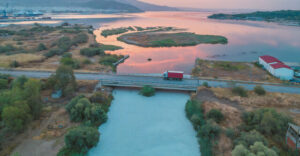
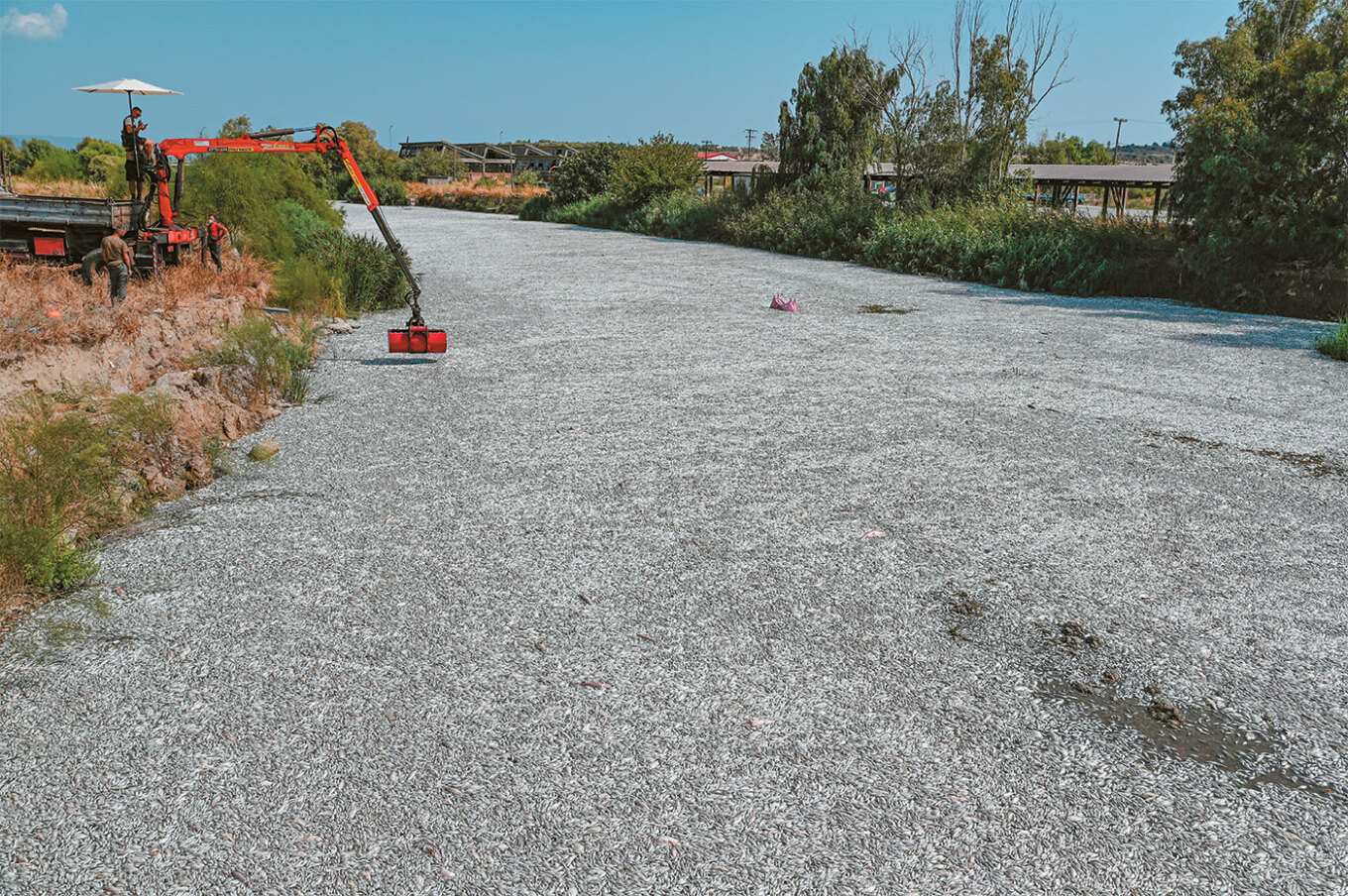
The necessity to drain the 180,000 flooded hectares in the surrounding areas of Lake Karla led to the death of dozens of tons of freshwater fish that had easily multiplied in the nutrient-rich “bottom” of the agricultural fields. The flooded areas had significant depth and water volume. At its peak, the floodwaters were up to three meters deep, with an estimated 400 million cubic meters of water. Through the sluice gates, much of this water, along with the dead fish, ended up in the Pagasetic Gulf.
Professor Klaoudatos explains that the drainage of this large water volume was accelerated during the summer months due to the high temperatures. As a result, many of these fish died from lack of water and oxygen before reaching the sea.
The Missing Management Agency That Could Have Provided Solutions
The Volos municipality and the Region of Thessaly are now in conflict over the current situation and the images that have made headlines worldwide. Is there anyone truly responsible for managing the Lake Karla area? In the past, the Local Land Reclamation Organization (TOEB) of Karla existed, but it no longer does. Even if it did, its responsibility would have been limited to irrigation. “Perhaps if we had an organized system to monitor these ecosystems, we could have acted better. As far as I know, there was no mechanism in place to monitor the situation, water quality, and fish populations to predict such an event,” says former director of Land Reclamation and former president of the Geotechnical Chamber of Central Greece, Kostas Goumas.
Since there was no such organization, could the University of Thessaly have helped by conducting measurements? “We wanted to take measurements at Lake Karla, but we don’t have the financial resources. We have the expertise, but these efforts require funding. No one called us, and I think the initial delay was due to local authorities not fully understanding the extent of the problem,” says Professor Klaoudatos.
As a result, almost a year later, a team from the Ministry of Environment took samples from the flooded area in Karla for the first time last Thursday. The professor’s team has been collecting samples and analyzing the situation in the Pagasetic Gulf, which had significantly improved before the appearance of the dead fish. However, he notes that there will now be some environmental stress on an already “environmentally stressed gulf.” The Pagasetic Gulf, he explains, has an average depth of 69 meters, and its waters renew approximately every three months. His team will conduct new sampling soon to determine if and how much the situation has worsened due to the dead fish.
Concern in the Hospitality and Restaurant Sectors
In Volos, residents are once again counting damages, this time from the aftermath of “Daniel.” Last September, many restaurateurs saw their businesses destroyed and only managed to rebuild with great effort. The hotel sector, which ground to a halt after last September, is also seeing a 30% drop in bookings due to the current situation. As a result, they are preparing to take legal action against those responsible.
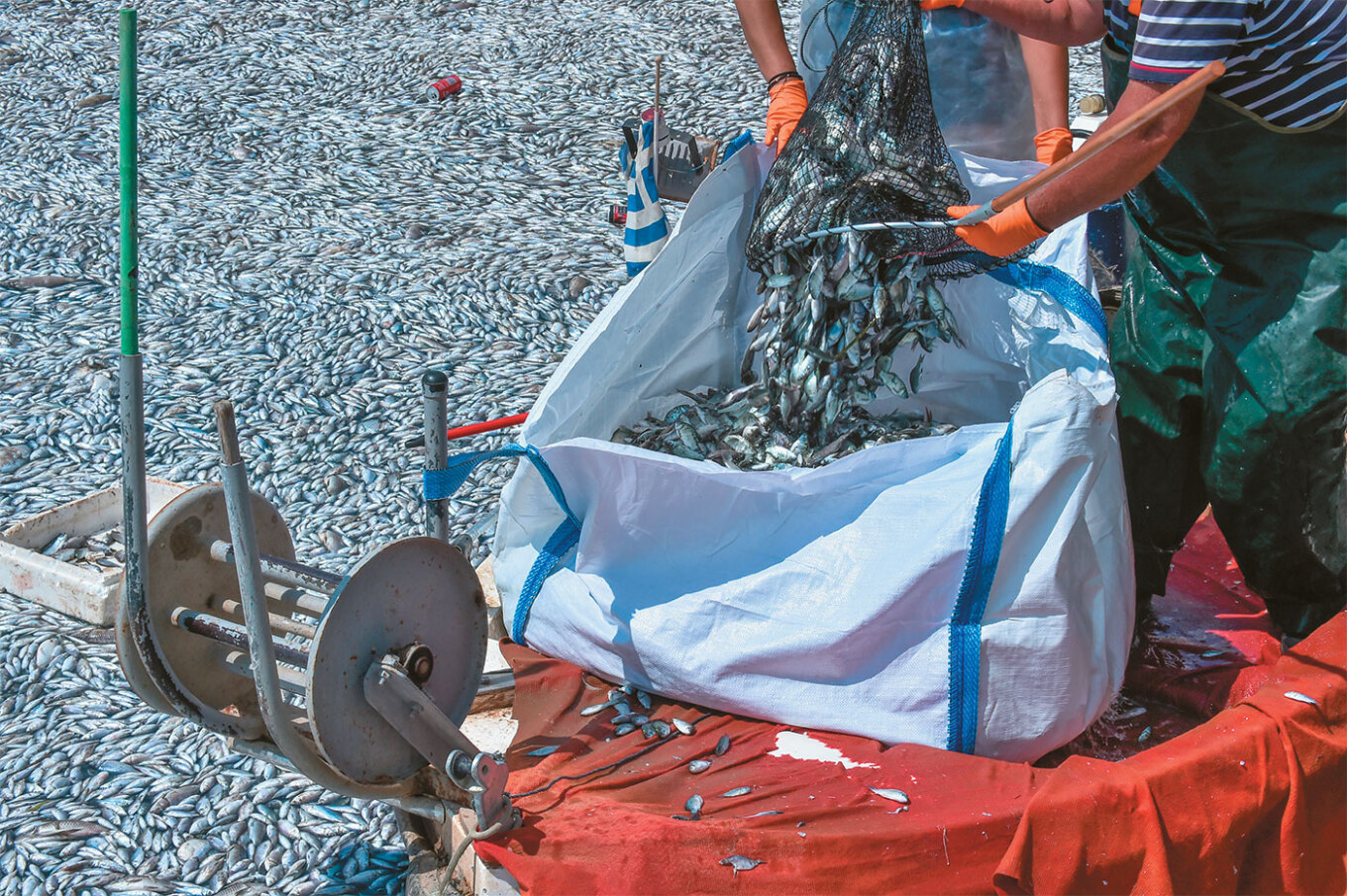
At the same time, the intervention of the Supreme Court is expanding the scope of investigations into the dead fish phenomenon, seeking any potential liabilities. Efforts to remove the dead fish continue, with over 100 tons removed in the first few days alone. Nets in the Xirias river have trapped the bulk of the fish before they reach the sea. The operation involves 11 vessels, six of which belong to local fishermen who have been affected once again. The operation is expected to be completed next week.
Ask me anything
Explore related questions