





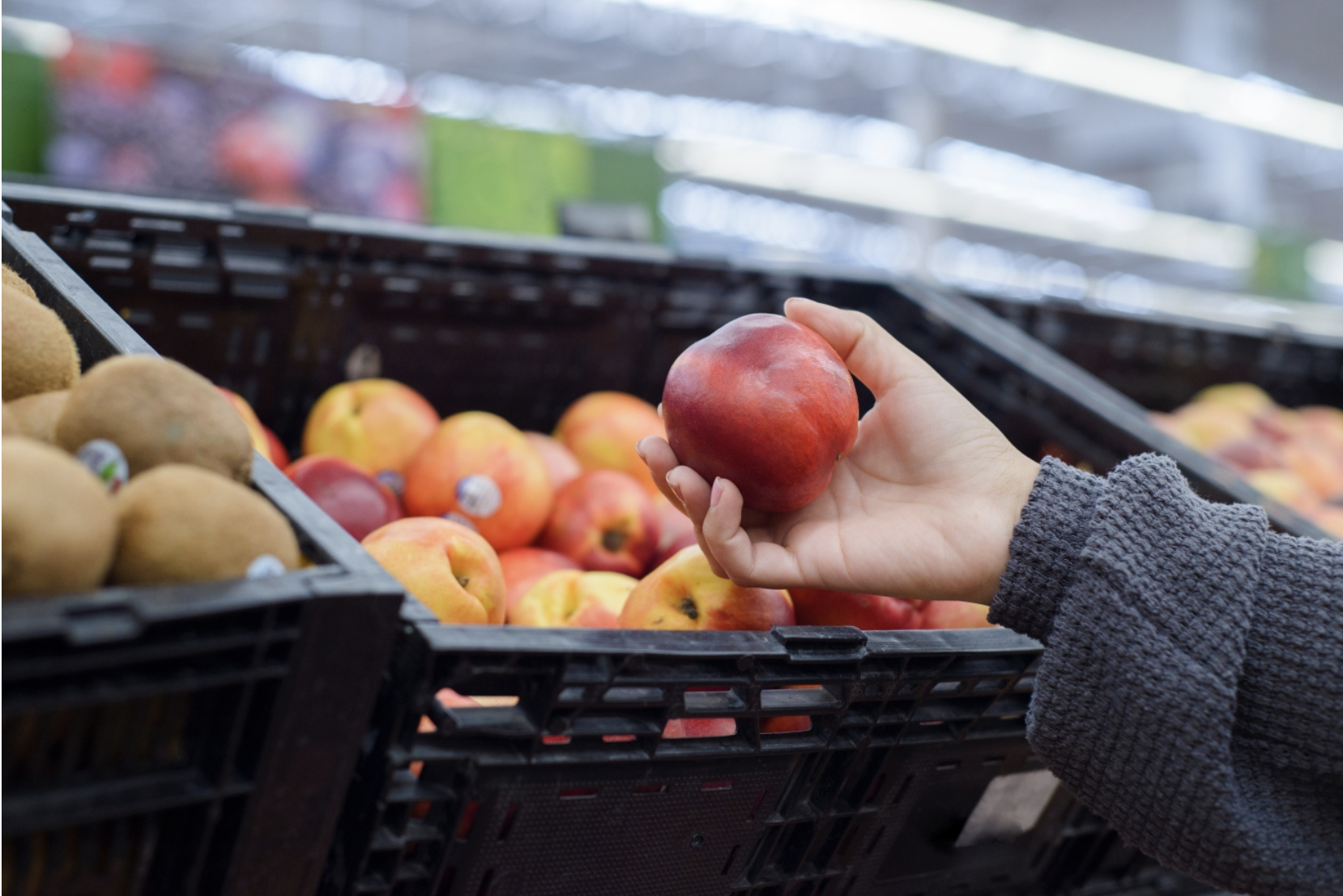
A total of 26,730.2 hectares across the regions of Florina, Trikala, Pieria, Pella, Imathia, Thessaloniki, Kilkis, and Larissa were found to have deformed stone fruits, reported by 1,778 growers who signed and submitted their observations on the electronic platform created and operated by the National Interprofessional Organization of Stone Fruits (EDOP), according to its president, Christos Yannakakis, who is also the vice president of the National Union of Agricultural Cooperatives (ETHEAS).
The platform has now closed, and the final data, which the Athens/Macedonian News Agency has access to, have already been sent to the Ministry of Rural Development and Food, as well as to MPs and relevant industry representatives.
Out of the total 5,094 agricultural parcels where deformed stone fruits were identified, 3,150 parcels covering 16,500 hectares were reported to have 100% deformity, according to the final data. Additionally, about 1,400 of these parcels are more than 12 years old.
Pella has the biggest problem, followed by Imathia and Larissa
The data analysis shows that Pella is the most affected region, with 1,304 growers reporting deformations in 20,809 hectares, across 3,830 parcels.
Imathia follows, where 429 growers reported deformed stone fruits on 5,233.8 hectares, spanning 1,160 parcels. Larissa comes next, with 17 growers reporting 287 hectares and 37 parcels.
In Kilkis, the final results of the electronic platform show 12 growers reporting deformations in 184.5 hectares, covering 26 parcels. In Thessaloniki, eight growers reported 113.6 hectares across 21 parcels.
In Pieria, four growers reported deformations on 43.4 hectares, across 11 parcels; in Florina, three growers reported 52 hectares across seven parcels; and in Trikala, one grower reported 6.5 hectares across two parcels.
Ongoing scientific analyses
Virological analyses are currently being conducted by scientists at Aristotle University of Thessaloniki, and initial findings may be available soon. “The contract we signed with the Association of Greek Canners (EKE) remains in effect until December, and the analysis of results from the first samples is ongoing,” says Barbara Malioga, professor of Plant Virology at Aristotle University of Thessaloniki. She adds, “So far, we do not have strong evidence about what is infecting and deforming the stone fruits. I hope we can identify the cause of this deformation. If the phenomenon is viral, then we will find it.”
It’s also worth noting that similar analyses are being conducted by the Benaki Phytopathological Institute, whose guidelines still stand. According to these guidelines, infected fruits should not be harvested and should remain in the field.
Expressing deep concern over the widespread nature of the deformities and relaying the serious worries of all those in the stone fruit industry about the future, Yannakakis hopes that the cause will soon be identified so that effective countermeasures can be implemented.
In response to a related question, he mentioned that state inspections of the already reported affected farms are expected to begin in the near future.
The history of the infection
The phenomenon of peach and nectarine deformities first appeared in 2021 in a 10-hectare parcel in Ampelies, Pella. However, within three years, it spread alarmingly, and what was initially estimated to affect 5,000 hectares in Pella and Imathia has now been shown to affect a much larger area—26,730.2 hectares—according to the final data from the electronic platform. “The phenomenon is extremely dangerous and must be dealt with properly and strictly to avoid a significant blow to the cultivation and income of farming households,” Yannakakis emphasized.
Ask me anything
Explore related questions