




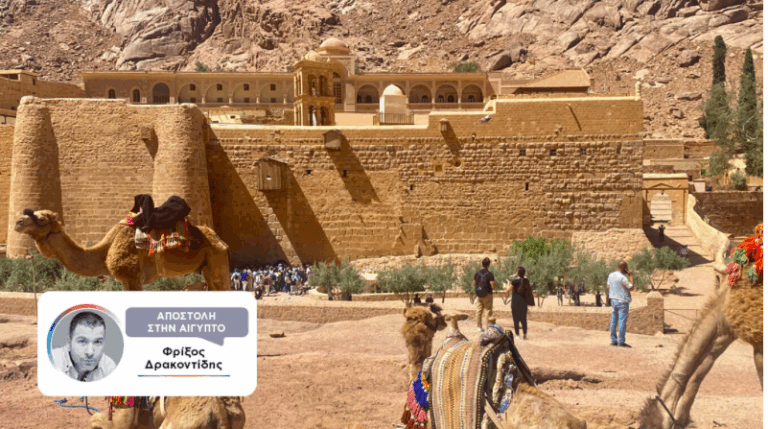
The Sinai Desert is more than just a landscape. It is a test — of endurance, of thought, of faith. The heat probes the limits of human tolerance. The stones burn, the light blinds, yet here, in this unimaginably barren land, beats a vibrant pulse that defies forgetfulness for 15 full centuries. This is the Monastery of Saint Catherine. A symbol not to be displayed for show, but to serve as a reminder. Today, it stands against a threat that does not wear military uniforms but bears signatures and administrative seals.
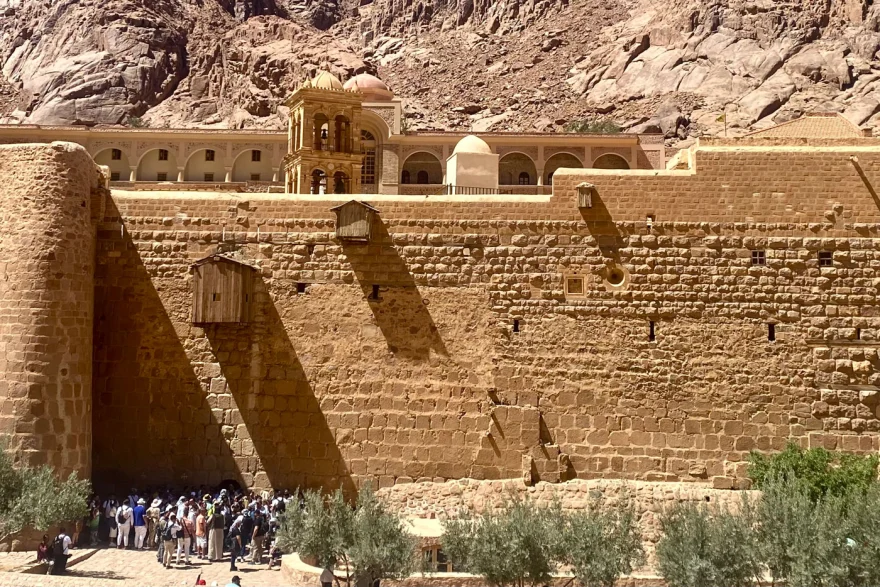
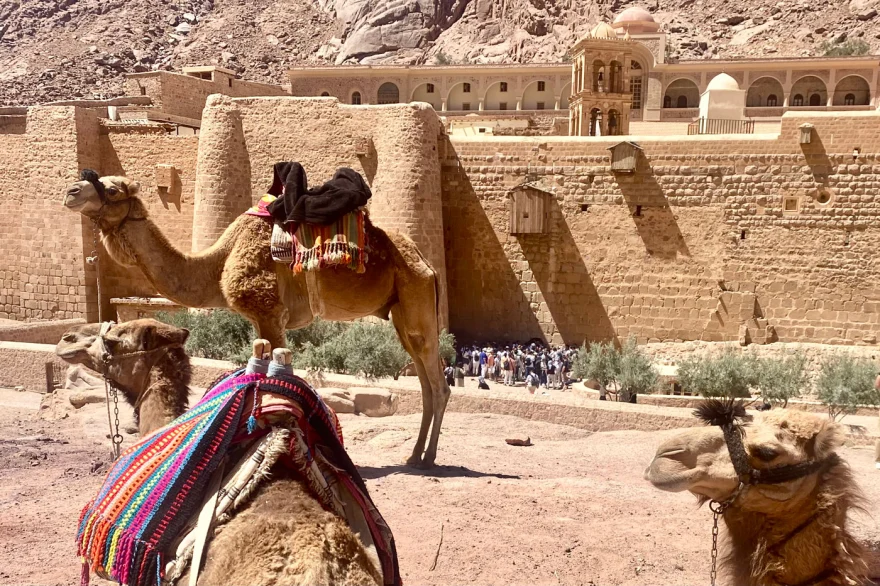
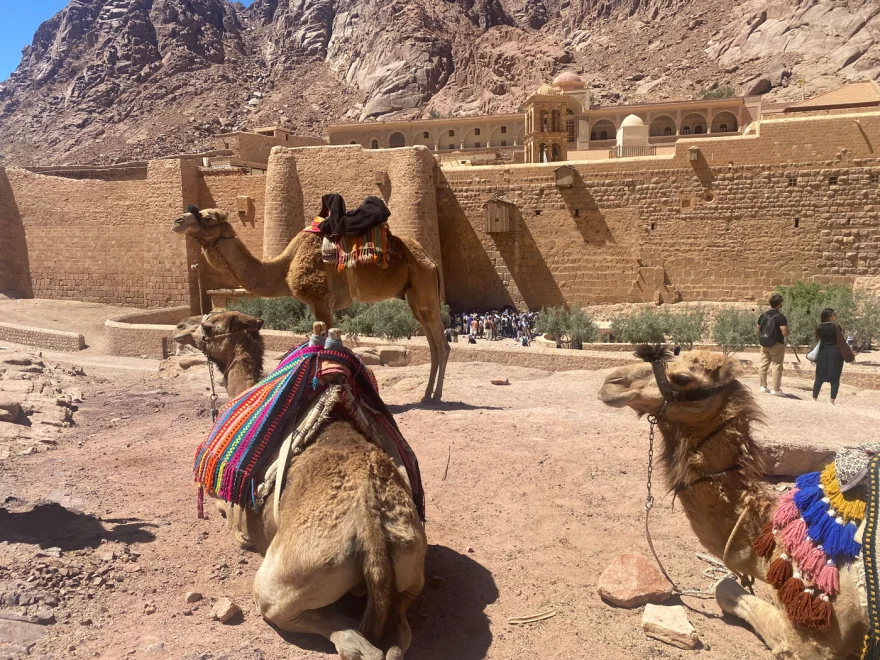
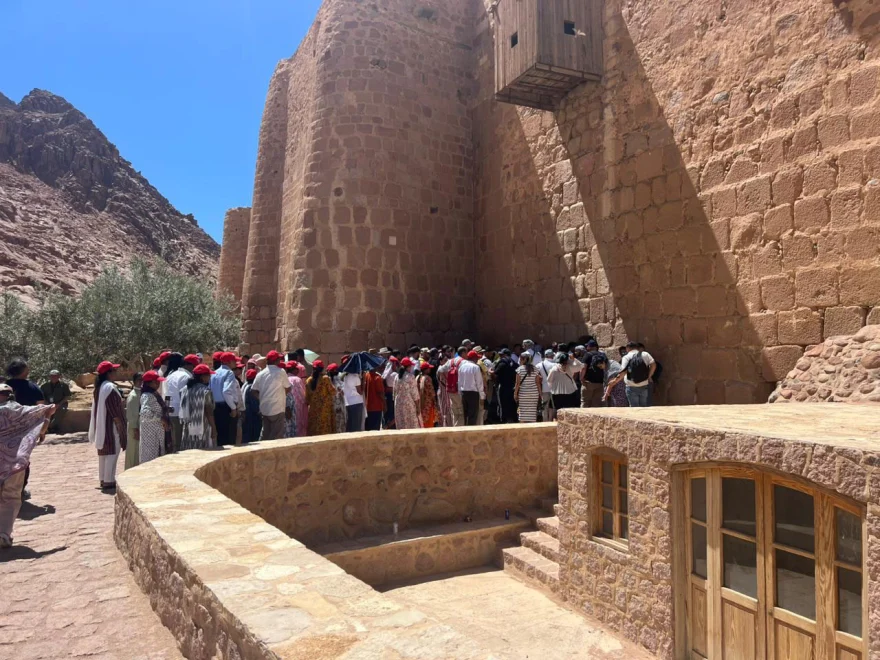
Entering the monastery’s courtyard, the first sensation is physical. It’s not just what you see — it’s something that permeates you. The walls close in around you. Their thickness makes you feel as if you haven’t entered a mere space but a different time. The light inside filters differently. It does not strike aggressively. It glides over icons, gently falls into corners, silently rests on old wood, charred stones from incense, doors that opened for the first time under Justinian and never closed.
The monks move quietly. They don’t speak unless asked. When they do, it’s as if they carry something deeper than words — a legacy. A young man waters the flowerbeds with hibiscus and basil that seem like miracles in the desert. An elder sweeps the stone-paved paths with a handcrafted broom. Another holds a book that took five centuries to arrive here. None seem in a hurry; yet all are fully present. They serve, they do not simply live.
Within the church, the oldest mosaic of the Eastern Church takes your breath away. The Transfiguration of Christ isn’t there to dazzle; it’s to remind. Remind you of who you are, whom you serve. Nearby, in the library, the dust is older than the ink. The Sinai Codex is not stored in some underground vault — it is alive, open. Opposite it, the famous “Achtiname,” the letter purportedly signed by Muhammad himself, assuring that the monks’ people would be protected forever — even from state violence. That assurance now appears to be shaken, not by invaders or wars, but by a judicial document.
The Ismailia Court of Appeal in Egypt has decided that all the buildings and lands of the monastery — from the library and church to the fields and guesthouses — belong to the state. The monks, who live there as guardians of prayer and tradition, are now recognized simply as “users.” Not owners, not custodians. As if they are visitors. As if it’s no longer their home.
Those who speak do so calmly. But behind their voices, there is a knot. “They don’t need to expel you; just don’t renew your visa,” says one. Many live on limited-duration permits — nine months. Nothing guarantees they can return after nine months. There is no forced eviction, only legal wear and tear — a silent eviction.
Behind the scenes, tensions escalate. In Athens, diplomatic circles mobilize. Church authorities express concern. All this while, just weeks ago, the Egyptian president visited Athens and publicly assured that the special status of Saint Catherine’s Monastery would not change. Suddenly, this statement now seems contradicted by the coldest tool of all: a court’s seal.
Intense negotiations unfold overnight
The turmoil intensified so much that within hours of the court decision, Egypt’s Ministry of Foreign Affairs issued a nighttime statement. The spokesperson declared, “The court’s decision does not change the monastery’s status.” The Egyptian presidency also issued a statement: “The decision is fully consistent with President Sisi’s commitments during his visit to Greece,” and “solidifies the sacred and unique religious character of the monastery.” Is this a retreat? An attempt at de-escalation? Or simply an acknowledgment that everything hinges on the details?
The monks of Sinai do not make statements. They do not respond with announcements. They react as always: with patience, with prayer, with lighting candles, with tending to their flowerbeds. With continuing a silent service that has lasted 15 centuries. That is their response, and it is enough. Because Sinai does not belong to states, archaeological councils, or ministries. It belongs to the conscience of humanity. Every stone bears witness. Every page in the manuscripts is the sweat of a believer. Every figure in the mosaic reminds us that the world changes, but the light — the true light — remains.
As we were leaving, we saw a young monk sitting alone under a fig tree. He was not reading. He was not writing. He was not speaking. He simply looked toward the mountain. And I understood. This is the loudest answer to anyone who thinks they can subjugate the intangible with laws. That gaze — sure, calm, rooted — was the monastery itself. And as long as there are people who see the world that way, the monastery will never surrender.
Diplomatic backstage and the still-unclear ownership issue
Within hours of the scandal caused by the Ismailia Court’s decision regarding Saint Catherine’s Monastery, Cairo attempted to tone down the rhetoric. Late yesterday, with almost simultaneous announcements from the Ministry of Foreign Affairs and the Egyptian Presidency, there was an effort to defuse the issue institutionally. The presidential statement mentions that the court’s ruling “aligns with what President Sisi confirmed in Athens” and “establishes the sacred and unique religious character of the monastery.” Likewise, the Foreign Ministry denied reports of confiscation, calling them completely false.
Despite persistent reassurances about respecting the spiritual and religious role of the monastery, neither statement explicitly addresses who owns the buildings and land. The ownership status remains ambiguous.
It is only noted that some remote areas, far from the monastery’s core, are passing to the Egyptian state due to lack of property documents. For the monastery itself, the focus is on maintaining its functioning and usage agreements, with no mention of ownership.
While attempts have been made to downplay the issue, a pressing question remains: does the monastery legally belong to itself or to the Egyptian state? Official responses avoid this question. And that, in itself, speaks volumes.
Ask me anything
Explore related questions