

×
GreekEnglish

×
  • Politics
  • Diaspora
  • World
  • Lifestyle
  • Travel
  • Culture
  • Sports
  • Cooking
Monday
12
Jan 2026
weather symbol
Athens 7°C
  • Home
  • Politics
  • Economy
  • World
  • Diaspora
  • Lifestyle
  • Travel
  • Culture
  • Sports
  • Mediterranean Cooking
  • Weather
Contact follow Protothema:
Powered by Cloudevo
> World

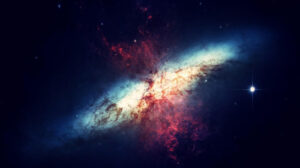
The Milky Way may escape collision with Andromeda, according to new research

An international team of astrophysicists involved in a study estimates that the probability of a collision between the two galaxies is about 50% in the next 10 billion years

Newsroom June 2 10:03


Our Galaxy may eventually escape a collision with Andromeda in a few billion years, according to new simulations that give it a 50-50 chance of avoiding extinction.

The Milky Way and that of Andromeda are moving toward each other at a speed of 100 kilometers per second. Scientists have long thought they would be in a collision orbit in about 4.5 billion years. A scenario that does not bode well for our Universe.

Past research suggested that the Sun (and Earth with it) could be at the center of this merged, future galaxy, in a colossal black hole. It could also eject the Sun into intergalactic space.

But “announcements of the imminent end of the Milky Way appear to have been exaggerated,” according to a new study published today in the journal Nature Astronomy. The international team of astrophysicists involved in this research estimates that the probability of a collision between the two galaxies is about 50% within the next 10 billion years.

“Essentially, it’s cornucopia,” summarized Til Sawala of the University of Helsinki, the study’s lead author.

The scientists ran more than 100,000 simulations using new data collected from space telescopes.

A head-on collision between the two galaxies within the next 5 billion years is “highly unlikely,” Sawala said.

The most likely scenario is that the Milky Way Galaxy and the Andromeda Galaxy will scrape past each other without colliding immediately. In half of the simulations, dark matter will drag them into an irreversible convergence, ultimately causing a cataclysmic collision. But that won’t happen before 8 billion years have passed, since our own Sun will be long extinguished.

>Related articles

Sick astronaut on mission – NASA considers early return of International Space Station crew

NASA published a new map of the universe; the “SPHEREx” space telescope changes the data landscape

Research: The BBC’s “first Black Briton” from the Roman era was ultimately…white and originated from southern England

“It may therefore be that the Milky Way will be destroyed. But it is also possible that the Milky Way and Andromeda have been orbiting each other for tens of millions of years. We cannot yet know,” Sawala said. “The fate of the Milky Way is still unknown,” the researchers summarized.

According to Sawala, new data from Hubble and the Gaia space telescope, which just completed its mission, may allow astrophysicists to provide a definitive answer within the next decade.

But why should they bother with the question if warming will render Earth uninhabitable much sooner, in about 1 billion years? “It’s possible that we are emotionally connected” and want to know what will happen after us, Sawala explained. “I would prefer that the Milky Way not collide with Andromeda, even if it would have no effect on my own life – not even on the lives of my tricuspids,” he added.

Ask me anything

Explore related questions

#Andromeda#galaxy#Milky Way#science#space#sun
> More World

Follow en.protothema.gr on Google News and be the first to know all the news

See all the latest News from Greece and the World, the moment they happen, at en.protothema.gr

> Latest Stories

Erich von Däniken, Swiss bestselling author who linked ancient civilizations to extraterrestrials, dies at 90

January 12, 2026

Ukraine: 35,000 households in Odessa are without electricity after a Russian drone attack

January 12, 2026

Greece prepares the first bond issue for 2026

January 12, 2026

Pierrakakis to Tasoula: Greece has increased authority in decision-making at the European level

January 12, 2026

The first snow fell on Parnitha, see impressive photos

January 12, 2026

Bloomberg: Britain and Germany discuss the presence of NATO forces in Greenland

January 12, 2026

JPMorgan: Greek bonds passed the convergence test, and investors are repositioning

January 12, 2026

Who are the Basij militias who are spreading terror among protesters in Iran?

January 12, 2026
All News

> Politics

Pierrakakis to Tasoula: Greece has increased authority in decision-making at the European level

The President of the Hellenic Republic met with the Minister of Finance and President of the Eurogroup and discussed the prospects of the Greek economy

January 12, 2026

Marinakis: There will be two meetings with farmers, the Prime Minister cannot work with ultimatums

January 12, 2026

Who is Maria Gratsia, the right hand of Maria Karystianou

January 12, 2026

Maria Karystianou’s political move divides opinion — Criticisms after early acclaim

January 12, 2026

Why Mitsotakis agreed to two meetings with farmers and livestock breeders

January 12, 2026
Homepage
PERSONAL DATA PROTECTION POLICY COOKIES POLICY TERM OF USE
Powered by Cloudevo
Copyright © 2026 Πρώτο Θέμα