




In the harrowing scene from the film The Revenant, a grizzly bear mauls the protagonist after he inadvertently comes between her and her cubs. Each wave of her attack is ferocious—she tosses him like a ragdoll, mauls his back and chest, bites him, and stops only when she believes the threat has been neutralized.

This dramatized attack echoes an old American saying about bear encounters:
“If it’s brown, lay down. If it’s black, fight back. If it’s white, goodnight.”
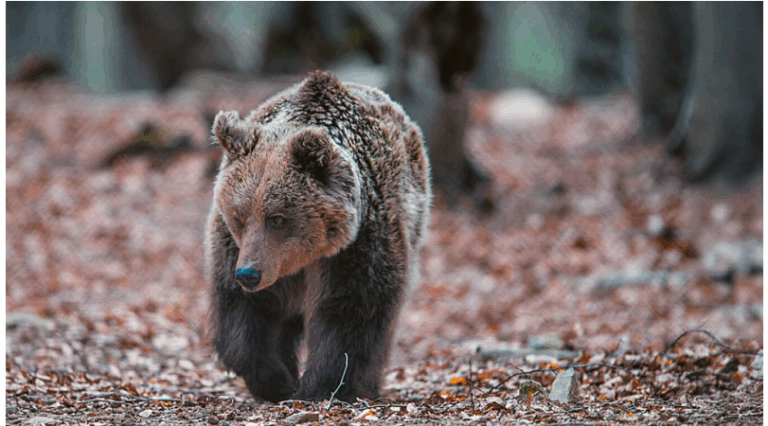
In Greece, however, the only bears we have are the brown ones—roughly 750 in number—and experts are clear: they do not view humans as prey or threats, unless provoked.
Much like the bears, most wild animals in Greece avoid human contact. But as rural areas become depopulated and wildlife habitats expand, animals are increasingly venturing into urban and semi-urban environments. Wolves, wild boars, jackals, and even vipers are no longer strangers to village edges—or city streets.
When nature turns deadly
The fatal incident in Frakto was not a random act of aggression but a tragic result of misunderstanding. A startled bear, feeling threatened, reacted out of instinct. Nature does not function like a Hollywood script or a videogame; a single misstep can have irreversible consequences.
Christos Stavrianidis, the mountaineer who died after a bear encounter, wasn’t the only one on the trail that day. His fellow climber, Dimitris Kioroglou, survived. The story highlights a fundamental truth: when in wild territory, we are guests—and often uninvited ones.
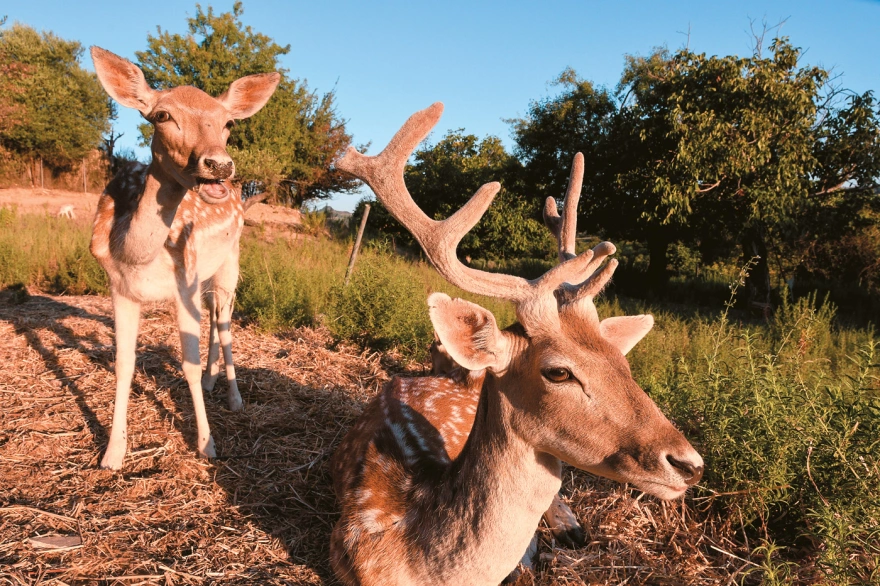
Experts urge us to shed illusions shaped by social media and wildlife videos. These animals are not characters in viral reels—they are instinct-driven, territorial, and often fearful of humans. Attempts to repel or approach them, such as using pepper spray on Greek brown bears or walking dogs in wolf habitats, can end dangerously.
Wildlife doesn’t belong to us. It exists independently of our schedules, selfies, and sentimentalism.
What to do if you encounter a bear
According to the environmental NGO “Callisto”:
- Remain calm.
- Stand still—do not panic or run.
- Do not throw objects like stones or sticks.
- Slowly back away, acknowledging the bear’s dominance in the area.
- If space is limited, create an escape route for the bear—don’t block its path.
The Bear: Giant of the Pindos
Greece is home to the southernmost population of European brown bears (Ursus arctos arctos), estimated at around 750 individuals. These bears inhabit the mountainous arc stretching from the Rhodope range in Thrace through the Pindos mountains to western and central Macedonia, and occasionally even as far south as the Agrafa region.

They are omnivores—over 85% of their diet consists of plants—and can weigh anywhere from 120–130 kg to over 400 kg, with the largest typically being males. When standing upright, they surpass 2 meters in height and can run at speeds up to 60 km/h.
Despite their size and strength, Greek brown bears are not naturally aggressive toward humans. But they will defend themselves or their cubs if they feel threatened. Most incidents of bear aggression result from accidental encounters, especially near food sources like garbage dumps or fruit trees close to human settlements.
In the last 15 years, 16 bear-human encounters have been recorded in Greece—none fatal. Conversely, more than 130 bears have died due to human causes: poaching, poison bait, or road accidents.
The cardinal rule in bear country? Don’t make the bear feel cornered or threatened.
The Wolf: Villain in Fairytales, Not in Reality
For centuries, wolves were demonized—blamed for livestock losses and cast as villains in folklore. In reality, wolves pose little threat to humans but remain a major predator of farm animals.
Around 700 wolves are believed to live in Greece, primarily in mountainous regions north of Boeotia. They favor remote areas with limited human activity but are highly adaptable. Their diet includes wild ungulates, livestock, and even organic waste from garbage dumps and slaughterhouses.
Occasionally, they venture close to villages, particularly where food is accessible. Still, wolf attacks on humans are virtually unheard of in modern Greece. One notable incident occurred in 2022 in Parnitha, when a wolf attacked a dog being walked by a teenager and killed it. This prompted reminders about existing laws that prohibit bringing domestic animals into national parks—especially dogs, which wolves view as territorial competitors.
If you encounter a wolf:
- Stay calm and avoid eye contact.
- Do not feed it or try to approach.
- Back away slowly.
- Never turn your back or run.
The Boar Boom: A Wild Problem
Wild boars are arguably the most disruptive species in modern Greek wildlife. Their population has exploded in recent years—estimated between 400,000 and 600,000—due in part to hybridization with domestic pigs, which has made them more fertile and less fearful of humans.
Boars now appear frequently in urban outskirts, posing traffic hazards and occasional physical threats. Adult males can weigh over 250 kg and reach speeds of up to 40 km/h. They have poor eyesight but acute hearing and smell.
Although rare, boar attacks can cause severe injuries due to their tusks. Experts urge the public to avoid feeding stray animals or leaving food waste outdoors, as this attracts boars. Motion-sensitive lighting can also deter them.
If you come across a wild boar:
- Remain calm. Slowly back away—do not run.
- Do not feed it or approach piglets.
- Keep your distance and avoid using flash photography.
- If young are present, be extra cautious. Adults will defend them.
Greek wildlife is not out to get us—but it’s not here for our entertainment either.
Respect the wild, stay informed, and remember: in nature, you’re a visitor—not the host.
Ask me anything
Explore related questions