




In the Peloponnese, no wedding is complete without diples. While you can find them in other parts of Greece, their presence almost always signals that at least one of the couple — bride or groom — has roots “from down south.” Similarly, in Crete, weddings aren’t considered authentic without xerotigana — a close cousin of diples.
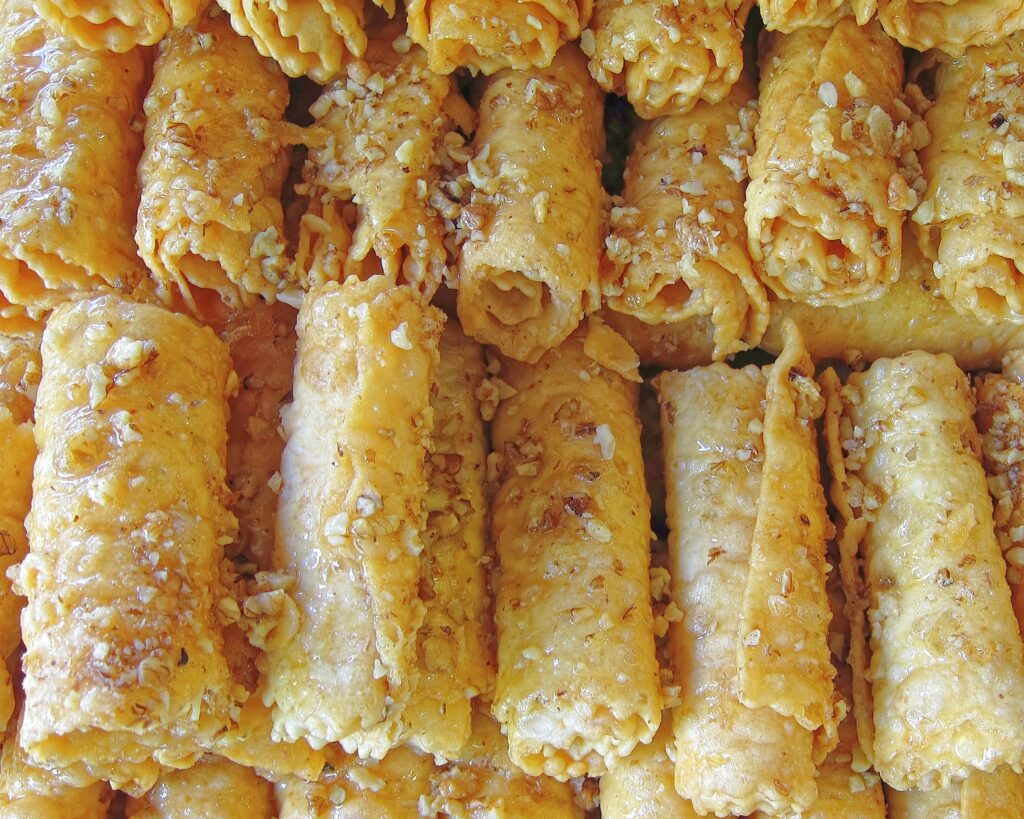
Carefully folded one by one, soaked in honey syrup, garnished with finely chopped walnuts, adorned with white sugar-coated almonds (koufeta), and arranged in wicker baskets lined with delicate lace, diples carry rich symbolism. The name itself comes from the word meaning “folds,” representing union and harmony — fitting symbols for marriage and celebration.
Beyond weddings, diples are a cherished treat at Christmas, christenings, inaugurations, and other joyful occasions — anywhere that calls for festivity.
The Story of Diples
Like many traditional Greek delicacies, diples trace their origins to ancient times. They belong to the category of sweet doughs fried in olive oil and drenched in honey — a method documented as far back as the Hellenistic and Roman eras, when small fried dough treats were served at festivals.
Over centuries, diples evolved in form and symbolism. From the Ottoman era onward, they became a traditional wedding sweet, embodying blessings for a happy life together. The art of making diples became ritualized: the dough folded with care, fried in extra virgin olive oil from the family press, dusted with walnuts and cinnamon, and finished with honey — all as a wish for sweetness and prosperity in married life.
Symbolism of Diples
The folding of the dough is more than a culinary step — it is symbolic of binding and togetherness. The spirals and rolls formed during frying represent connection and unity, central themes in marriage.
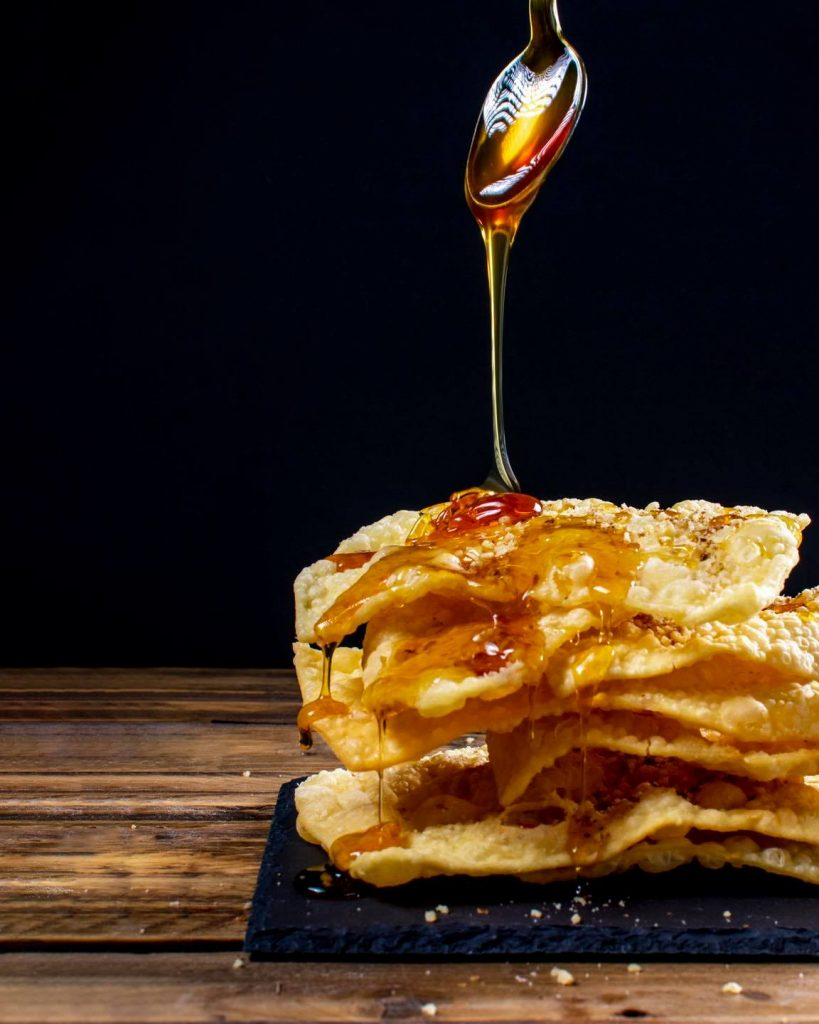
Honey, poured over the warm pastry, symbolizes sweetness and longevity. Offering honey at celebrations is an enduring Greek tradition, a blessing for “a life of sweetness.” Its flavor varies by region and season — thyme honey, wildflower honey, or citrus blossom honey are all used.
Walnuts, sprinkled on top, represent fertility and abundance, while white sugar-coated almonds (koufeta) often used at weddings symbolize faith, purity, and wishes for happiness.
A Tradition Passed Down Through Generations
Traditionally, days before a wedding, women of the household — grandmothers, aunts, neighbors — gathered to prepare diples in large quantities. In kitchens filled with laughter, conversation, and a spirit of community, an impromptu “production line” emerged, creating dozens or even hundreds of these delicate sweets.
The tradition was as much about the process as the pastry itself — about community, shared stories, and family bonds. Diples became a symbol of joy, prosperity, love, and the warmth of female creativity.
Regional Variations Across Greece
Although diples are most closely associated with the Peloponnese, each region adds its own touch, adapting the recipe while preserving its essence.
- Peloponnese (Achaia & Western Peloponnese): Long, thin rolls or spirals fried lightly until golden, served with honey, cinnamon, walnuts, and sometimes sugar-coated almonds.
- Laconia: Slightly thicker dough, less strict folding, finished with local thyme honey, occasionally sprinkled with sesame.
- Messenia: Famous for its ultra-thin, almost translucent dough, folded with a fork and fried in hot extra virgin olive oil, generously dusted with cinnamon-flavored walnuts and drenched in warm wildflower honey.
- Crete: Uses a similar dough for xerotigana, but without eggs. Strips are cut with decorative edges and shaped into flower-like spirals.
- Kefalonia: Orange juice is added to the dough, giving it a biscuit-like texture; often baked rather than fried, formed into small shapes, and served mainly at Christmas.
- Chios: Known as psathouria, with thick, crispy strips of dough fried and soaked in syrup, reminiscent of woven straw patterns.
- Lesvos: Dough cut into perfect squares, with honey infused with arbaroriza leaves.
- Andros: Called avgokalamara, served at Carnival, with a sturdier dough folded only once.
- Cyclades Islands: Known as xerotigana, with variations in folding and serving across the islands — spirals, bows, or simple folds.
The Philosophy Behind Diples
Despite differences in shape, flavor, or technique, diples everywhere remain more than a sweet. They are treats of joy, made collectively, shared generously, and offered as blessings for happiness, prosperity, and love.
Whether at a wedding, a christening, a feast, or Christmas, diples remain a timeless symbol of Greek tradition — a sweet that carries meaning beyond taste.
Ask me anything
Explore related questions