





In recent years, a simple but exotic fruit has taken over the world of gastronomy, and Greece, and Athens in particular, is no exception. Yuzu, a citrus fruit native to East Asia, has become the favorite fruit of Michelin-starred chefs and innovative bars and mixologists, appearing in everything from sauces to avant-garde cocktails. But what exactly is this golden-skinned fruit, why is it so prohibitively expensive, and why are Athens restaurants and bars so determined to showcase it? And why are Athens’ restaurants and bars so determined to promote it?
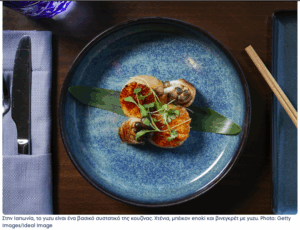
What is Yuzu?
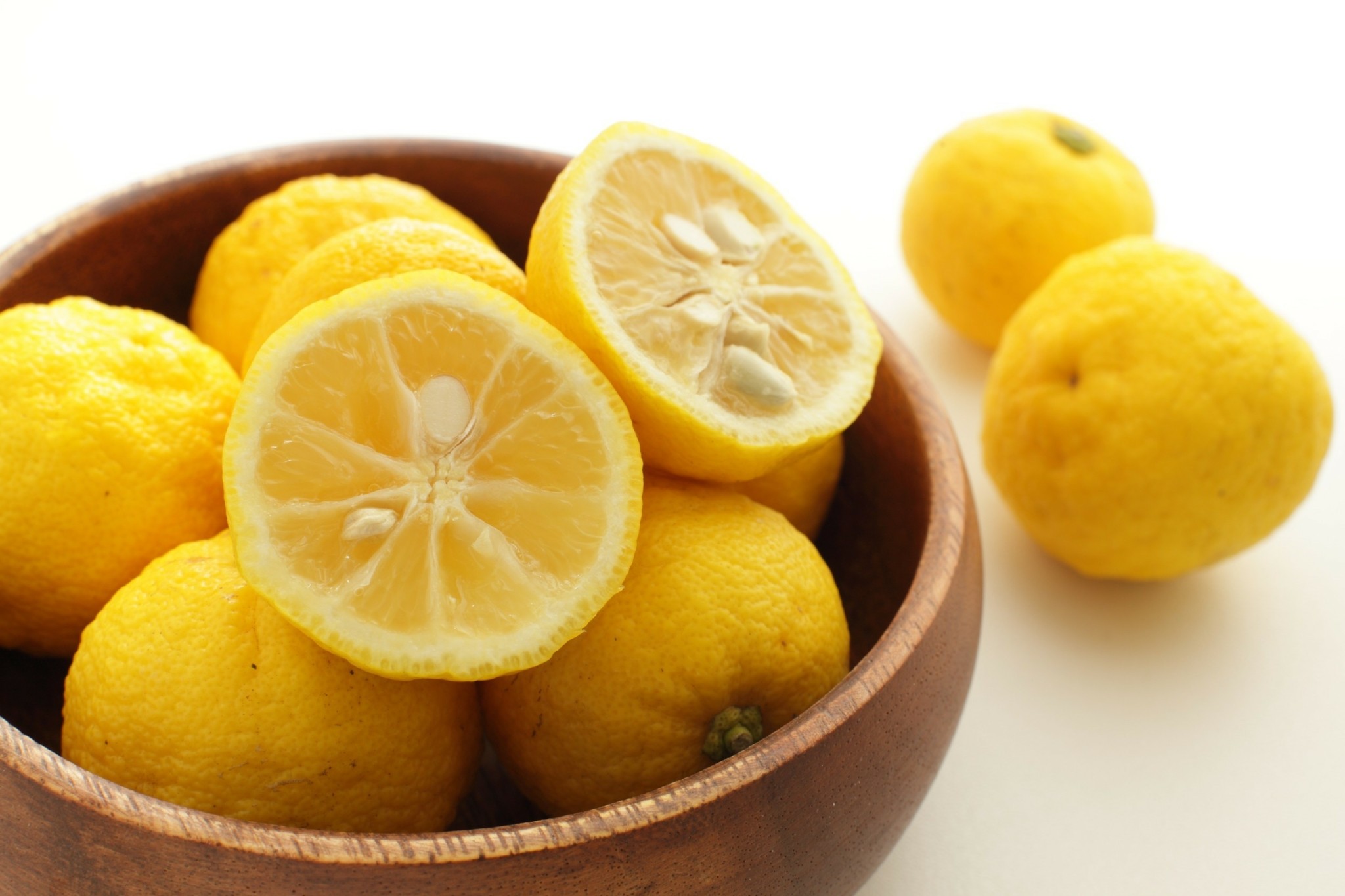
At first glance, yuzu looks like a small, slightly wrinkled lemon or a large mandarin. Its origins trace back to China and Tibet, though it was Japan that made the fruit a cultural icon, weaving it into both its cuisine and traditions. Unlike its citrus relatives—lemon, lime, or orange—yuzu is rarely eaten raw because of its thick peel and many seeds. Instead, it’s prized for its fragrance and juice, which offer a complex aroma described as an enchanting blend of grapefruit, lime, and mandarin with floral notes.

In Japan, yuzu is not only a culinary staple but also a symbol of well-being. During the winter solstice, people bathe with yuzu to prevent colds and attract good fortune. In cooking, its juice brightens ponzu sauce, enlivens miso soups, and perfumes desserts. Today, this once-local ingredient has crossed oceans to captivate chefs from Copenhagen to California—and now, Athens.
Yuzu: Greeks Discover Japan’s Exquisite Citrus Fruit
Why is it so expensive?
Part of yuzu’s high price lies in its rarity. Unlike lemons or oranges, yuzu trees are slow to bear fruit, often taking a decade to mature. Cultivation is limited mainly to Japan and Korea, with smaller production in Australia, Spain, and France. Strict import regulations in many countries push prices even higher, making yuzu a rare and coveted luxury ingredient.
In Europe, fresh yuzu can cost over €40 per kilo. Bottled yuzu juice—carefully imported and pasteurized to preserve its volatile aromas—is equally expensive. Greek chefs and bartenders describe it as an “investment ingredient”: a few drops of juice or a hint of zest can transform a dish or cocktail, justifying its cost.

A Chef and Bartender’s Obsession
For Michelin-starred restaurants, the quest for flavor is also a quest for innovation. Yuzu delivers both: a familiar yet exotic citrus profile that instantly elevates any dish. Its acidity is gentler than lemon’s but more aromatic than lime’s, making it versatile for both savory and sweet creations.
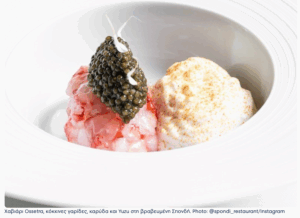
In Athens, where fine dining has flourished over the past decade, yuzu has found its natural home. Restaurants such as Spondi, Matsuhisa Athens, and Birdman feature it in their tasting menus. Chefs use it sparingly—a yuzu beurre blanc over seafood, a touch of yuzu kosho (a spicy paste made from yuzu, chili, and salt) with grilled meats, or a delicate yuzu sorbet to cleanse the palate.
Bartenders have also embraced its allure. At world-renowned bars like The Clumsies and Baba au Rum, yuzu juice is mixed into gin-based cocktails or distilled into aromatic syrups.
Why Athens?
One might wonder why a fruit grown thousands of kilometers away has gained such popularity in Greece, a country blessed with its own rich citrus heritage. Crete and the Peloponnese abound with lemons, oranges, and mandarins, fruits deeply tied to Greek cuisine and culture. Yet Athens’ thriving gastronomic scene thrives on fusion, experimentation, and global influence.
The rise of Michelin-starred restaurants in Greece has brought with it a hunger for rare ingredients. Chefs competing on the international stage seek to showcase innovation, and yuzu offers a way to express cosmopolitan flair while harmonizing beautifully with Mediterranean flavors. Its subtle tartness complements Greek seafood, balances the richness of lamb, and refreshes herbs like oregano and thyme.
Meanwhile, Athens’ cocktail culture has matured dramatically. The city’s bars regularly feature among the world’s best, and bartenders are eager to spotlight unique ingredients that set them apart. Yuzu—rare, intriguing, and aromatic—gives them exactly that. In a city where gastronomy and mixology have become sources of pride, this citrus fruit has turned into a kind of calling card that always impresses.
Ask me anything
Explore related questions