





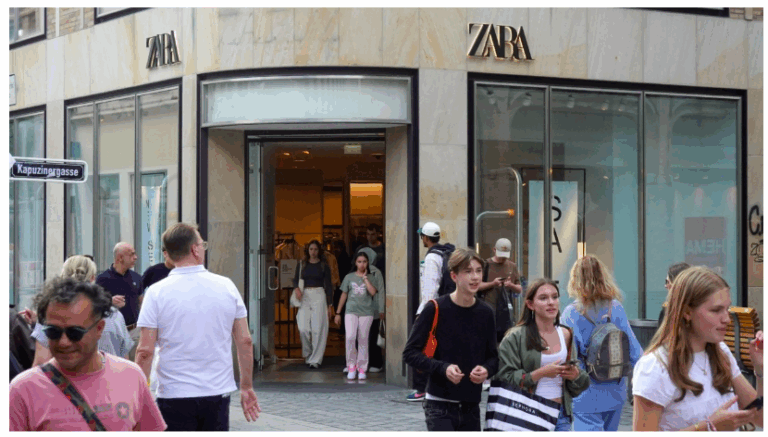
Zara’s story is built on a paradox. In a world obsessed with Big Data, algorithms, and technology, the world’s largest fast-fashion chain was built on something far simpler — observing the customer. That is its great differentiator — the one thing competitors have never managed to imitate, no matter how hard they tried.
Zara began in Galicia, Spain, in the mid-1970s, when Amancio Ortega opened a small shop with a mission to bring fashion closer to the average person. His vision wasn’t to create a luxury brand with heavy branding but to build one that constantly adapts to consumers’ desires. This philosophy became the foundation on which the Inditex empire was built.
If Zara’s culture and system show the way forward, Inditex’s financial results silence any talk of “wear and tear over time.”
In the second quarter of 2025, sales reached €10.08 billion — slightly below expectations of €10.26 billion (source: Reuters) — mainly due to cautious consumer spending and currency headwinds. Yet, the upward trend remained intact. From August 1 to September 8, sales rose 9% at constant currency, compared with 5.1% in the first half, showing clear signs of recovery and fueling optimism for the rest of the year.
Net profits grew 0.8% in the first half to €2.79 billion. Inditex shares, which had dropped 14% since the start of the year, rebounded — a sign of resilience amid global pressures. These numbers confirm that Zara’s strategic agility remains its greatest strength: though global turbulence may hit, its ability to read trends instantly keeps it growing.
In 2024, Inditex ended the year with record highs — €38.63 billion in sales and €5.86 billion in net profit, while online sales rose 12%. Despite some market slowdowns, the company is pressing ahead with €1.8 billion in investments in technology and logistics — a modernization strategy designed to future-proof its competitiveness (source: Inditex).

The Customer as Trendsetter
Zara’s secret isn’t in marketing wizardry — it lies in treating the customer as the real trend creator. Store managers are not just employees; they’re the “eyes and ears” of the market. They send daily reports on what shoppers ask for, what they try on, and what colors stand out.
A now-legendary example is the pink scarf: what started as a random celebrity sighting quickly turned into a global trend, becoming available in hundreds of Zara stores within weeks. That’s not luck — it’s a system that listens, adapts, and executes with astonishing speed.
Behind this capability lies Zara’s famous supply chain. Its distribution hub in Galicia — known as “The Cube” — operates like a beating heart, absorbing data from around the world and sending products where demand emerges.
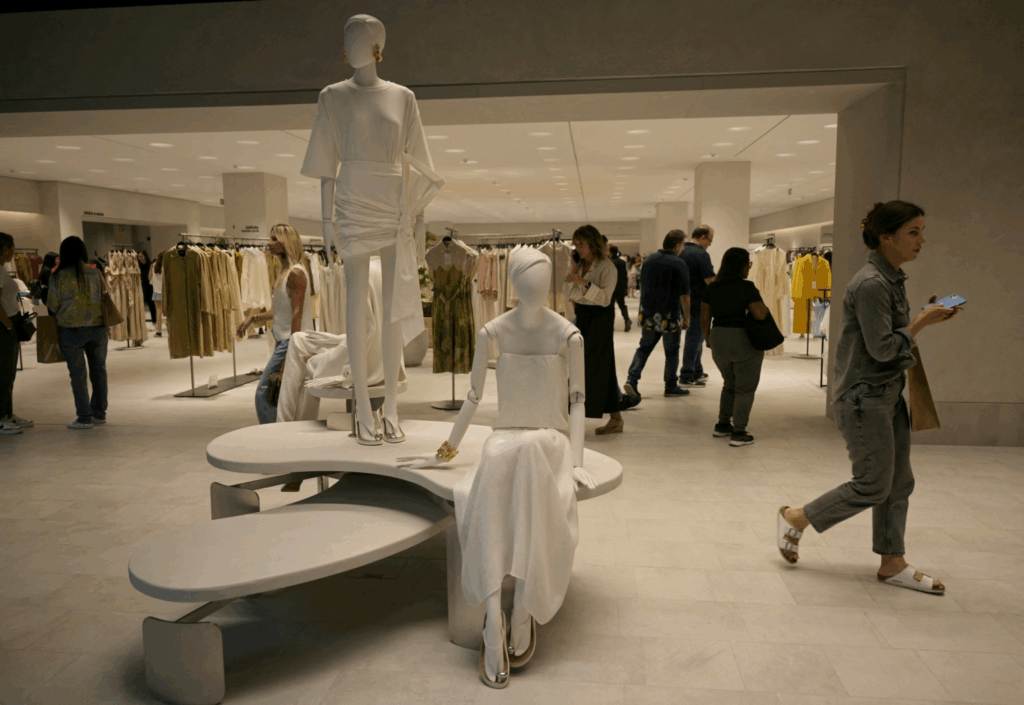
The company avoids large production runs, instead producing small, constantly refreshed batches — limiting overstock, creating scarcity, and allowing color and design changes within weeks. The system behaves like a living organism — responsive, adaptive, alive — and that’s why it’s nearly impossible to copy.
Beyond Big Data
Our era worships data. But Zara has proven that Big Data alone isn’t enough. What’s needed is the human eye — the intuition to read subtle signals that no dashboard can capture.
This is the essence of Zara’s culture: the marriage of technology and human observation. It doesn’t undervalue data, but it knows that numbers without interpretation are meaningless.
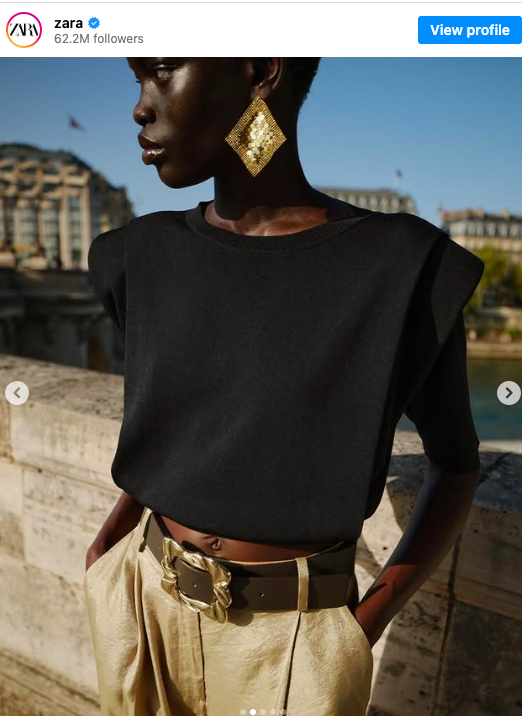
Unlike other fashion giants, Zara has never relied on flashy campaigns or celebrity ambassadors. Its brand is almost neutral — a blank canvas customers can fill with their own personality and style.
This strategy is reinforced by its flagship stores in major city centers, with minimalist, luxury-inspired design. Zara manages to balance affordability and sophistication, creating an irresistible mix.
Why the Imitators Failed
Many have tried to copy Zara’s model. H&M sped up production but ended up with piles of unsold inventory. Uniqlo focused on timeless basics but failed to create the sense of urgency Zara generates.
The lesson is clear: you can’t copy an ecosystem piece by piece. Zara isn’t just a process — it’s a culture, a philosophy, a living system built over decades.

The era is changing. Pressure for sustainable fashion and transparency is growing. Zara knows this — and has already begun investing in eco-friendly materials, predictive digital tools, and low-impact production methods.
The challenge is to keep its competitive edge without losing its immediacy. Judging from its history, Zara has shown time and again that it can adapt better than anyone.
Its secret is simple — but hard to master:
See the customer not just as a consumer, but as a co-creator.
And that’s the lesson every business can learn: listen to your customers.
Ask me anything
Explore related questions