




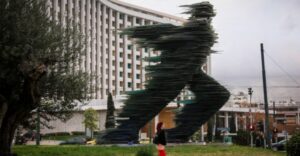
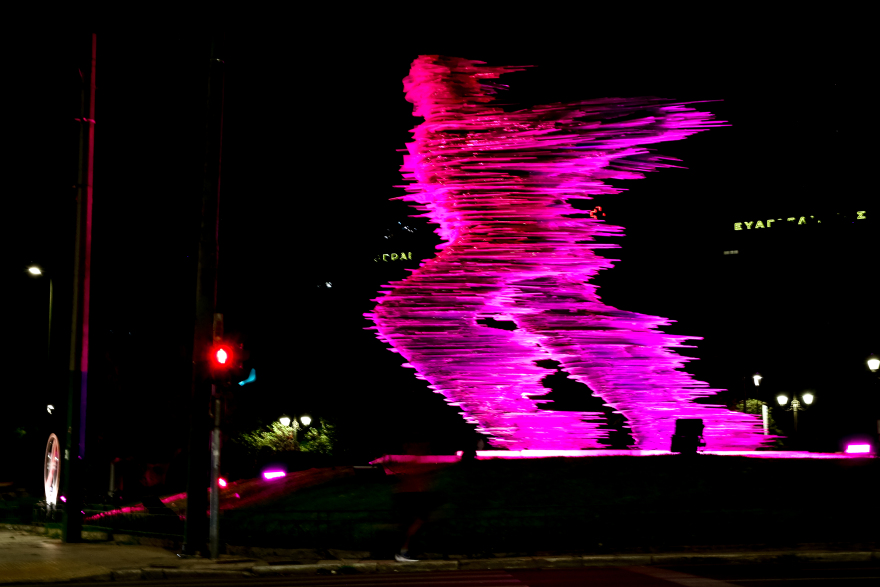
One of the most recognizable spots in modern Athens, Kostas Varotsos’ “Dromeas”, has returned to the spotlight in recent days, as the Municipality of Athens, in collaboration with a well-known equipment company, completed its scheduled cleaning. The work took place last weekend in the Great Hall Square, reminding many that the impressive glass sculpture, in addition to being an artistic landmark, is also a project that requires systematic care.
This opportunity brought back to the forefront the story of a work that, from 1988 to the present day, has experienced movements, disapprovals, heated debates, and deep acceptance by the city’s residents.
The “Runner” march began in August 1988 in Omonoia Square. At that time, the work was created by Kosta Varotsos and placed on top of the pyramidal fountain that existed at the site, as part of the artistic action “Dromena” organized by the Municipality of Athens during the mayoralty of Miltiadis Evert, on the initiative of the deputy mayor of Cultural Affairs, Stavros Xarchakos. It was a work made of glass sheets and an iron frame with a total height of eight meters – an aesthetic choice that differed drastically from what the Athenians of the time were used to.
Why they called him “Stranger”
Despite the acceptance it was gradually gaining, the “Runner” or, as it was originally called, the “Xenos“, also generated a good deal of debate. Its modern style, the almost fleeting movement created by the layers of glass, and its imposing presence divided public opinion. Some Athenians found it open for the time, while the artist was viciously criticized by his colleagues and even personally attacked for being politically identified with the right. At the same time, many were those who saw in it a new symbol of the city, a “passerby” of everyday life, a figure that comes and goes, like a ghost in the perpetual movement of Omonia.
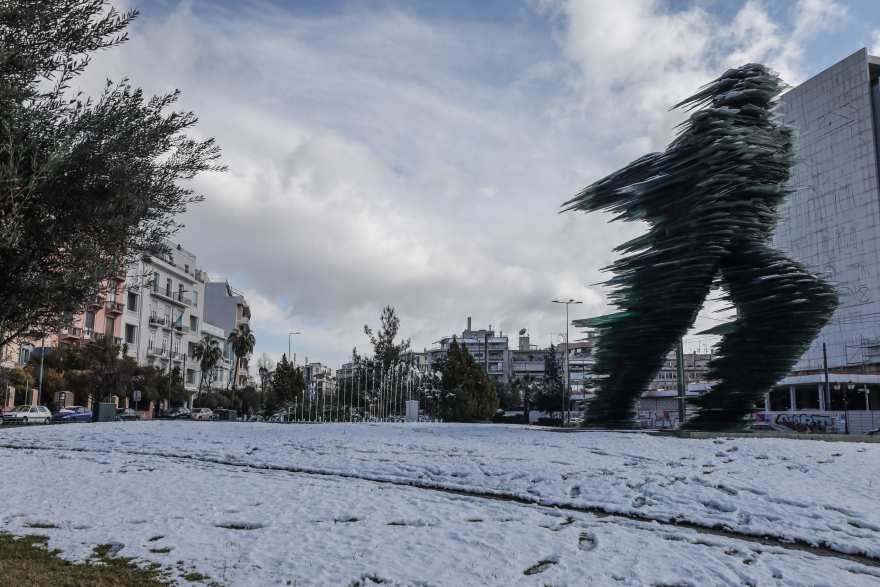
A constant presence, a spectator of the city, a constant presence in the city’s everyday life.
The name “Xenos” reflected this very original conception: an anonymous, fast traveler in the urban landscape. However, it was the residents themselves who gave it its current identity. The sculpture’s dynamic stance and the impression of speed it creates led to the universally adopted name “Traveler,” which eventually prevailed and established the work in collective memory.
His steady presence in Omonia did not last forever. In 1993, due to the construction of the metro station, the statue was destroyed. A year later, in May 1994, Varotsos recreated it from scratch. The new installation site was the Grand Genius School Square, opposite the Hilton, at the junction of Vasilissis Sophia Avenue and King Constantine Avenue, where it remains to this day.
The most recent moment of public debate surrounding the project occurred in 2019, when, as part of the Prespes agreement, then-Culture Minister Myrsini Zorba proposed its transfer to Skopia, according to Varotsos. The artist rejected the proposal, making it clear that The Runner belongs to Athens and to the place where it is now identified with the gaze of its inhabitants. It should be noted that the then Minister of Culture had denied the news, calling it unfounded.
Today, more than three decades after its first appearance, the sculpture continues to be a constant point of reference for those moving through the centre of the city. Its recent cleaning reminds us that it is a living work, exposed to time, traffic, and weather – and at the same time a piece of contemporary Athenian identity, still in conversation with the generations who observe it every day.
Ask me anything
Explore related questions