




Politico’s annual ranking of the 28 most powerful people in European politics places U.S. President Donald Trump in first place, recognizing him as the person with the greatest influence “in or on Europe” for 2025, while the magazine also includes a separate list of “10 people to watch.”
In its introduction, Politico describes Europe’s relationship with Trump as a constant diplomatic exercise, questioning whether he is a “partner,” a “threat,” or mainly a force reshaping the continent’s relationship with him on his own terms.
It underscores that Europe is confronted with an “unpredictable, dominant partner” whose impulses can overturn the European landscape “overnight.” As this year’s list was being compiled, the outlet concludes that “no one has exerted more influence” on Europe this year than the U.S. president.

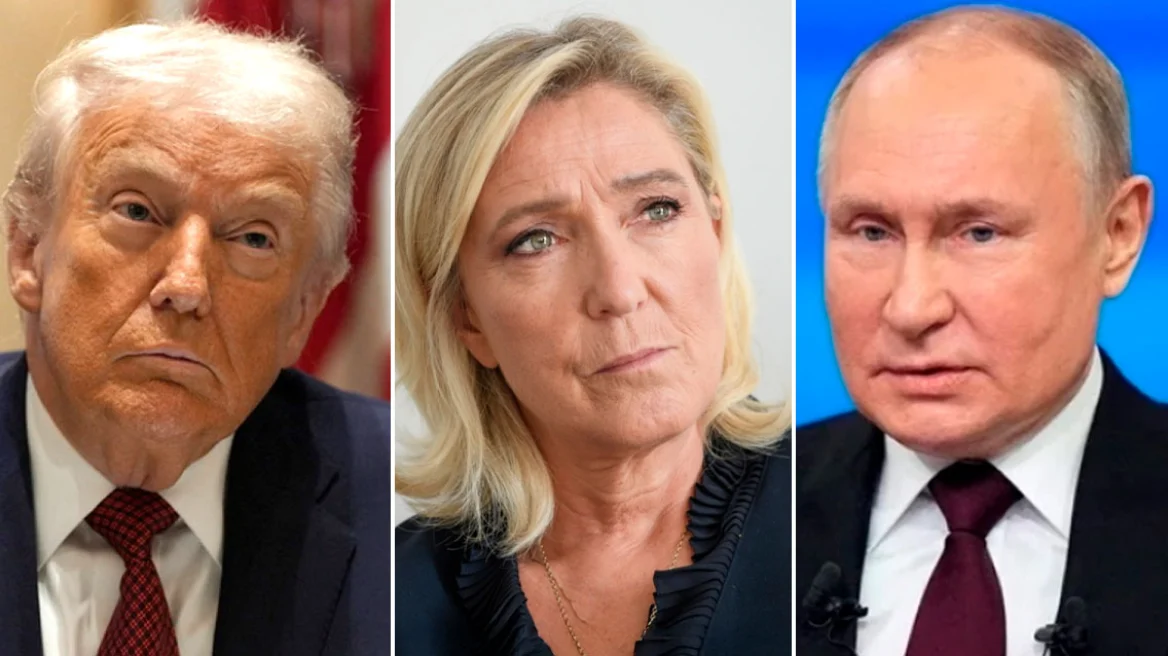
In the main ranking of the 28 figures, Donald Trump holds the top spot, followed by Danish Prime Minister Mette Frederiksen and German Chancellor Friedrich Merz. Marine Le Pen and Vladimir Putin also appear in the top five.
The “class of 28” includes heads of state, leaders of European institutions, politicians from across the Atlantic, as well as economic and sports figures whom Politico considers crucial to shaping the European landscape.
Continuing down the list are Nigel Farage, leader of the UK Independence Party; European Commission President Ursula von der Leyen; NATO Secretary-General Mark Rutte; Italian Prime Minister Giorgia Meloni; and UK Prime Minister Keir Starmer.

The list goes on with Manfred Weber, former head of the European People’s Party; Hungarian Prime Minister Viktor Orbán; Finnish President Alexander Stubb; and Ukrainian President Volodymyr Zelensky. It also includes French economist Gabriel Zucman; Kaja Kallas as the EU’s chief diplomat; and European Commission Vice President Teresa Ribera.
In the economic and institutional sphere, Politico ranks Swedish billionaire and Spotify co-founder Daniel Ek, French President Emmanuel Macron, and Mario Draghi, former Italian prime minister and former ECB president. They are followed by Czech Prime Minister Andrej Babiš; Alexis Grinkevich, commander of U.S. forces in Europe; and Polish President Karol Nawrocki.
Also included are Heidi Reichinnek of Germany’s Left Party; UniCredit CEO Andrea Orcel; Rima Hassan of the Left group in the European Parliament; Dutch election winner Rob Jetten; and FIFA President Gianni Infantino.
Alongside the main ranking, Politico also presents its “10 to watch” list—ten individuals it considers to offer the clearest insight into “what’s brewing in European politics.” It notes that while Europe grapples with war and pressure from “hostile superpowers,” it is easy to overlook the “slow but steady currents” reshaping the continent from within. This year’s selection focuses on figures who “upend the established system” and “lay the groundwork for tomorrow’s political landscape.”

At the top of the “10 to watch” list is German Green MEP Alexandra Geese, whom Politico describes as one of the most influential voices in digital policy in the European Parliament. She is followed by Budapest Mayor Gergely Karácsony and Data Protection Commissioner Niamh Sweeney in third place.
The ten are rounded out by Spanish economist and ECB member Pablo Hernández de Cos; European Chief Prosecutor Popi Papandreou; French MEP Sarah Naf; Semen Kryvonos, head of Ukraine’s National Anti-Corruption Bureau; Romanian MEP Siegfried Mureșan, the chief rapporteur for the EU’s long-term budget; Simon Mordue, foreign policy adviser to the European Commission; and Ulrich Siegmut, lead AfD candidate in the Saxony elections.
With these two lists, Politico seeks to capture not only the current balance of power in Europe but also the individuals who—whether in institutional positions or more specialized roles—are expected to shape the political battles and institutional developments of the coming period.
Ask me anything
Explore related questions