




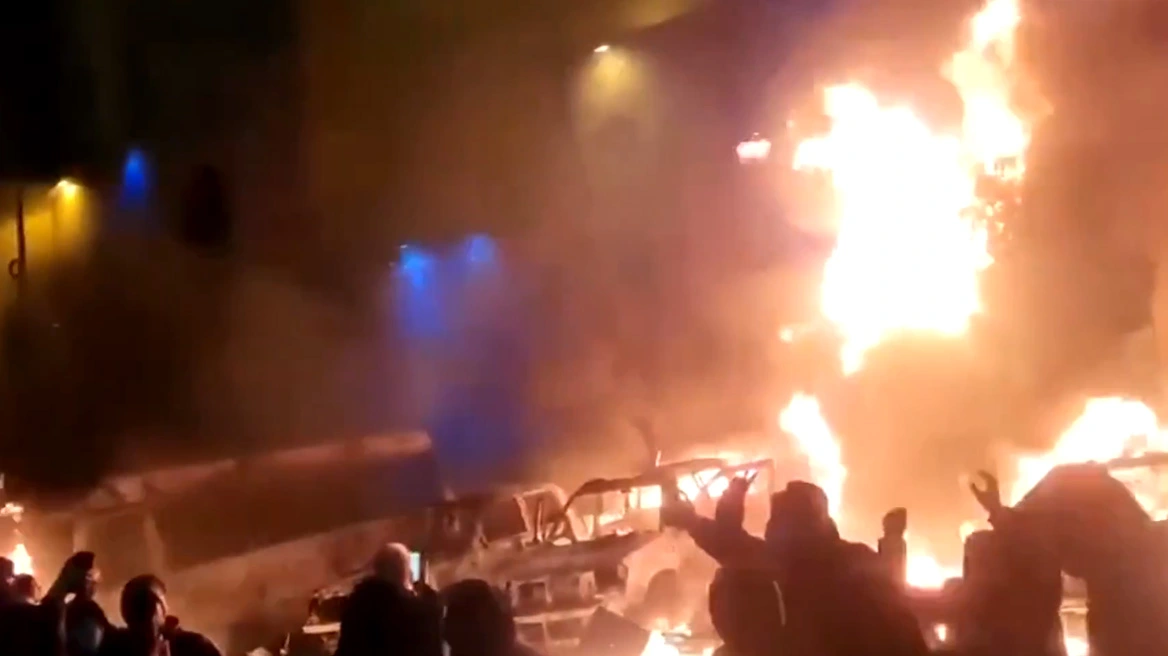
Following the significant escalation of protests in Iran over the past two days, the regime is reportedly “responding” in many areas with live ammunition. A doctor in Tehran, who spoke to TIME magazine on condition of anonymity, said that just six hospitals in the Iranian capital had recorded at least 217 protester deaths, “most of them from bullets.” If this figure is confirmed, it is clear that this is a strategy of extensive repression, which had been prepared through the almost total “blackout” of internet and telephone connections imposed on Thursday night.
The report of hundreds of deaths comes as U.S. President Donald Trump has repeatedly warned the Iranian regime that it will “pay dearly” if it kills protesters, who have been taking to the streets in growing numbers since December 28. Such a development would, according to assessments, constitute a direct provocation toward Washington, with the climate further aggravated by harsh statements broadcast by the state media of the Islamic Republic.
The protests, which have now spread to all 31 provinces of the country, began as a reaction to an economy in free fall. Very quickly, however, they took on a political character, with demands extending as far as the overthrow of the authoritarian Islamic regime that has ruled Iran since 1979, in a population of around 92 million. Although the gatherings have been described as largely peaceful, with slogans such as “Freedom” and “Death to the Dictator,” incidents of vandalism at government buildings have also been reported.
The doctor cited by TIME said that authorities removed bodies from the hospital on Friday. According to him, most of the dead were young people. He also described an incident outside a police station in northern Tehran, where, according to his testimony, security forces “fired with a machine gun” at the crowd, with protesters falling dead “on the spot.” Activists reported that at least 30 people were shot in that incident.
Human rights organizations, however, on Friday gave significantly lower death tolls than the doctor’s estimate, attributing the discrepancy to different recording criteria. The Washington-based Human Rights Activist News Agency, which counts only identified victims, reported around 63 deaths.
At the same time, Iran’s leadership and judiciary sent harsh messages yesterday to those participating in the protests. Supreme Leader Ayatollah Ali Khamenei, in a speech broadcast on Friday, said that “the Islamic Republic will not retreat in the face of vandals” who seek to “please” Trump. Meanwhile, Tehran’s prosecutor said that protesters could even face the death penalty. In a state television broadcast, an official of the Revolutionary Guards warned parents to keep their children away from the protests, saying: “If… a bullet hits you, don’t complain.”
Ali Larijani, secretary of Iran’s Supreme National Security Council, also said that the country is in the middle of a war. According to him, “the rioters constitute an urban, semi-terrorist group,” and “Israel is behind the current situation.”
Posts that began circulating on social media on Friday, combined with the regime’s blunt threats, reinforced the impression that clear orders for repression have been given. “I think that under the current conditions, since the protests have spread to middle-class areas as well, the regime will not hesitate to use brute force,” Hossein Hafezian, an Iranian political scientist based in New Jersey, told the British media. As he noted, “right now they consider what is happening an existential threat,” predicting that “from now on casualties will increase rapidly.”
In the same context, Hafezian added— in a statement reflecting the level of tension— that “if Trump hits a few riot police barracks, it could change the game.”
Ask me anything
Explore related questions