





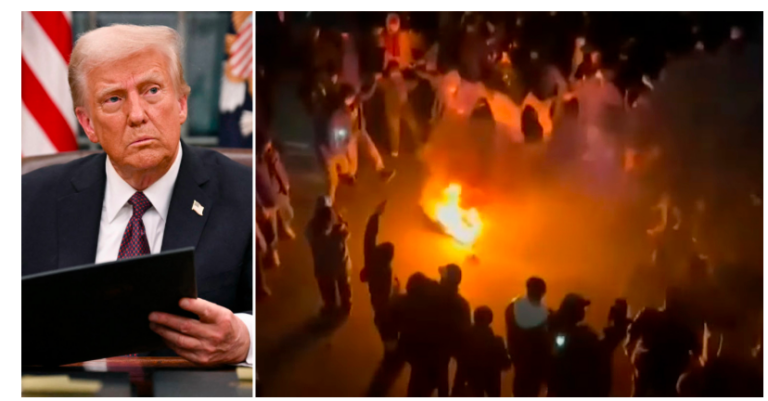
Iran is facing its deadliest wave of unrest in years, with the death toll from anti-government protests now exceeding 500, according to the U.S.-based organization Human Rights Activists News Agency, as U.S. President Donald Trump says he is considering a wide range of “very strong options” in response to the escalating crisis. The country has effectively been cut off from the outside world following internet shutdowns imposed after new, large-scale demonstrations—the most serious in three years—spread across major cities.
According to the organization, at least 544 people have been killed, a dramatic increase from the 116 deaths reported by Saturday night, while an additional 579 reported deaths are still under investigation, potentially raising the total to as many as 1,123. At the same time, more than 10,681 people have been arrested and transferred to prisons following mass roundups. Most of the victims were reportedly killed by live ammunition or shotgun pellets, often fired at close range. Iranian state television broadcast images showing dozens of body bags at Tehran’s forensic medical office, attributing the deaths to incidents caused by “armed terrorists,” while footage also showed families gathered outside the Kahrizak Forensic Medical Center waiting to identify their relatives.
Speaking to reporters on Sunday, President Trump said Iranian leaders had contacted his administration to “negotiate” after he threatened possible military action, adding that preparations for a meeting were underway but warning that the United States might need to act before any talks take place. He stated that Iran is “starting to cross red lines” set by Washington and that the U.S. military is reviewing “very strong options.” He also issued a blunt warning that any attack on American interests or bases in the region would be met with an unprecedented response. A U.S. official told Reuters that Trump is expected to meet with senior advisers on Tuesday to discuss possible courses of action.
Reza Pahlavi, son of Iran’s last shah and a prominent figure in the exiled opposition, called on Iran’s security forces to “stand with the people” rather than the government of the Islamic Republic as it attempts to crush the protests. In a message posted in Persian and English, he urged public employees, members of the armed forces, and security services to choose between supporting the nation or becoming accomplices in violence against civilians, warning that history would judge their actions. Addressing Iranians living abroad, he said that embassies and consulates belong to the Iranian people and urged them to display Iran’s former national flag associated with the pre-1979 monarchy.
Amid the unrest, Israel and Germany signed a security agreement in Jerusalem aimed at addressing threats posed by Iran and its allies, according to a statement from the office of Israeli Prime Minister Benjamin Netanyahu. The agreement reflects what Germany described as its deep commitment to Israel’s security and focuses on regional threats from Iran as well as allied groups such as Hezbollah, Hamas, and the Houthis. The text of the agreement states that Iran and its partners threaten not only Israel but also regional stability and international security. Citing Germany’s historical responsibility stemming from the Holocaust, German officials reiterated their long-standing support for Israel. Earlier, Israel’s foreign minister urged the European Union to designate Iran’s Revolutionary Guards as a terrorist organization, saying the issue is now clear to all.
As the death toll rises, arrests continue, and international tensions grow, fears are mounting that the crisis in Iran could deepen further, with severe consequences both for the country’s population and for stability across the wider region.
Ask me anything
Explore related questions


