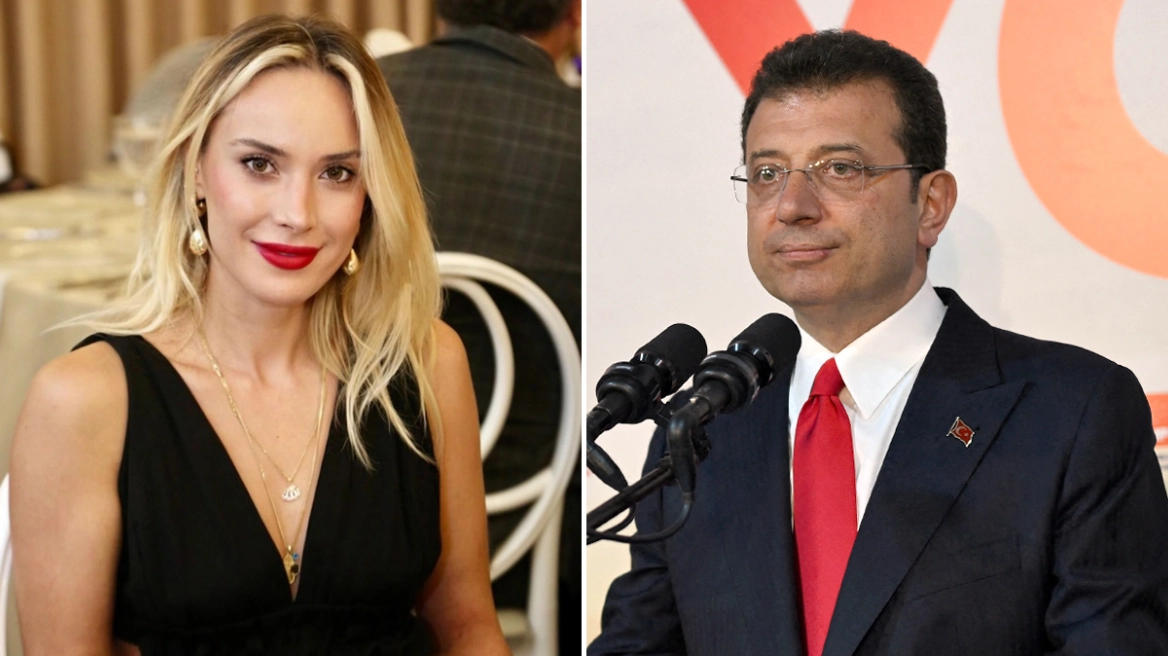
Instead of cooperating to challenge the government, opposition parties are focused on fighting among themselves for position within the opposition benches. In doing so, they avoid facing a simple political reality: the more divided the progressive camp becomes, the stronger Mitsotakis’ position grows. This is widely acknowledged across the political spectrum.
According to analysts and pollsters, the creation of new parties only deepens this fragmentation. As a result, New Democracy remains the most cohesive political force, a fact that could benefit it even more at the ballot box—especially if voter turnout drops due to frustration within the opposition.
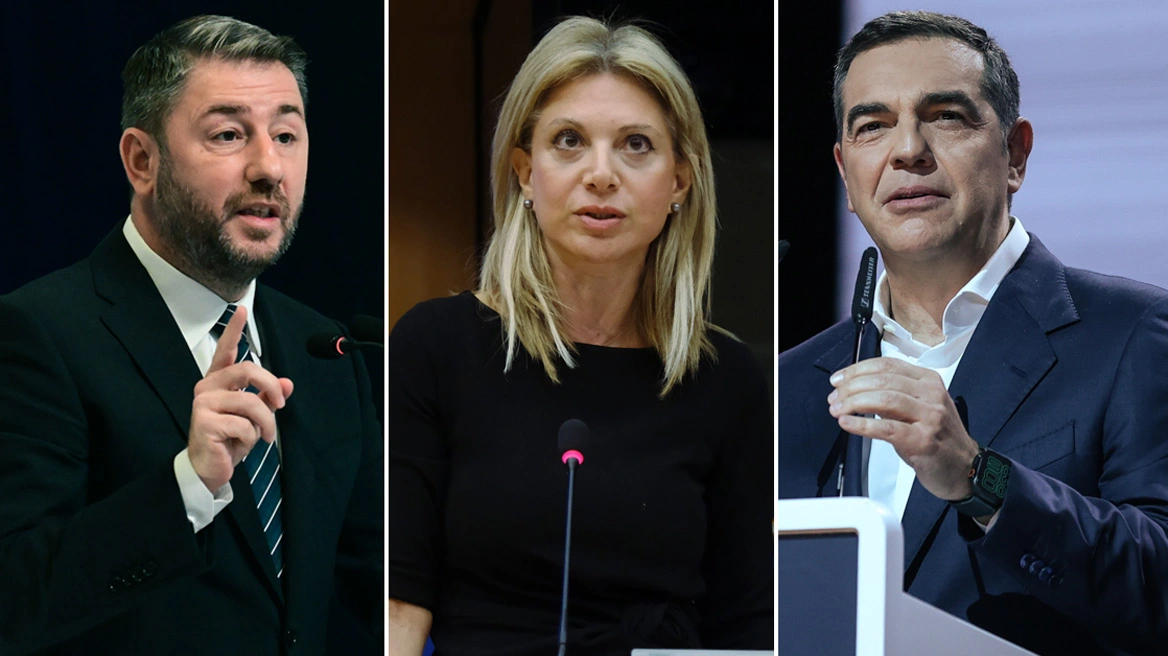
Despite this, both PASOK leader Nikos Androulakis and former prime minister Alexis Tsipras continue to pursue leadership of the opposition. However, following Maria Karystianou’s announcement that her new political party is nearly ready, the political landscape has shifted dramatically.
Polls now show that the “Karystianou party” has strong appeal across almost all voter groups, even outperforming PASOK and the prospective Tsipras party in terms of voter penetration. According to a GPO survey, significant percentages of voters from parties ranging from the left to the right say they would consider voting for Karystianou’s party.
If these trends are confirmed, Greece could see a tight three-way battle for second place, with Androulakis, Tsipras, and Karystianou all polling between 12% and 14%.
PASOK appears particularly vulnerable, as even small losses to Karystianou and Tsipras could push it further down the rankings. Meanwhile, Tsipras faces his own challenges: he struggles to fully absorb SYRIZA’s former voters and has limited appeal among anti-system voters, a group now dominated by figures such as Zoe Konstantopoulou, Kyriakos Velopoulos, and Karystianou herself.
Political observers note that Tsipras’ decision to position himself as a more “systemic” figure has cost him support among angry and protest-oriented voters. While he seems determined to move forward with forming a new party, there is a real risk that failing to secure second place could lead to political marginalization.
At the same time, Karystianou’s strategy includes directly confronting Tsipras, aiming to place him—alongside Mitsotakis and Androulakis—among the politicians rejected by anti-establishment voters. Analysts warn that if Tsipras responds directly, the main beneficiaries would likely be Mitsotakis and PASOK.
Overall, many believe the next elections may not produce a clear governing majority. If current trends continue, the ongoing internal conflict within the progressive camp could further strengthen the ruling party, leaving the opposition divided, weakened, and unable to present a credible alternative for power.
Ask me anything
Explore related questions