





Dendias: It is the most powerful frigate on the planet, tasked with safeguarding our sovereign rights
“Today is a great day for the Hellenic Navy and the Armed Forces, and a great day for our homeland as well. The frigate Kimon is sailing in Greek waters, in the waters of the Aegean,” said the Minister of National Defense, Nikos Dendias, in his opening remarks.
“I would like to say, without any exaggeration, that this frigate is the most powerful on the planet. It is a weapon that will strengthen the Armed Forces in their core mission: deterring any aggression and ensuring every aspect of security for Greek society, Greek citizens, and our homeland,” he added.
“Its mission is to safeguard our sovereignty and our sovereign rights. That is its role.”
“We are witnessing today the transition to a new era. With the 2030 Agenda, the Armed Forces are being transformed from a collection of weapons systems into a knowledge-based force—capable of processing information and addressing threats thoroughly.”
“We are creating the ability for modern data processing and rapid response to any challenge, through platforms such as Kimon, integrated into a unified, holistic defense framework. Greece—and every Greek citizen—can feel safer. Through the sacrifices of its people, the Armed Forces are entering the 21st century with steady and confident steps.”
Mitsotakis: A duty to hand over a safer homeland than the one I inherited
“We have spoken at length about the operational capabilities of this ultra-modern vessel, but it also represents another link in the ongoing effort to modernize the Armed Forces, both in terms of equipment and personnel. In this way, our country’s deterrent capacity is not questioned by anyone, and Greece projects its strength as a pillar of stability and credibility in the Eastern Mediterranean with ever greater effectiveness.
It is the duty of every government—and personally, as prime minister—to hand over a homeland that is safer than the one I inherited. Fair winds to Kimon, and may we soon welcome the rest of the ultra-modern Belharra frigates as well.”
Greek President and Prime Minister Exchange Gifts with Frigate Commander During Historic Ceremony
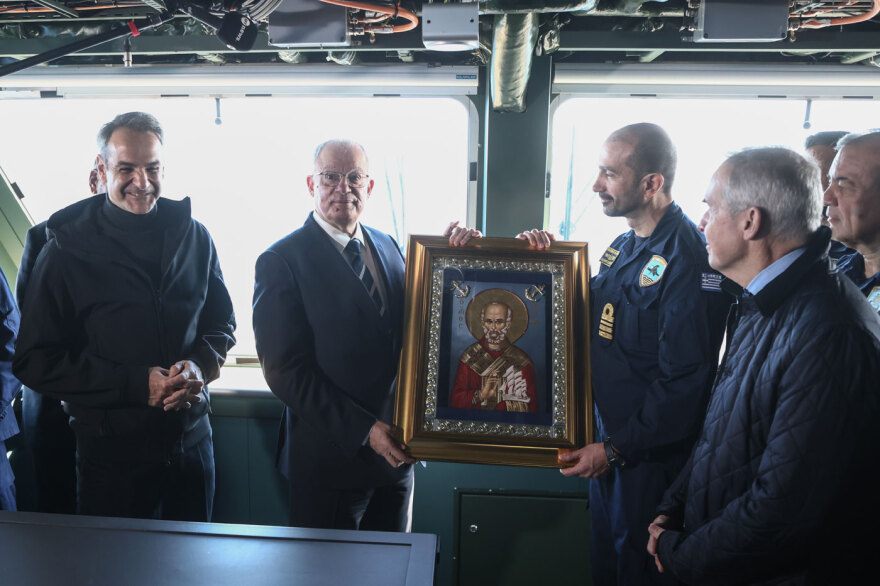
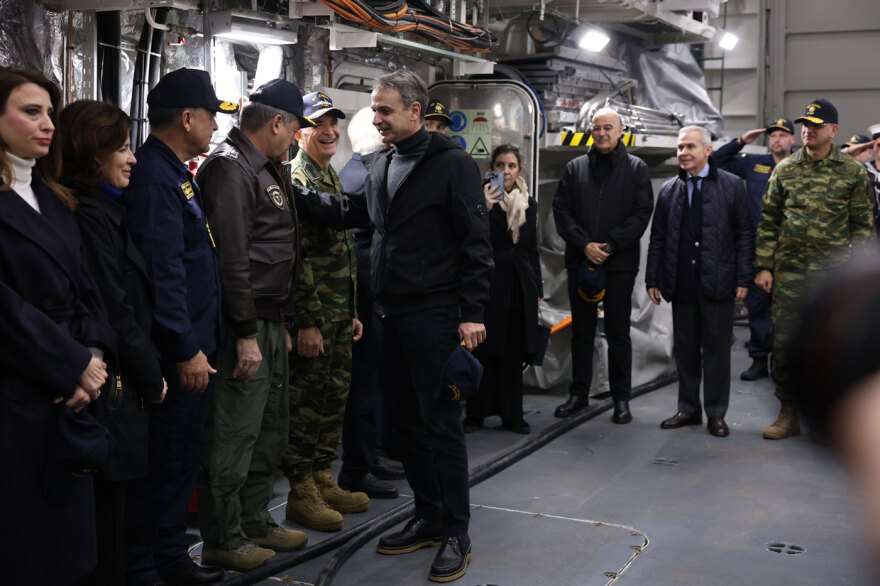
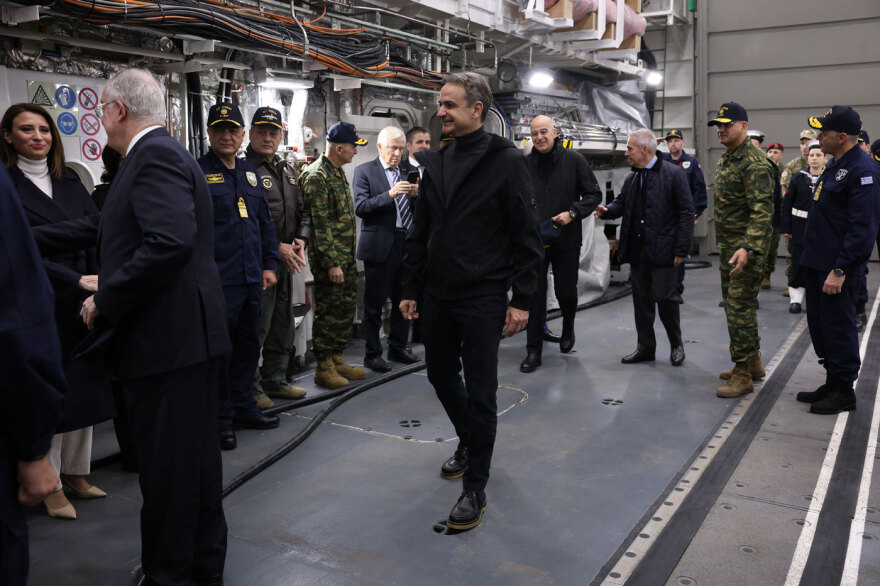
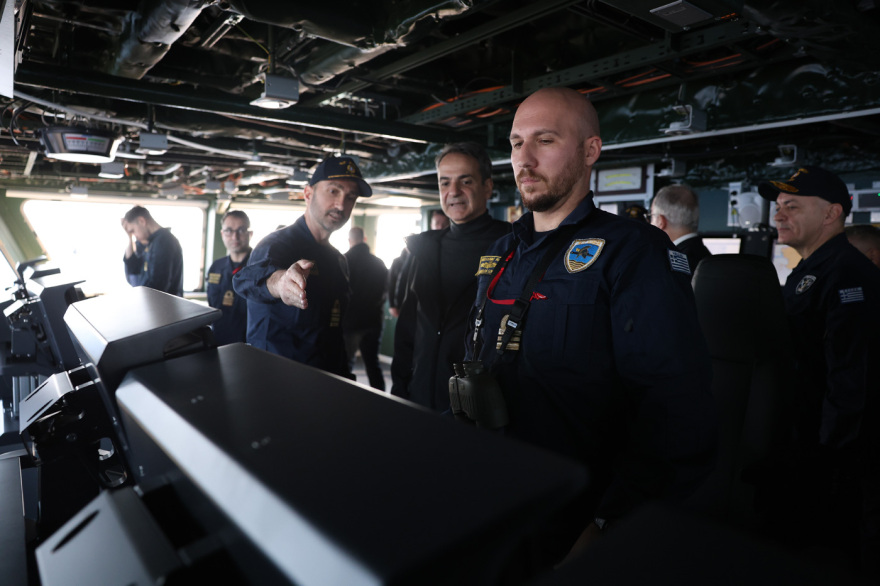
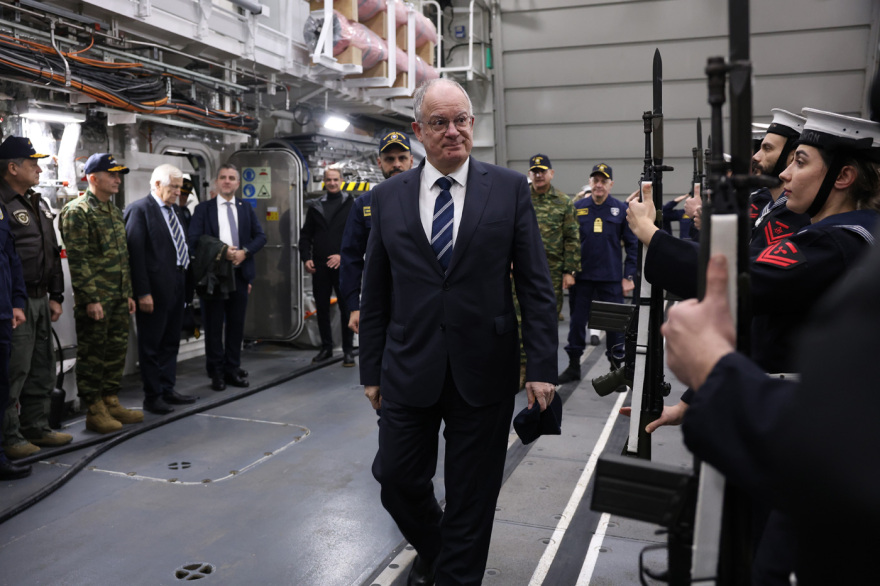
On January 15, 2026, President of the Hellenic Republic Konstantinos Tasoulas and Prime Minister Kyriakos Mitsotakis exchanged gifts with Commander Ioannis Kizanis and the officers of the new frigate Kimon.
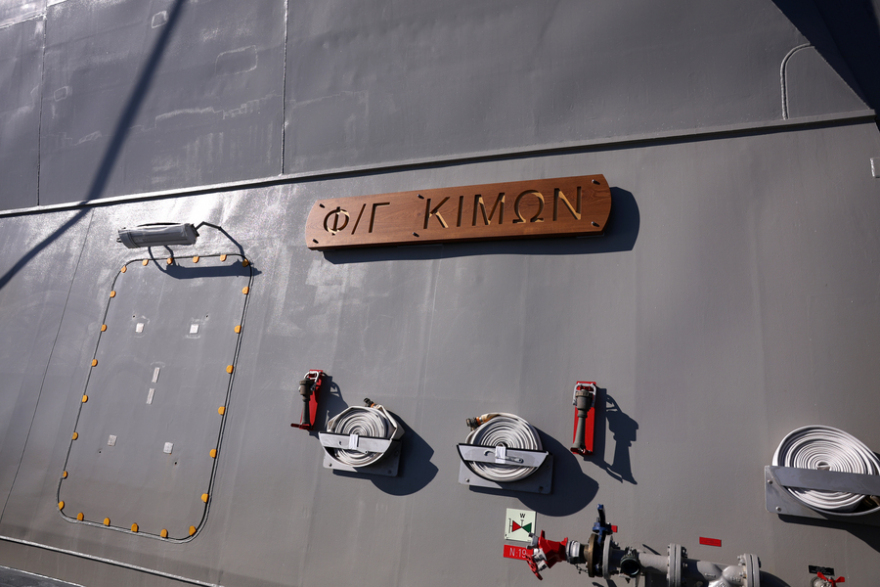
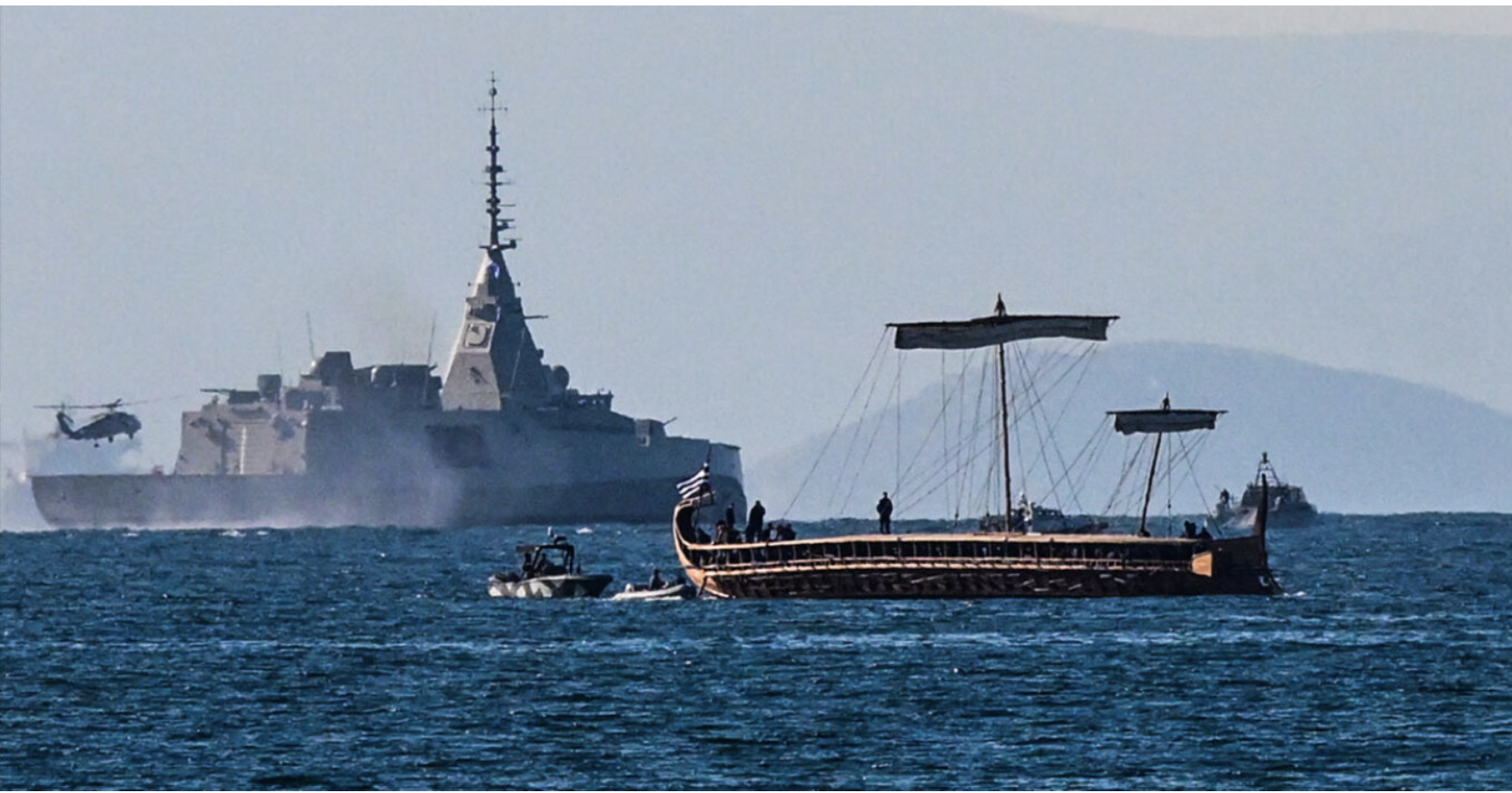
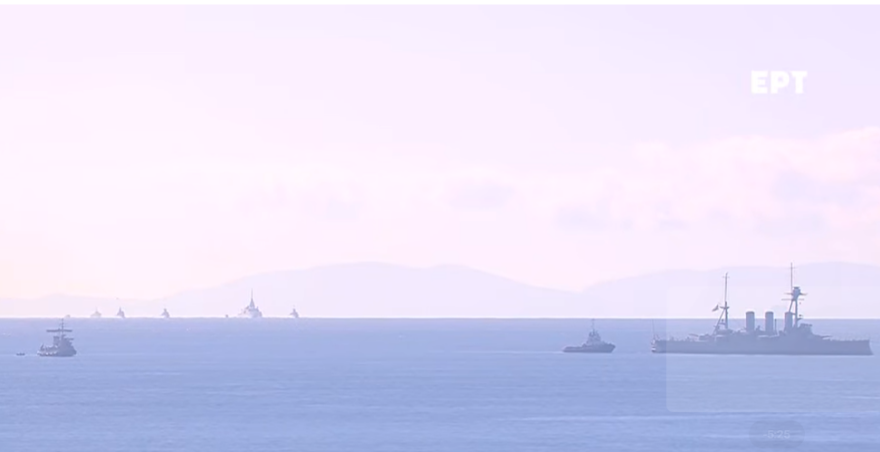
The event marked a historic moment as the Kimon sailed past the iconic Greek Navy ships, the battleship Averof and the trireme Olympias. As the frigate passed, it fired its guns at a salute, while the Averof’s crew stood still in respect. Naval cadets were present aboard the Olympias during the ceremony.
The political and state leadership witnessed this significant naval tradition, symbolizing the continuity and pride of the Greek Navy.
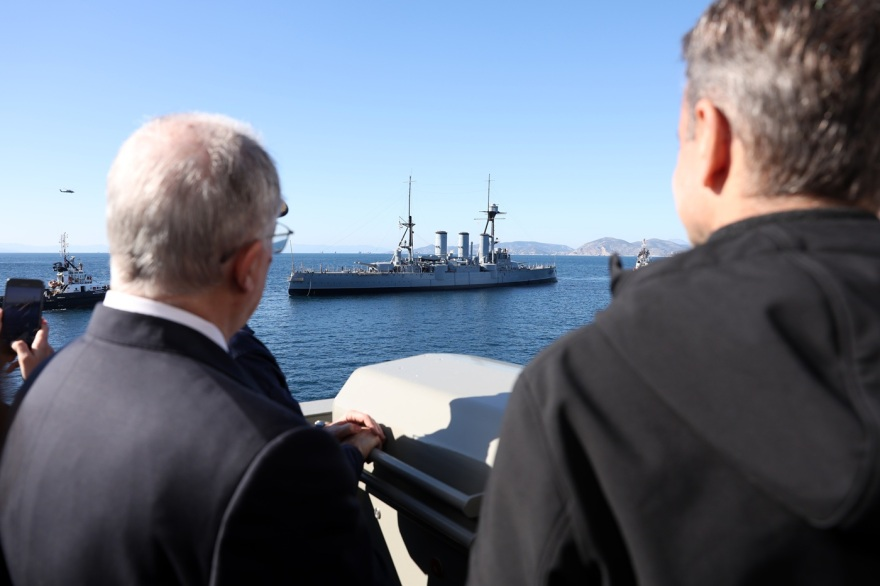
Frigate Kimon Arrives in Greek Waters: A New Era for the Hellenic Navy
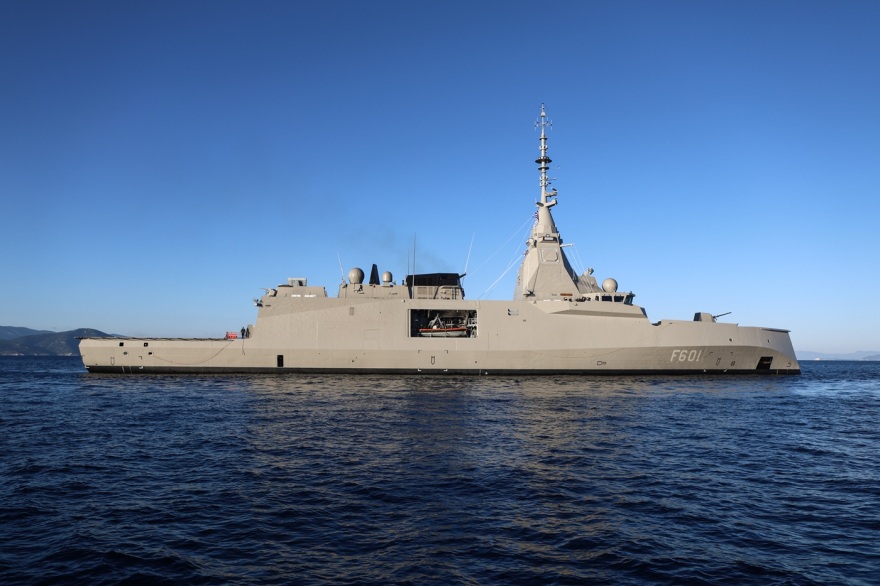
The first Belharra-class frigate of the Hellenic Navy, Kimon, has sailed into the Saronic Gulf, marking a historic moment for Greece’s naval forces. This is the first addition of a new frigate to the Greek fleet in 28 years, signaling a major upgrade in the country’s maritime defense capabilities.
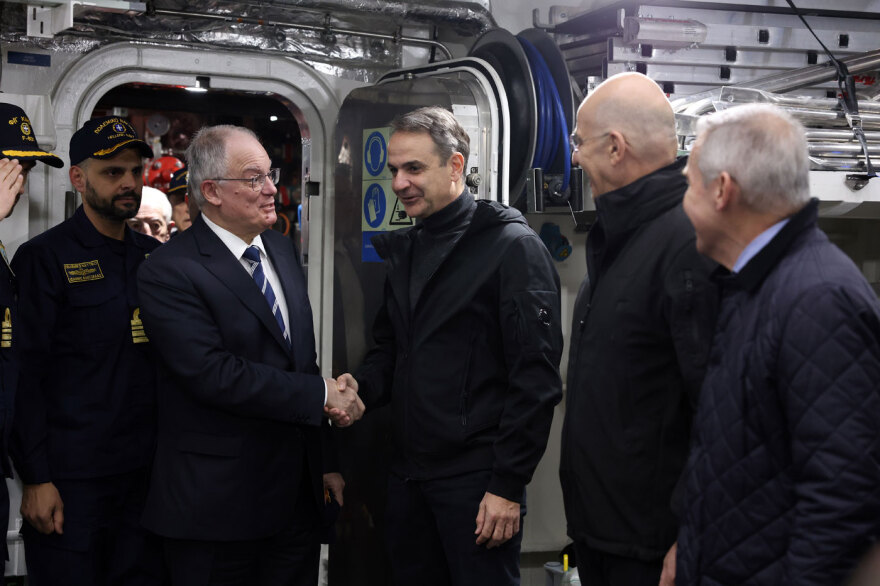

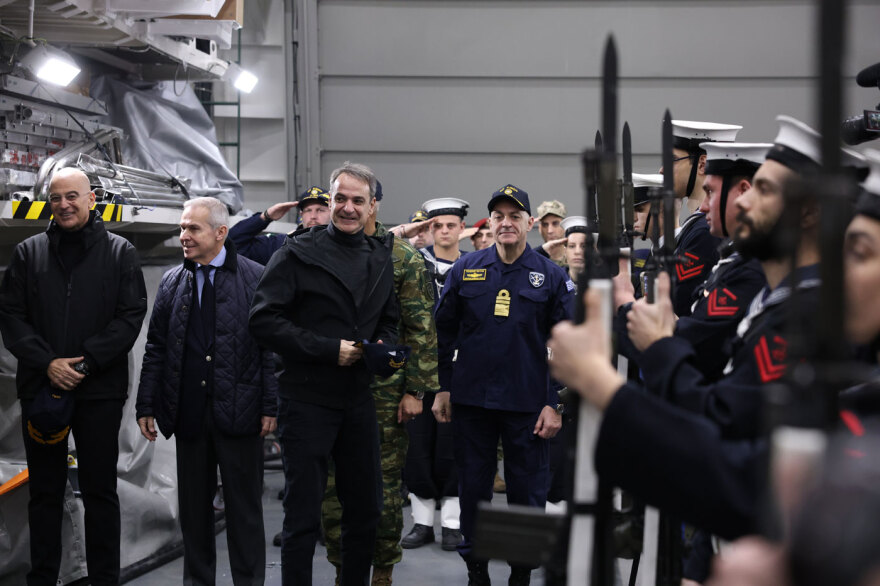
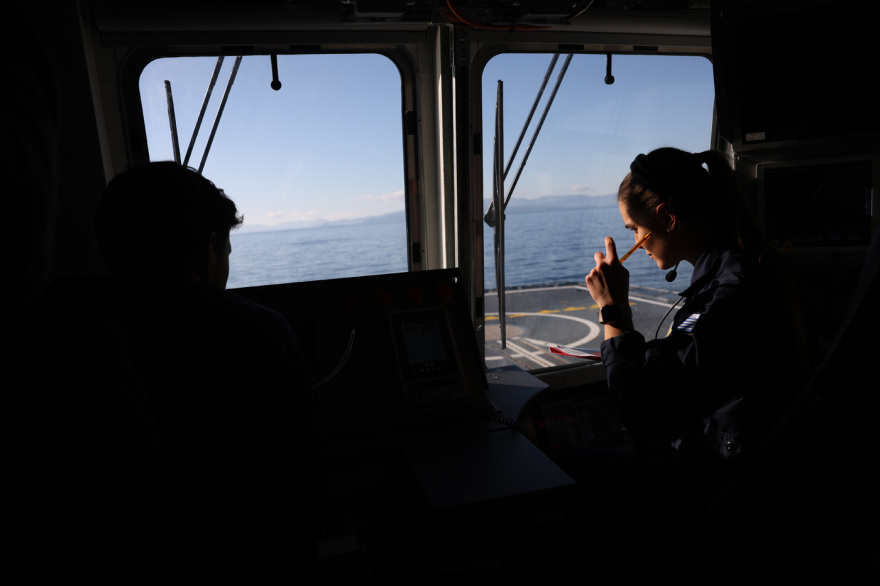
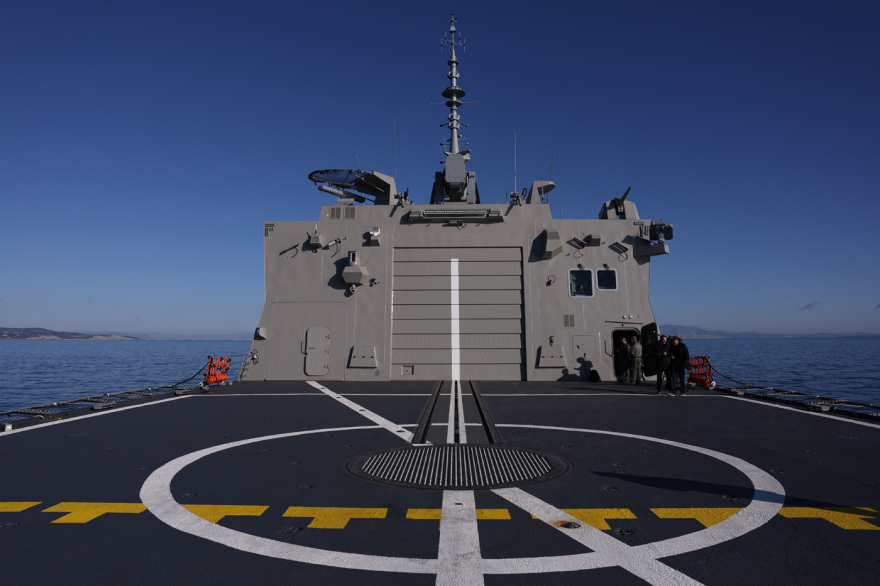
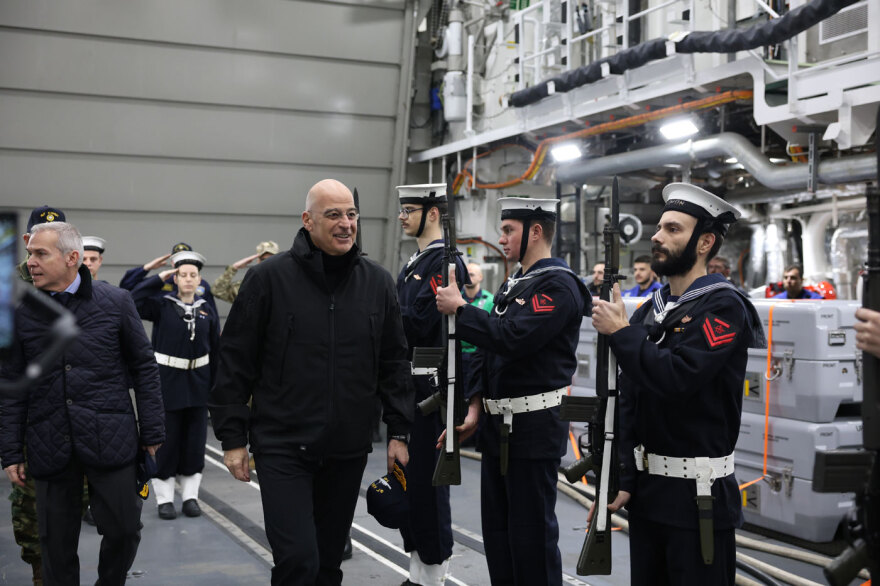
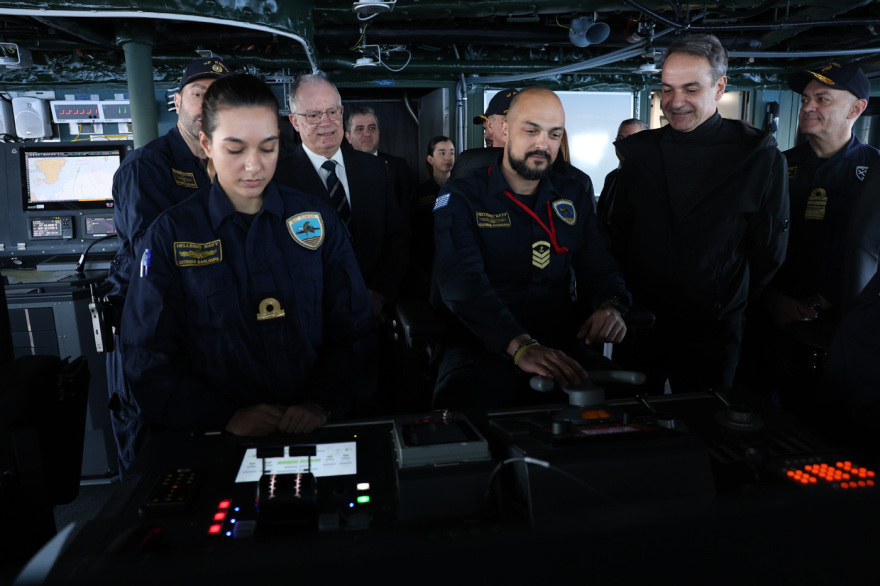
Onboard the frigate for the arrival ceremony were some of Greece’s highest officials: President Konstantinos Tasoulas, Prime Minister Kyriakos Mitsotakis, and Minister of National Defense Nikos Dendias. Their presence underlined the importance of this milestone for the nation.
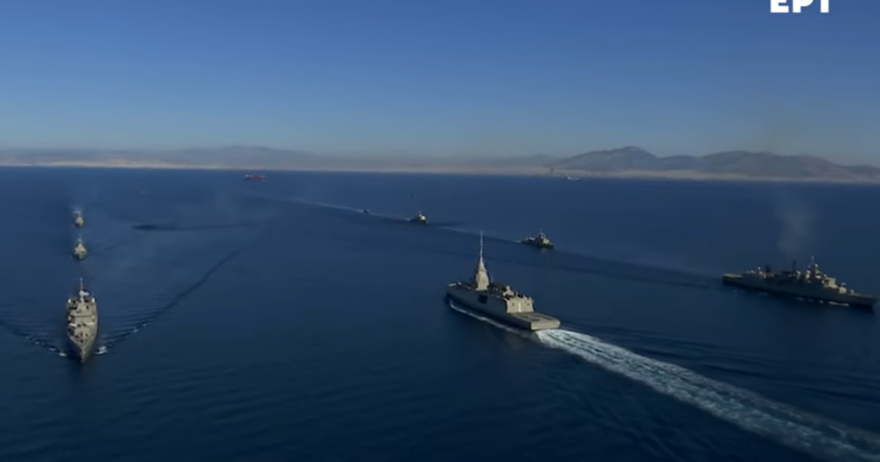
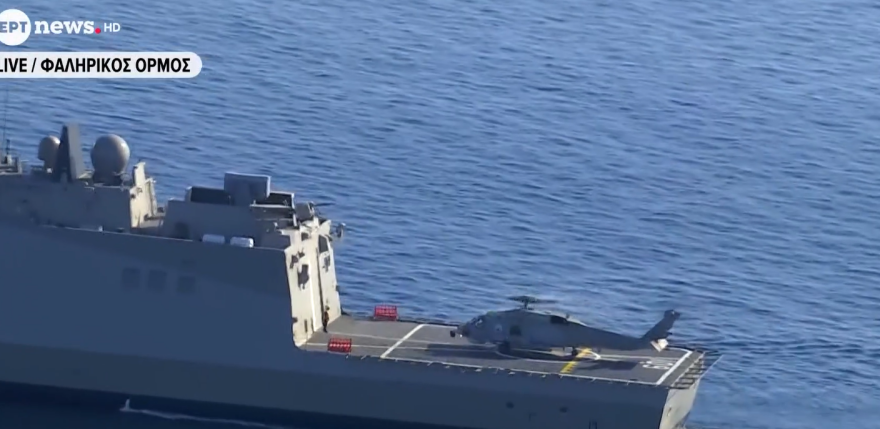
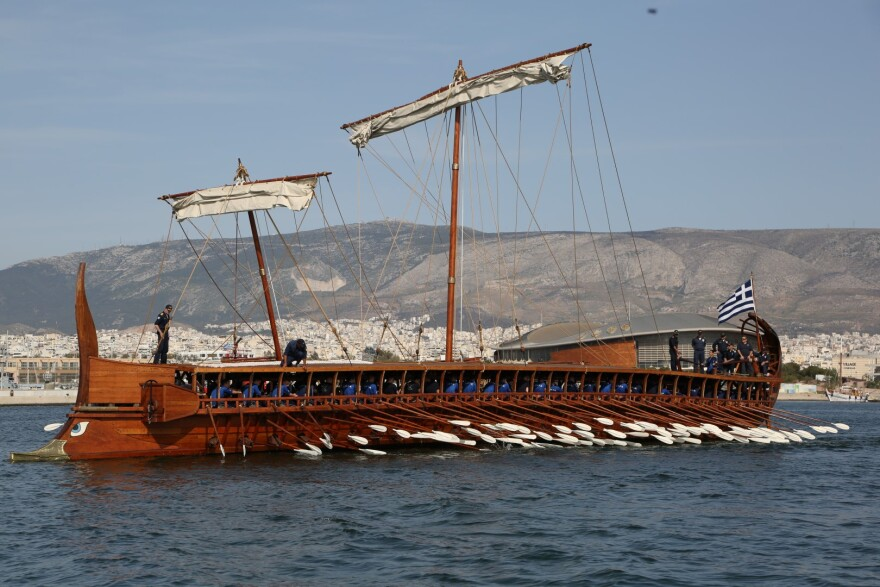
The Kimon was warmly welcomed by two iconic vessels of the Hellenic Navy—the historic battleship Averoff and the ancient trireme Olympias—highlighting the connection between Greece’s rich naval heritage and its modern defense advancements.
Next Steps for the Fleet
The arrival of the Kimon is just the beginning. By the end of this year, two more frigates, Nearchos and Formion, are expected to join the fleet. The current shipbuilding program, known as FDI HN, will culminate in 2028 with the addition of the fourth frigate, Themistoklis, completing the modernization of Greece’s naval power.
Advanced Capabilities of Frigate Kimon
The Kimon is designed to withstand modern saturation attacks involving multiple missiles or drones—tactics intended to overwhelm ship defenses. Its advanced systems can simultaneously engage multiple targets, making attacks extremely costly and difficult for any adversary.
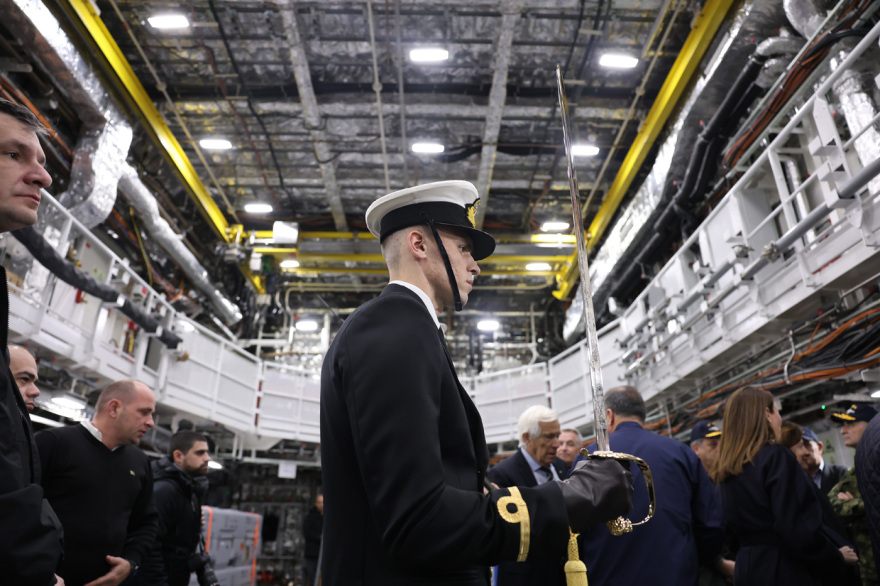
Adding to its cutting-edge technology, the frigate will soon be equipped with the Greek-developed anti-drone system Kentavros, further enhancing its defensive capabilities against unmanned aerial threats.
This arrival represents not only a significant boost to Greece’s naval strength but also a clear signal of the country’s commitment to maintaining security and stability in the region with modern, highly capable forces.
The Advantages of the Frigate Kimon: Greece’s New Naval Powerhouse
Greece’s newest frigate, Kimon, represents a major leap forward in the capabilities of the Hellenic Navy. Designed to withstand modern threats, the Kimon is built to handle intense saturation attacks involving multiple missiles or drones simultaneously — scenarios meant to overwhelm naval defenses. Unlike many ships, Kimon is specifically engineered to engage numerous targets at once, dramatically increasing the cost of any attack for an adversary.

Advanced Weaponry and Sensor Systems
The Kimon began its journey from Brest, France, where it was outfitted with powerful armaments. Its superior sensor suite includes the SeaFire 500 radar and AESA radar systems, which give the frigate the ability to monitor airspace nearly 500 kilometers away and simultaneously track over 80 active targets. These features provide the Kimon with a distinct operational edge in modern naval warfare.
Historic Welcome and Symbolism
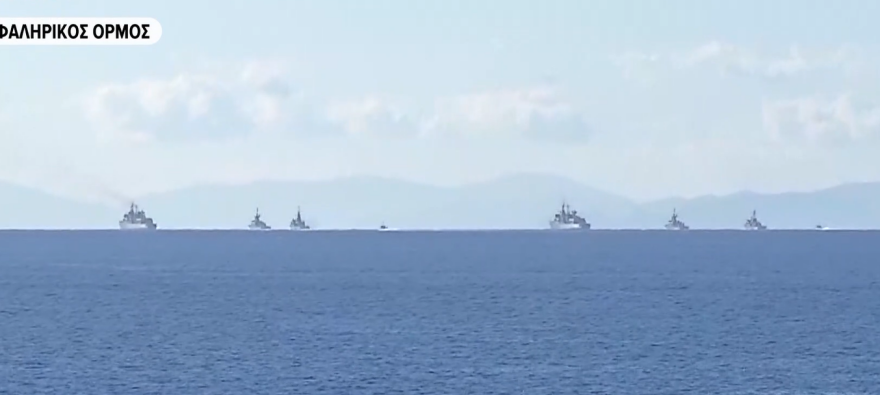
The frigate’s arrival in Greek waters has been marked by an impressive ceremony. Six vessels of the Hellenic Navy have taken formation to welcome the Kimon, including the historically significant battleship Averoff and the famous trireme Olympias.
What links these three ships is their unique design: all feature an inverted bow, a rare naval architecture trait that challenges traditional shipbuilding but offers notable advantages to their owners. This symbolic procession underscores Greece’s naval heritage while highlighting its transition to cutting-edge maritime defense.
Key Moments from the Arrival
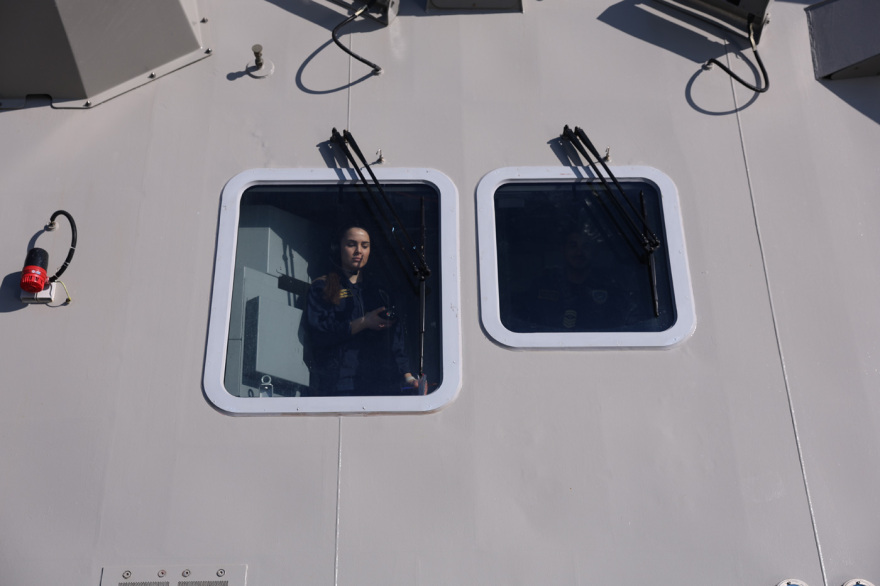
The arrival of the frigate Kimon marks a proud moment for the Greek Navy and the nation, symbolizing strength, tradition, and a leap toward advanced naval defense.
This morning is of historic importance for Greece. It is the morning when the new frigate “Kimon” enters the naval station. At her reception, earlier, as she sails in the Saronic Gulf, two warships stand out with which the frigate Belhara has a “family” relationship due to a unique characteristic they bear: the battleship Averoff and the trireme Olympias.
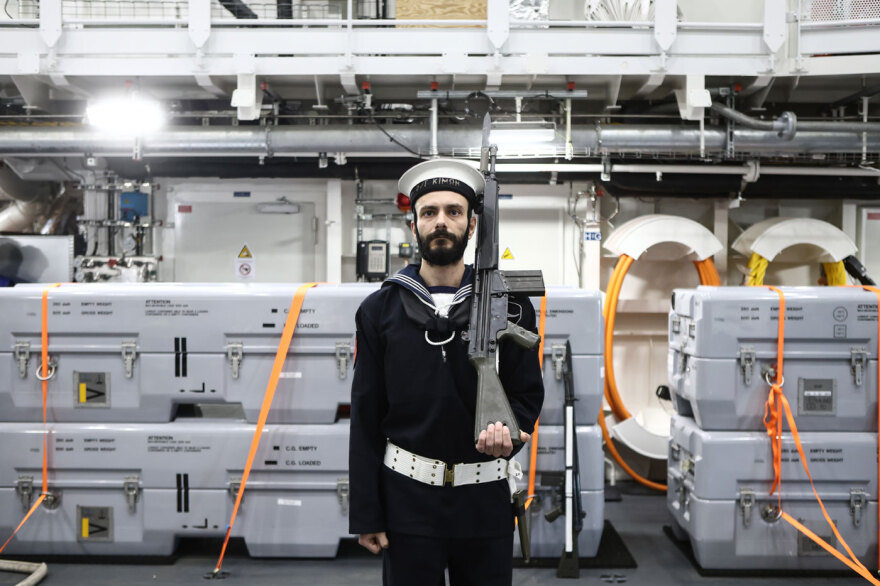
What is it that connects these three ships?
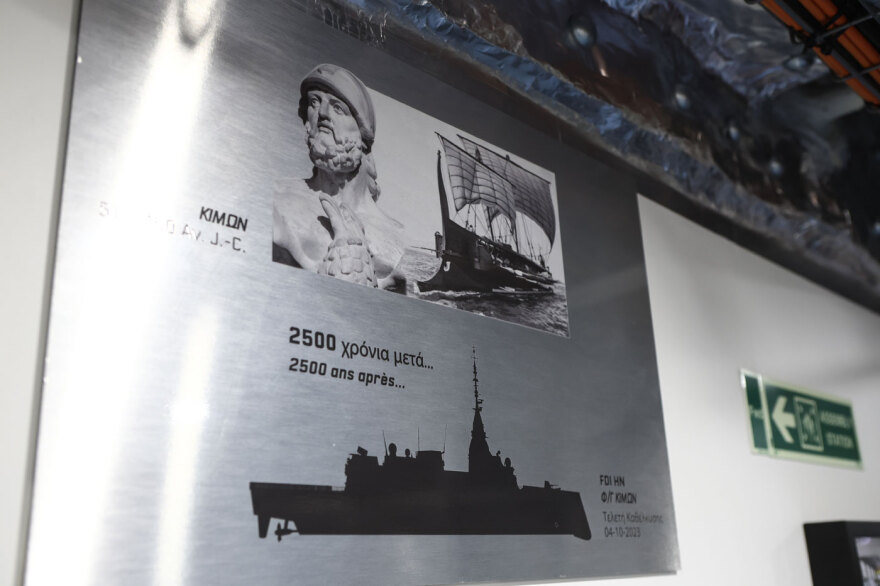
They are the three historic reversing bow ships of the Navy. The three unique ships of the Navy have a bow that is inverted compared to the vast majority of ships. This choice is a shipbuilding challenge, which, when achieved, gives spectacular assets to the owner.
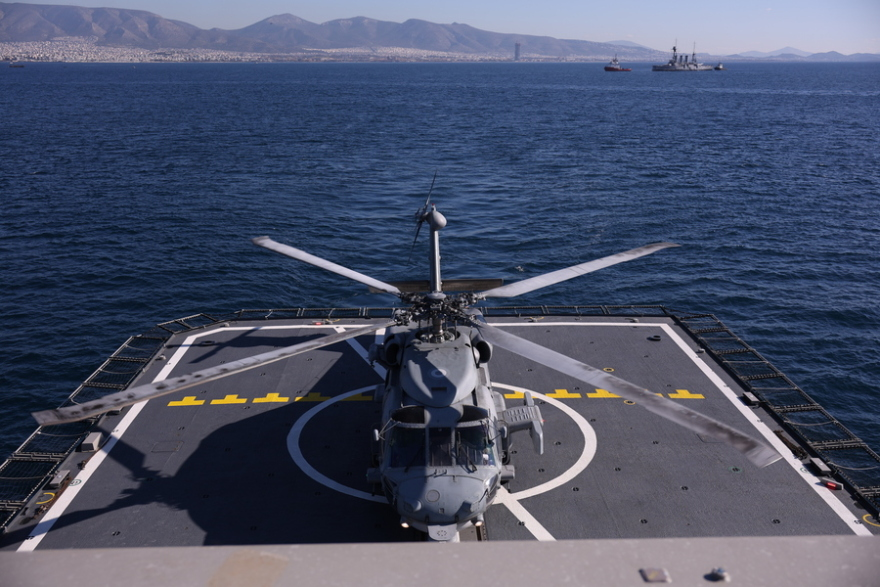
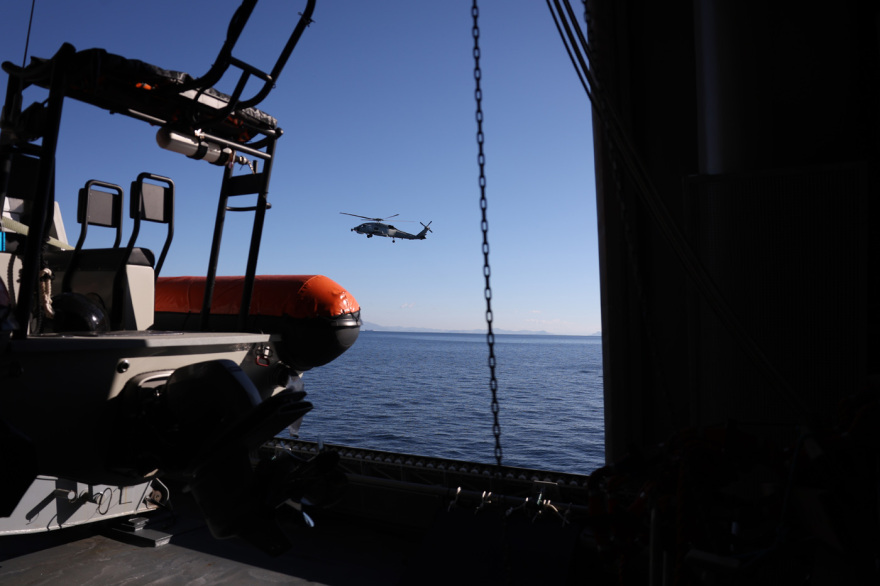
Shortly after 11, the “Kimon”, continuing her journey from Lorian, France (the Naval shipyard, from where she left), the Naval Station of Brest (where she received her armament and got certifications) will pass through the Saronic Gulf and the Prime Minister, Kyriakos Mitsotakis and the Minister of National Defence Nikos Dendias will arrive at her deck by helicopter.
Next to her, the “lucky uncle George”, as their crews called the battleship Averoff and the trireme Olympias, along with other ships of our Navy, will proudly sail alongside her. In fact, in the Saronic Gulf, three generations of dominant ships of the Mediterranean will sail for the first time. The choice of the “Averoff” and “Olympias” to accompany the frigate “Kimon” during her solemn reception -presentation of the country’s political leadership- in Greek waters and at the Naval Station is anything but accidental.
The ships of victory
It has been 74 years – since 1952, the year the battleship Averoff was decommissioned – since the Greek Navy last used a ship with an inverted bow to assert its dominance in the Aegean and the wider Mediterranean region. The first time was with the triremes, when the Greek navy used the masterpiece of ancient Greek shipbuilding to dominate the Mediterranean Sea for more than three hundred years (7th to 4th century BC), culminating in the Battle of Salamis. It was then (480 BC), when Themistocles, prompted by the oracle of the Oracle of Delphi, that “the wooden walls will save Athens,” used 350 triremes to trap the 1200 ships of the Persian fleet in the straits of Salamis, destroying them, saving Athens, Greece, and Europe from Persian domination.
The inverted bow was used extensively in ancient Greek triremes, which had a sharply forward-sloping bow with a low profile. The ancient Greeks made the bow thin, sharp, and designed it to cut through the waves, reducing water resistance and maintaining speed and maneuverability even in heavy waves.
The aim that was achieved was that the ship should be able to catch and maintain high speeds regardless of the weather, and also remain stable when ramming another ship with its iron “nose”. The ancient Greeks were well aware of the value of a bow that cuts through the waves. Their triremes had a low, sharp forward section, designed to reduce hydrodynamic drag and maintain high speed and manoeuvrability even in waves. This design served both ramming efficiency and stability on the high seas, elements vital to operations in the Aegean.
At a similar time, in the autumn of 1911, crowds of people welcomed the impressive 140-metre-long battleship Averoff at Faliro. It was a very expensive ship, of the Pisa type, which had an inverted clipper-type bow. The semiotics is… The notation is diabolical, as the ultra-modern for the time armoured cruiser (the only one of its class to survive in the world) “Averoff” had been greeted with enthusiasm by the Greeks in Faliro, as it symbolized the transition of the Navy (which had only a few surface units and these were obsolete) to a modern era of combined speed and unprecedented firepower, as is the case with the frigate “Kimon”, which combines the transition to an era of digital innovation and naval superiority..
Eleftherios Venizelos knew this, as he bid farewell to the Averoff on October 18, 1912, telling the crew before leaving the Faliro bay: “Patrice deserves from you not just to die for her. That would be the least you could do. Worthy of victory.” From the very beginning of the First Balkan War, Averoff made his presence felt. The naval battles of “Elli” (3/16 December 1912) and Lemnos (5/18 January 1913), victorious for the Greek side, were of decisive importance, as they decided the naval struggle.
Spyridon Markezinis writes: “The first (naval battle) can be compared to the battle of Marathon: it inspired self-confidence. The second one of Salamis: it decided the outcome of the war. And when, after the final victory, the “Averoff” sailed back to Faliro, the modern history of the nation was enriched with a unique page. In fact, the nickname “Seitan Papor” (devil’s pawn) of the ship that chased the entire Ottoman fleet and went down in history with Admiral Kountouriotis sending a telegram from the Averoff to the Ottoman fleet leader because they did not come out of the Dardanelles with the following message: “We understand Tenedon. We expect your fleet to leave. If you wish, I am willing to supply you with coal.”
The frigate “Kimon” is sailing in Greek waters with “unstoppable momentum”, representing the new era for the glorious and invincible fleet of our Navy. The Chief of the Navy, Vice Admiral Demetrios – Eleftherios Kataras, sent the first naval signal to the frigate, stating that the ship, sailing to Salamis, would be welcomed in the Saronic Gulf by a convoy of six Navy ships, consisting of frigates, gunboats, and missile boats. And, of course, by the two other ships with the inverted bow, the unique shipbuilding feature that gives the ship stability and speed, as it does not “ride” the waves like the classic bow, the inverted bow cuts through them. The result is a drastic reduction in vertical oscillations (pitching), greater stability, the ability to maintain higher speed in adverse weather conditions, and generally more predictable boat behaviour.
Today, in FDI frigates, the philosophy of this naval platform is returning, adapted to the requirements of the 21st century: precision sensors, missile systems, and interoperability with other instruments. The inverted bow offers a smooth and linear response to extreme waves, reducing abrupt movements and improving crew living conditions.
Of course, this design comes with challenges. The fact that the bow gets wet more often requires enhanced waterproofing measures and efficient drainage systems. At the same time, the successful implementation of the inverted bow requires extremely accurate weight, balance and stability calculations – a shipbuilding puzzle that is not easily adapted to any vessel. This is why its use remains limited mainly to warships or high-speed vessels, where the benefits outweigh the increased complexity and cost. In contrast, in commercial or slow-moving vessels, the investment is not considered cost-effective.
In the case of the FDI and Kimon, however, the design of the reverse bow is incorporated into the overall architectural plan of the ship from the outset. The balance between design, performance and operational needs is precisely achieved, making the inverted bow not just a technical choice, but a strategic advantage in today’s maritime operating environment.
Political choice
In a world of uncertainty and amidst upheavals on the map of global correlations, the government decided from the very first moment to move with a clear vision and realistic decisions, so that Greece continues on a path of certainty and growth.
In this context, the central political choice of Prime Minister Kyriakos Mitsotakis – who will be attached by helicopter to the deck of the frigate today, as it will sail through the waters of the Saronic Gulf – was to strengthen the country’s Defence and the Armed Forces and to adapt the government’s policy to the new map of global correlations in the national interest.
The integration of the newly built frigate “KIMON” and the three remaining frigates FDI HN (Belharra) into the Navy that will follow, constitutes a historical milestone for the National Defence and forms the strongest Navy that Greece has ever had.
This is the first entry of a new frigate into the Greek fleet in 28 years. By the end of the year, the inclusion of the frigates “Nearchos” and “Formia” is expected to follow, while in 2028, the current FDI HN shipbuilding programme will be completed with the inclusion of the fourth frigate, “Themistocles”, in the construction programme of which there will be a domestic participation of 25%.
The new “Belharra” frigates, with their upgrade to Standard 2++, following the amendment of the Convention by the Parliament of Greece and their extensive operational upgrades, will be among the most advanced frigates on the planet. They give the Navy for the first time a strategic role (with the ability to carry missiles with a range of more than 1,000 km), decisively enhancing national deterrent power.
Compared to the original Standard 2 type, they incorporate 11 improvements, the product of experience from modern conflicts and Operation SHIELD in the Red Sea.
As Greek Defense Minister Nikos Dendias said during the debate on the amendment to the Convention in the Greek Parliament, “Greek ships must have, in the conditions we are in today, specific weapon systems.”
The receipt of the “KIMONA” is not just the acquisition of a modern ship. It is another major step in the transition of the Greek Armed Forces to the new era, in conjunction with the New Force Structure, the acquisition of 4th, 5th, and 5th generation fighter aircraft, the “Achilles’ Shield” holistic protection canopy, the emphasis on Innovation and Unmanned Systems, and other major changes.
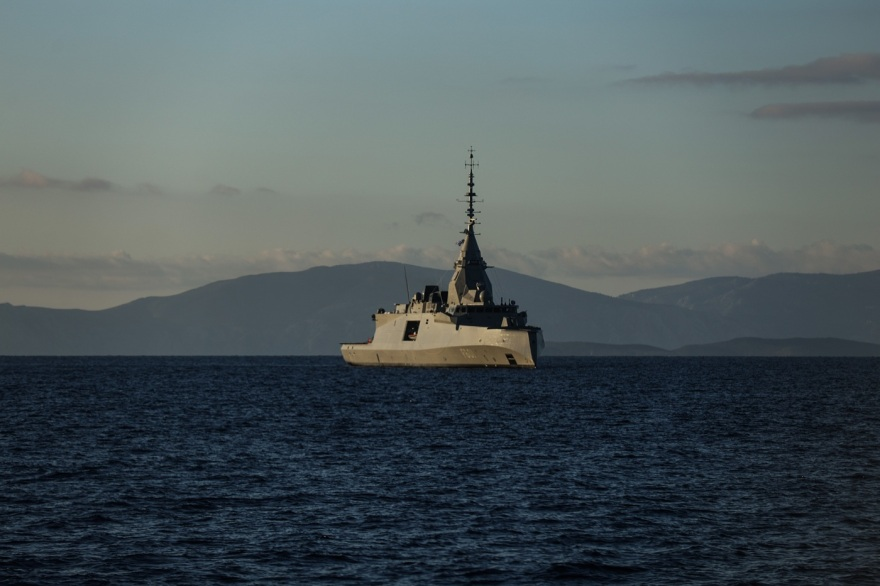
The integration of new ships with upgraded capabilities in the Navy is fully integrated in the framework of the “Agenda 2030” reform, with the aim of Greece having the strongest Armed Forces in its history by the end of the current decade.
Ask me anything
Explore related questions