





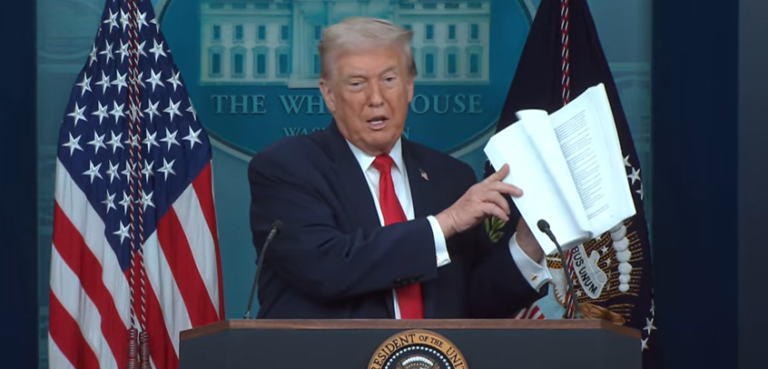
US President Donald Trump marked the anniversary of his second inauguration with a press conference that was long on assertion and short on novelty. Opening the event by leafing through a bulky folder of what he called his administration’s “achievements”, Trump set a deliberately visual tone, presenting documents and photographs to underline a narrative of control, endurance, and success.
The early moments were subdued. For several minutes, the president stood silently at the lectern, scanning papers before pulling out selected pages and holding them up for journalists. Many of the images, he said, depicted undocumented migrants arrested as part of intensified enforcement operations carried out by Immigration and Customs Enforcement and the US Border Patrol. He praised both agencies repeatedly, stressing that a significant number of their personnel are Hispanic and insisting that his policies enjoy broad support within those communities.
Migration and border security dominated much of the discussion. Trump claimed that his administration had eliminated “almost 100%” of drugs entering the United States by sea, adding that traffickers would inevitably attempt to shift routes onto land — a development, he said, US authorities were already prepared for. He linked Venezuela’s president Nicolás Maduro, whom he described as an “illegitimate dictator”, to drug cartels allegedly responsible for thousands of American deaths, and suggested that the US might “do something” in coordination with Venezuelan opposition figure María Corina Machado.
At several points, the president returned to his favourite theme of personal accomplishment. He asserted that he had ended eight wars that “could not be ended”, remarking that he “normally deserved a Nobel Prize for each one”, while adding that the United Nations had offered no meaningful assistance in these efforts. The claim was left unexplored, much like several others, as Trump moved swiftly between topics.
On the economy, he credited his administration with reversing stagflation inherited from President Joe Biden, pointing to strong stock market performance and what he described as improved fundamentals. He complained, however, that these achievements were not being communicated effectively, joking that he might have “the wrong people in public relations”.
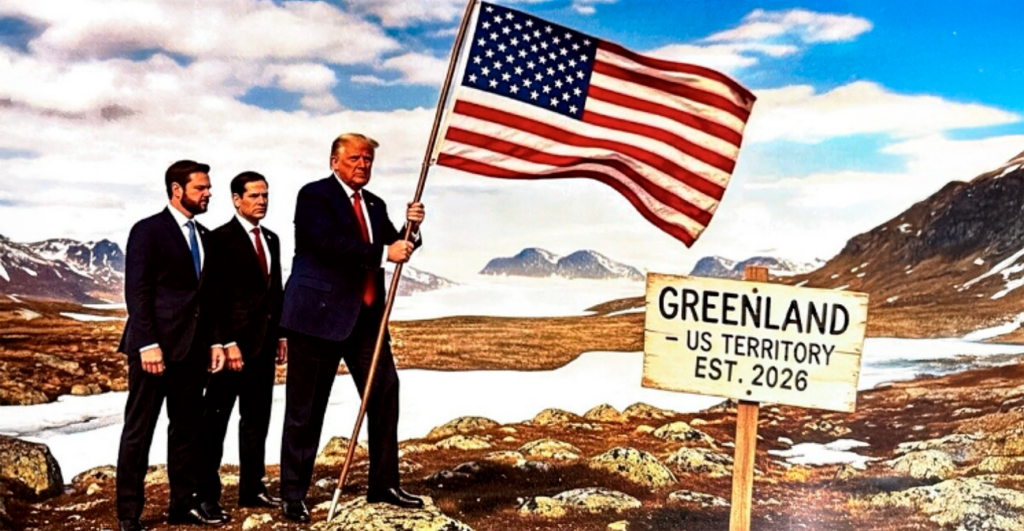
Foreign policy, by contrast, remained largely in the background. Despite recent controversy surrounding Greenland, NATO and tariffs on Europe, Trump said little on these fronts during the briefing. While he reiterated his belief that Greenland is strategically vital to the United States, he avoided detailed comment, even as his earlier remarks — including suggestions that the island should be acquired — continue to draw firm resistance from European leaders.
There were lighter moments, delivered with characteristic ambiguity. Trump quipped that he had once considered renaming the Gulf of Mexico the “Gulf of Trump”, before quickly adding that he was joking — or, at least, that he had decided against it.
Overall, the appearance projected an image the president has long cultivated: resilience under pressure, confidence bordering on defiance, and a preference for grand narrative over granular explanation. As Trump framed it, his focus remains squarely on domestic strength and authority, even as international questions gather at the edges of the agenda.
Whether cooler heads will prevail — at home or abroad — remains an open question. For now, the message was clear: the story Trump wishes to tell is one of control, persistence, and self-declared success, delivered with a thick folder in hand and little appetite for deviation.
Ask me anything
Explore related questions


