





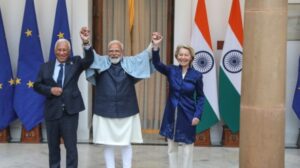
The European Union and India reached a free trade agreement today, creating a market of approximately 2 billion citizens, equivalent to 25% of global GDP, described as “the mother of all agreements.”
After about 20 years of deadlock between Brussels and New Delhi, the two sides took the final step in an effort to respond to the tariff-imposing policies of U.S. President Donald Trump and the massive exports of Chinese products.
According to the European Commission, which has the exclusive authority to negotiate trade agreements, total trade between the EU and India (goods and services) is estimated at more than €180 billion annually, supporting nearly 800,000 jobs in the EU. This agreement is expected to double EU goods exports to India by 2032, eliminating or reducing tariffs on EU exports.
Overall, the tariff reductions are expected to save approximately €4 billion annually in duties on European products. As the Commission notes, “This is the most ambitious trade opening India has ever granted to a trading partner. It will provide a significant competitive advantage to key industrial and agri-food sectors in the EU, giving European companies preferential access to the world’s most populous country with 1.45 billion inhabitants and the fastest-growing major economy.”
Reduction of tariffs on agri-food products
The agreement eliminates or significantly reduces prohibitive tariffs (averaging over 36%) on EU agri-food exports, opening a huge market for European farmers.
For example, Indian tariffs on EU-produced wine will fall from 150% to 75% at the start and eventually to just 20%. Tariffs on olive oil will decrease from 45% to 0% over five years, while processed agricultural products such as bread and sweets will see tariff reductions of up to 50%. Sensitive European agricultural sectors will be fully protected, as products like beef, chicken, rice, and sugar are excluded from the agreement’s liberalization. All Indian imports will continue to comply with the EU’s strict food health and safety rules.
At the same time, the two sides are currently negotiating a separate agreement on Geographical Indications (GIs), which will help EU traditional agricultural products sell more in India, eliminating unfair competition from imitations.
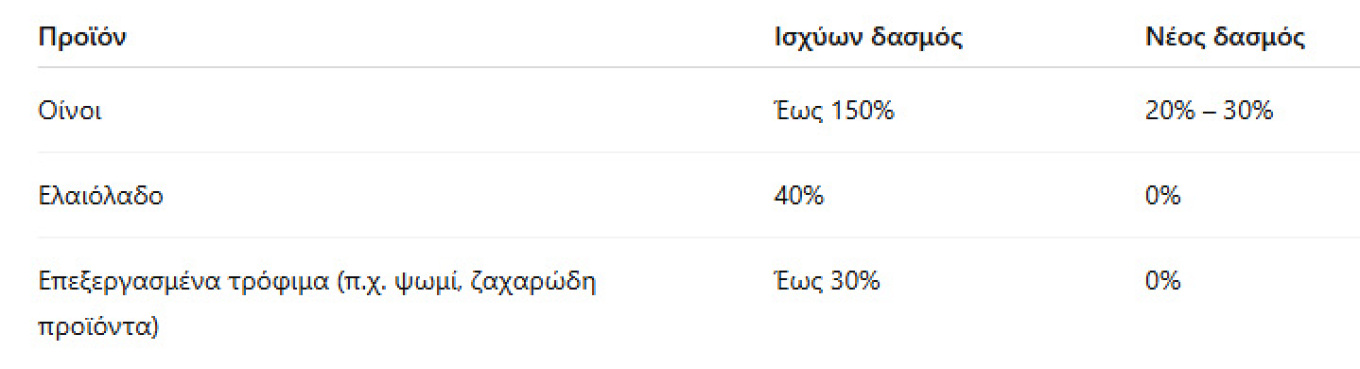
European (and Greek) products and future tariffs
Under this trade agreement, India will grant the EU tariff reductions that no other trading partner has received. European companies export machinery and electrical equipment worth €16.3 billion, currently facing tariffs of 44%. Under the agreement, tariffs will fall to 0% over 5–7 years.
Aircraft tariffs, currently at 11%, will also be eliminated within the same timeframe. Tariffs on medical and surgical equipment, currently at 27.5%, are also expected to be reduced to nearly 0% for almost all such products.
Plastics exported to India, worth €2.2 billion and currently taxed up to 16.5%, will see tariffs reduced to 0% over the next ten years. The same applies to chemical products exported by European companies, valued at €3.2 billion.
Regarding the agricultural and livestock sector, the EU-India agreement includes wine, spirits, olive oil, and kiwis—products of interest to Greek producers, especially since Greece is the world’s third-largest kiwi exporter.
Some examples
Indian tariffs on EU-produced wine currently stand at 150%, but under the agreement will gradually fall to 20–30%. Beer tariffs will drop from 150% to 50%. Tariffs on olive oil, margarine, and other vegetable oils, currently at 45%, will be eliminated. Tariffs on kiwis and pears will fall from 33% to 10%. Tariff elimination is also planned for fruit juices and non-alcoholic beers, as well as processed foods (bread, bakery products, biscuits, pasta, chocolate, pet food).
At the same time, as highlighted by the European Commission, sensitive European agricultural sectors will be fully protected, with products such as beef, chicken, rice, and sugar excluded from the agreement’s liberalization. All Indian imports will continue to comply with the EU’s strict food health and safety rules.
Services and intellectual property
Beyond the goods mentioned above, the EU-India agreement also covers services and intellectual property. Specifically, the trade deal will provide EU companies with preferential access to the Indian services market, including key sectors such as financial services and maritime transport, while offering a high level of protection and enforcement for intellectual property rights, including copyrights, trademarks, designs, trade secrets, and plant variety rights.
The European Commission will soon publish draft texts, which will undergo legal scrutiny and translation into all official EU languages. The Commission will then submit its proposal to the Council of the EU. Once approved by the Council, the EU and India can sign the agreements. After signing, the agreement requires the consent of the European Parliament and a Council decision to enter into force.
Ask me anything
Explore related questions