




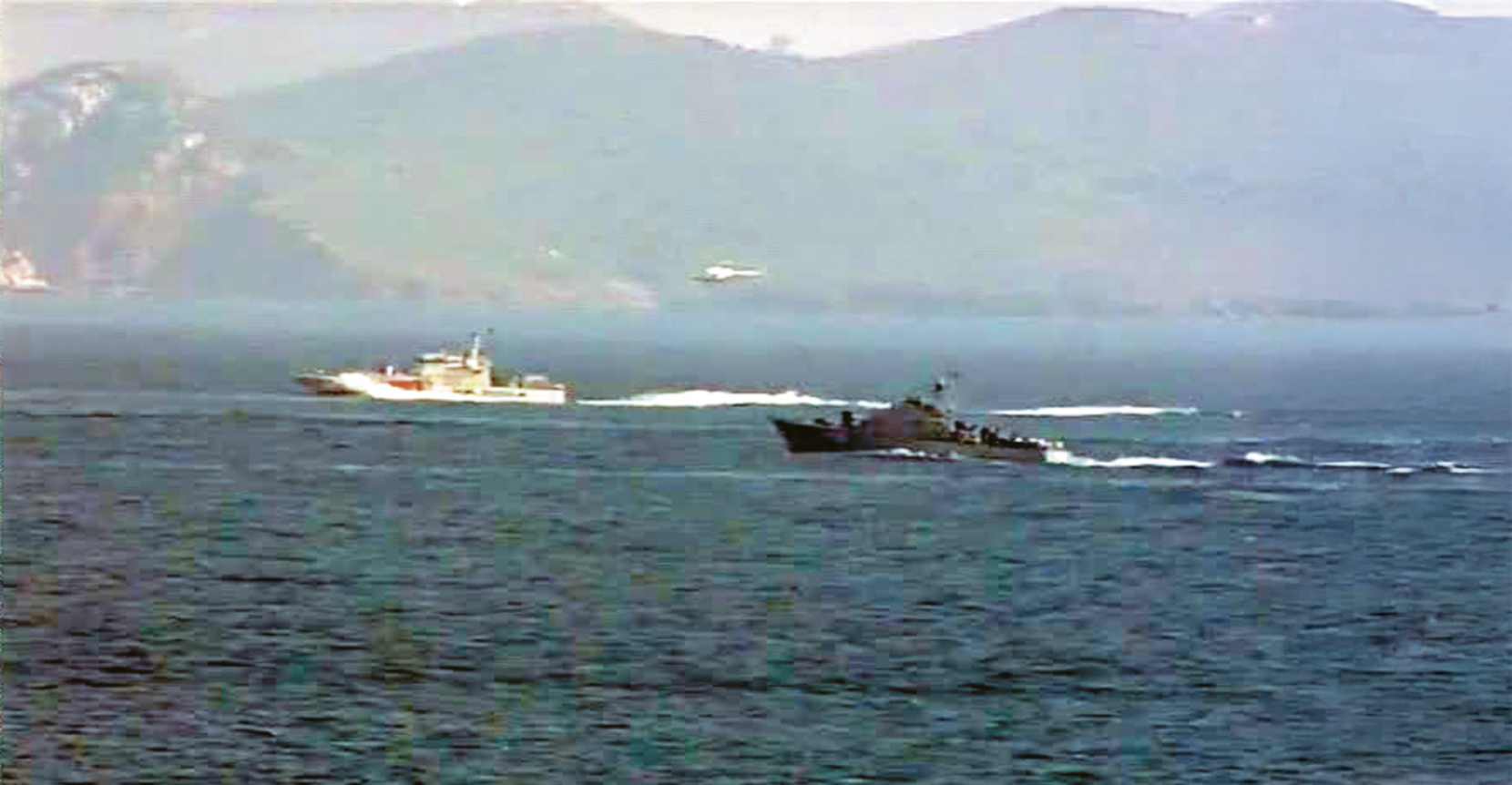
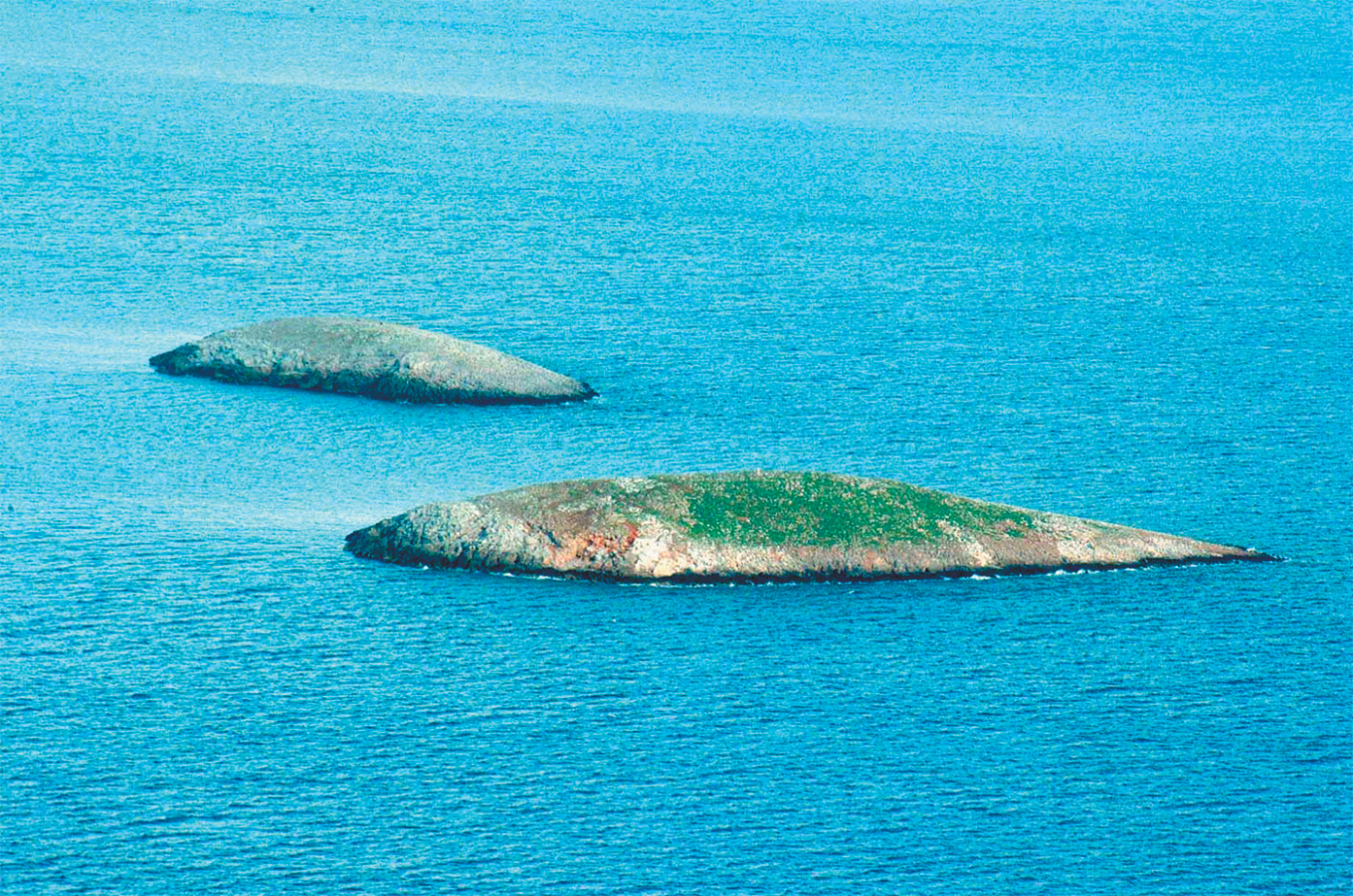
Imia, January 30–31, 1996. A turning point in Greek-Turkish relations, as for the first time Turkey challenged Greek sovereignty by military means over two small islets in the southeastern Aegean. The Turks added to their package of entirely unfounded claims against Greece (limits of Greek airspace and the Athens FIR, demilitarization of eastern Aegean islands) the challenge to the sovereignty status of certain islands and islets in the Aegean.
Imia became the stage for the operation to establish the so-called “grey zones” on the menu of Greek-Turkish disputes, as perceived solely by Turkey. Greece, relying on International Law, consistently rejects Turkish claims and has in practice nullified its neighbors’ revisionist plans in various parts of the Archipelago.
Imia Crisis – MEGA breaking news bulletins, dawn of 31.01.1996
The unbelievable Egaydaak list, with 152 Greek islands and islets claimed by Turkey all the way to the Libyan Sea, was immediately consigned to the wastebasket. This, however, did not happen in the case of Imia.
In this crisis, the two countries came to the brink of a conflict with unknown consequences, but under suffocating American pressure, calm prevailed and a de-escalation agreement was achieved.
However, it evolved into a drama for Greece and Hellenism. The first victims were the three Greek officers who fell in the line of duty. Along with them, a deeply wounded national honor and dignity, as soldiers of a foreign power entered and remained, even for a few hours, on our country’s territory. And in order for them to withdraw without bloodshed — as a clash was inevitable, foreshadowing a bloodbath — one more condition was imposed.
What followed
The removal of the raised Greek flag from eastern Imia. From a Greek islet. A prerequisite for the simultaneous removal of the Turkish flag from western Imia — again from Greek territory — and thus the end of tensions. An unprecedented and painful development in a crisis where, unfortunately, the mistakes of the political and military leadership of the time abounded.
Sadness, anger, bitterness, rage — the emotions of Greeks on that day. From then until today. Officially, no Greek government has accepted the “greying” of Imia; nonetheless, the signs are indicative.
Since then, visits to Imia have been avoided so as not to disrupt balances in bilateral relations. Even the legendary shepherd of Imia, the late Antonis Vezyropoulos, was forced not to return. Even approaching the two islets is practically impossible. It is not forbidden — but it is avoided.
And the much-vaunted Panos Kammenos, who when Kostas Simitis as prime minister thanked the US government from the parliamentary podium for its help in peacefully resolving the crisis, led chants of “shame,” “disgrace,” and “traitors to Goudi,” later, as Minister of National Defense twenty years on, “honored” the tragic anniversary of Imia by dropping a wreath… from a helicopter — ridiculing the concept of national sovereignty over them.
SIMITIS – IMIA
The European Union clearly sided with Greek positions, but, as usual, only verbally. Meanwhile, the American guarantee for de-escalation had an explicit framework:
“The US recognizes neither Greek nor Turkish sovereignty over the two islets.”
Through the voices of Richard Holbrooke — who “rang off the hook” with Athens and Ankara that night — and State Department spokesman Nicholas Burns, later ambassador to Athens.
Greek Navy and Coast Guard vessels have of course since continuously patrolled to defend national maritime space against Turkish encroachments at Imia and elsewhere. But the Turks do the same, claiming they are defending… Kardak.
Against this backdrop, borderline situations inevitably followed — successive incidents which fortunately did not escalate into conflict, though at times they came close. In all cases, Turkish vessels violated Greek territorial waters, carried out reckless maneuvers, provoked, played with fire. But they learned their lesson.
The peak of these provocations was the ramming by a Turkish patrol boat of a Hellenic Coast Guard vessel with a 27-member crew on 13 February 2018. The Greek vessel suffered material damage, but fortunately no injuries.
Political mistakes
Prime Minister Kostas Simitis’ strategic choice that the Imia crisis should be resolved politically, without military engagement, was not wrong. No one wanted a war with Turkey of unknown duration, scale, and intensity. But rigidity, lack of flexibility, and the absence of a plan B in the face of escalating military and diplomatic pressure from Ankara proved disastrous.
1. Strategic deficit
The Greek government lacked a clear crisis-management strategy and failed to adequately read Turkish aggression. From the grounding of the merchant vessel Figen Akat at Imia and the captain’s refusal of Greek assistance on Christmas Day 1995 — disputing Greek sovereignty — through the Turkish Foreign Ministry’s diplomatic note and the “flag war,” Athens did not understand how far Turkey would go.
Thus, the decision not to convene KYSEA at its natural venue — the National Operations Center (ETHKEPICH) beneath the Pentagon — while the country stood on the brink of war, was a decisive mistake at the peak of the crisis.
Simitis’ choice meant that he, Defense Minister Gerasimos Arsenis, and HNDGS Chief Christos Lymberis were far from the operations room, lacking real-time situational awareness to make sound decisions. In his book, Simitis explained:
“The choice was conscious. I wanted to avoid creating the impression that we were facing a war crisis.”
2. Contradictions
Government messages to Washington, Turkey, and the domestic audience were contradictory. The sudden escalation — even hinting at armed conflict — while de-escalation under US guarantees had already been decided, was incomprehensible.
Instead of limiting the issue to a symbolic “flag war” by civilians or local officials, the Defense Minister approved raising the Greek flag by a Navy detachment — an escalation.
On January 30, the Foreign and Defense Ministers competed publicly in aggressive anti-Turkish rhetoric, while fleet movements were broadcast live on TV — even as the government worked behind the scenes for de-escalation.
At midnight, Theodoros Pangalos appeared on a TV show while events spiraled. The head of the National Intelligence Service was not even invited to the meeting, despite bringing critical intelligence from Turkey and the CIA station chief in Athens.
3. “Everyone spoke to everyone”
Multiple parallel contacts with the US blurred the picture further. This created confusion and conveyed instability.
4. No plan B
The lack of preparedness became clear when the HNDGS Chief asked for rules of engagement and was told Greece was already negotiating. Simitis reportedly even asked what those rules were.
5. Optics over substance
The agreement’s terms were clear: “No ships, no troops, no flags.” Later attempts to reinterpret or deny them undermined credibility.
Operational mistakes
Errors on the ground
To the inadequate political handling were added purely operational mistakes.
6. The unguarded western Imia:
The military leadership failed to correctly read the facets of Turkish strategy. The field of dispute over Greek sovereign rights was the two Imia islets—not other points in the Aegean. If indeed the Greek side did not have the naval assets for continuous and secure surveillance of western Imia, it should have landed forces there in a timely manner as well. Any other option entailed high risk, as was ultimately proven.
7. Without alternatives:
The Chief of the Hellenic National Defense General Staff (HNDS) on his own initiative relaxed—rightly so—certain rules of engagement. But even if he was correct that he was not receiving full authorization of the rules from KYSSEA, all the alternatives he proposed at the critical moment, when asked by the prime minister to neutralize the Turkish advantage, led to total confrontation.
Flattening western Imia with bombardments and annihilating the Turkish commandos, or a recapture operation with the landing of Greek special forces—thus extensive bloodshed. In both scenarios, escalation of the conflict was inevitable.
8. Inadequate preparation:
The men of the 2nd OYK (Underwater Demolition Team) group did not have batteries for their radios. Thus, when they received orders for immediate action to preempt the landing of Turkish commandos on western Imia, they wasted extremely valuable time first moving to eastern Imia to resupply with batteries.
9. Lack of inter-branch cooperation:
From the outset, problems in cooperation between the Navy and Army leaderships became apparent. The islets fell within the area of responsibility of ASDEN. But for their defense, the Chief of the HNDS activated it belatedly, having assigned the handling entirely to the Hellenic Navy.
10. Failure of foresight:
In the face of the threat of war, you anticipate—you do not follow—otherwise you will lose. Greece’s most capable frigate in operational terms, the Hydra F452, a MEKO-class vessel, was deployed in the NATO operation to blockade Serbia. The order for its immediate return was given far too late, on the afternoon of January 30. At the peak of the crisis, it was still sailing west of the Peloponnese.
Communication mistakes
Public bravado trapped the government, leading public opinion from resolve to humiliation — sealed by the loss of the three helicopter crew heroes.
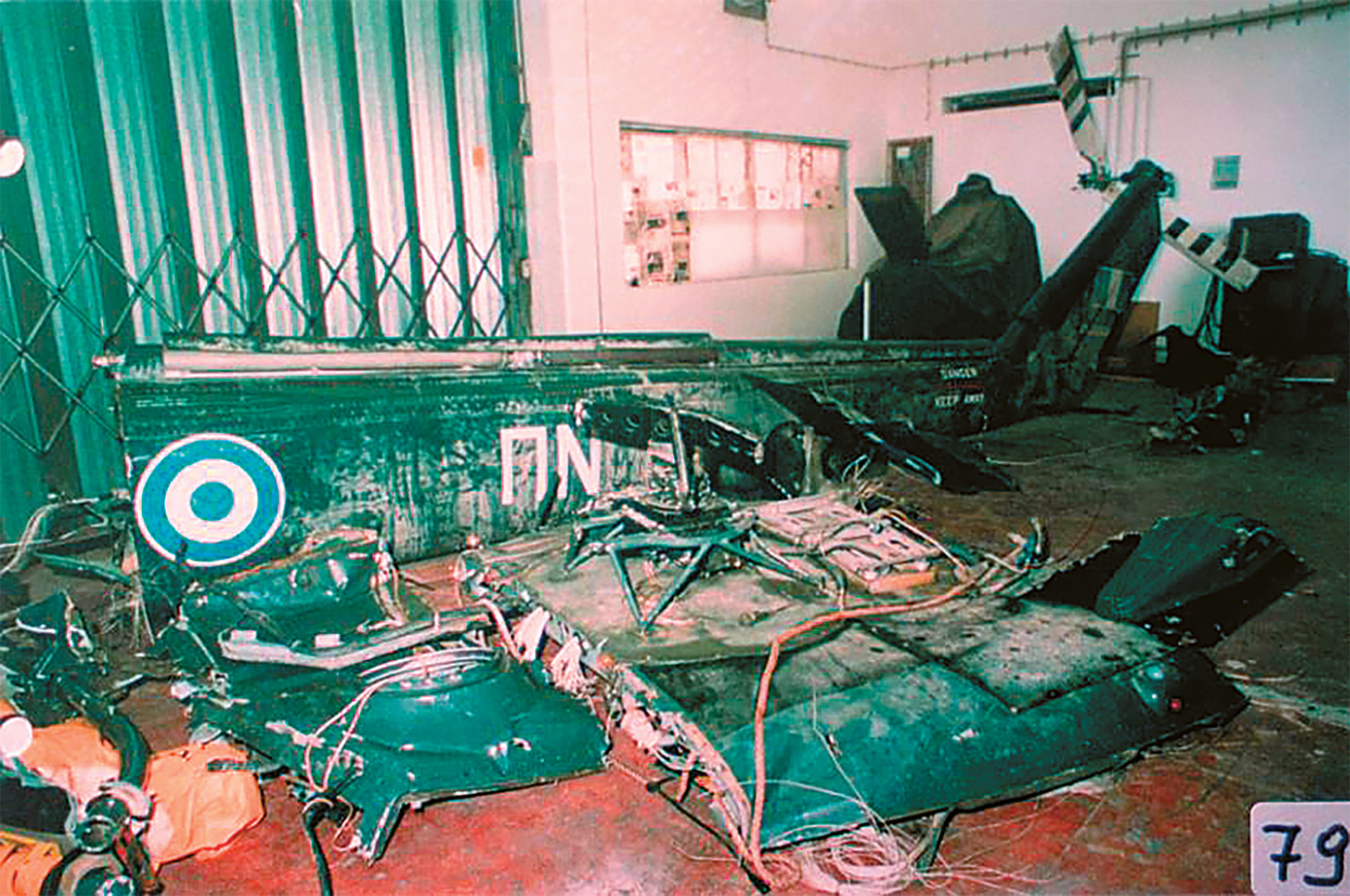
The helicopter wreckage was recovered; investigations showed it had not been hit by fire.
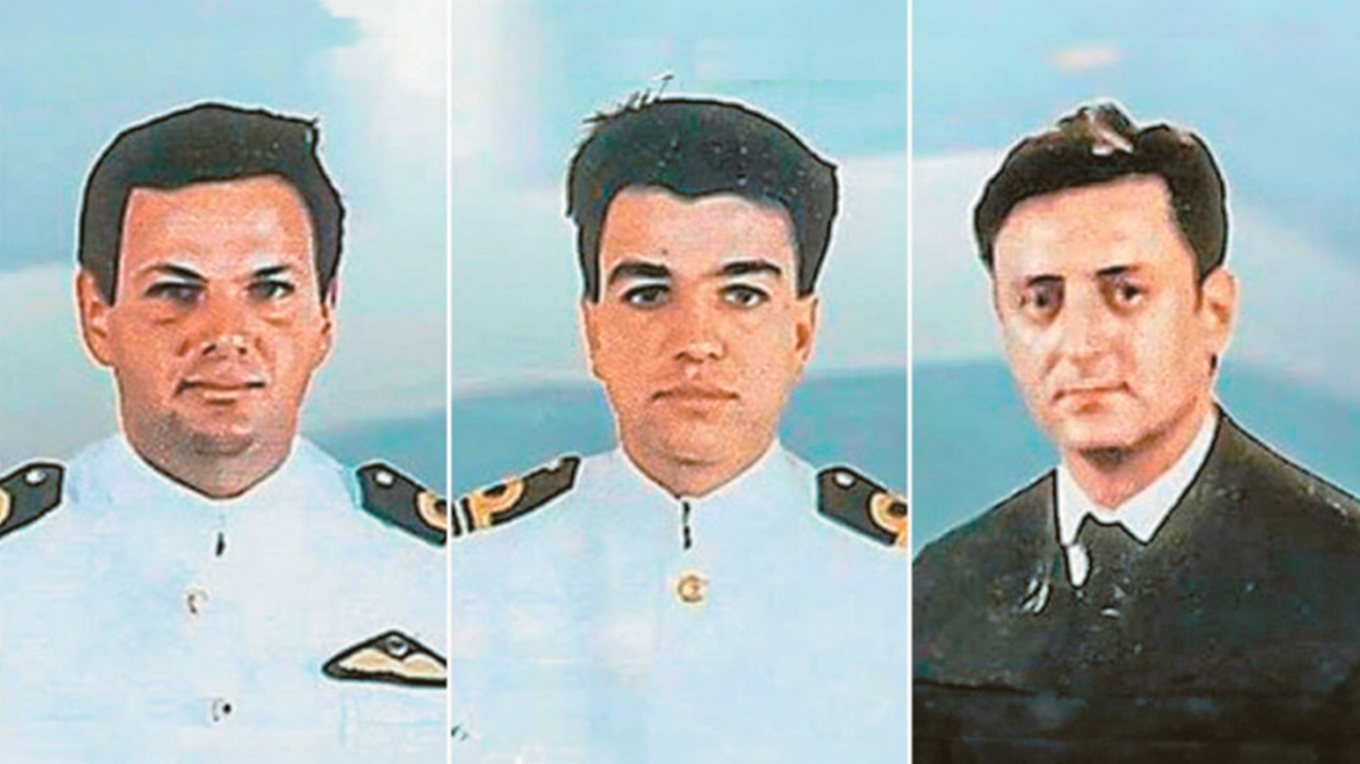
The fallen officers: Christodoulos Karathanasis, Panagiotis Vlahakos, Hector Gialopsos
+1. A critical leak
The delayed leak of diplomatic correspondence inflamed public opinion beyond control. Why it happened, and whom it served, was never clearly answered.
…And three myths
First myth
It concerned whether or not there was a tactical advantage on the ground for either of the two opposing sides. In the “hot” area, the Hellenic Navy deployed the frigate Navarinon (Standard type), the destroyer Themistoklis, three missile boats, and two gunboats. The Turkish naval forces consisted of the frigate Yavuz (MEKO type), two additional Knox-class frigates, and two missile boats.
At the same time, in the central Aegean, three Greek frigates, one destroyer, and four missile boats had already been deployed, having targeted the entire Turkish fleet moving southward. Greek superiority in firepower—mainly due to the abundance of Penguin and Exocet missiles—was unquestionable. However, the “back door” of the unguarded western Imia abruptly changed the situation at 01:40 a.m. on January 31, when Turkish commandos landed.
In the event of a clash, claims about the destruction of the Turkish fleet are exaggerated. Nevertheless, the blow would have been extremely heavy, and Turkish losses clearly greater. An unpredictable factor in the case of a wider conflict remained the degree of involvement of the Turkish Air Force, which at the time—unlike today—outmatched the capabilities of the Hellenic Air Force. Naturally, the Turks would not have left a significant Greek success at sea unanswered.
Second myth
This concerns the fate of the group of Turkish commandos who landed on western Imia. It was written many times that all of them soon met a tragic death in another operation of the Turkish Navy—some were even portrayed as victims of… Greek sabotage.
On February 15, 1996, the Turkish media reported the crash into the sea of a Black Hawk helicopter shortly after its takeoff from the Aksaz Naval Base, near İzmir. Among the victims were five commandos, reportedly members of the “Kardak Team.” They were named.
Two months later, two more alleged members of the team lost their lives in traffic accidents. In 2003, Zeki Şen, another member, was murdered under mysterious circumstances in Taksim Square in Istanbul.
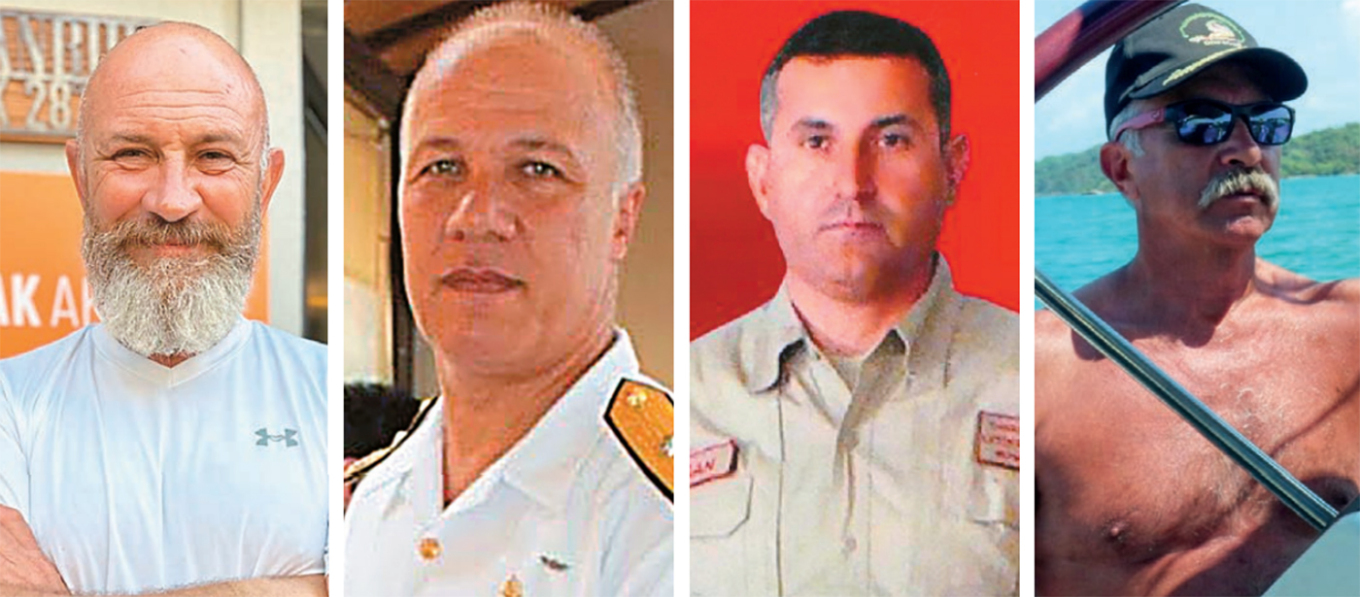
However, in 2012, Lieutenant Commander İzzet Metin, head of the Imia operation “Yunuz-1,” named the 12 members of the team in the newspaper Hürriyet. Among them were Ali Türkşen, Erkan Kiretstape, and Sadettin Doğan—but none of the eight aforementioned deceased.
What is certain? Indeed, Ercan Kiretstape was the leader of one of the commando teams at Imia. He himself revealed that he paid with his credit card for the fuel for the inflatable boat that would carry the team to the islet. He was later promoted to rear admiral in the Turkish Navy.
The other leader of the frogmen, Captain Ali Türkşen, after his retirement in 2015, turned to politics, passing through various small parties. Likewise, Sadettin Doğan left the military, accused of involvement in the Ergenekon case. He was murdered in 2014 in Somalia, where he was working.
Third myth
This concerns what happened shortly before the ill-fated AB-212 helicopter crashed into the sea, resulting in the tragic death of three Hellenic Navy officers. It is not about whether it was shot down by Turkish fire, something which, based on what is known, has been ruled out.
It concerns whether Turkish assistance was offered to the pilot and crew by the frigate Yavuz for an emergency landing on its helipad. The then Turkish Chief of Naval Staff Güven Erkaya, as well as retired Vice Admiral Aydın Gürül—commander of the Turkish naval force and aboard the Yavuz—stated that the three Greeks refused the assistance offered.
Retired Vice Admiral Ioannis Lioulis, commander of the frigate Navarino, later denied that the Yavuz had shown a “green deck” to the Greek helicopter. Other officers have spoken of brazen Turkish falsehoods.
However, former Chief of Naval Staff Antonis Antoniadis pointed out that the decision not to land the helicopter on the Turkish frigate, but to continue toward the Navarino, was not taken centrally. That is, the pilot himself refused the Turks’ “offer.”
This adds to the grandeur of the heroism and self-sacrifice of Lieutenant Commanders Christodoulos Karathanasis and Panagiotis Vlahakos, and Chief Petty Officer Hector Yialopsos, who fell not merely in the line of duty, but also refused to trade their salvation for their oath to defend the homeland and the flag—that sacred symbol which, according to Theodoros Pangalos, could have been carried away by the wind…
Photos: EUROKINISSI, ARCHIVE
Ask me anything
Explore related questions