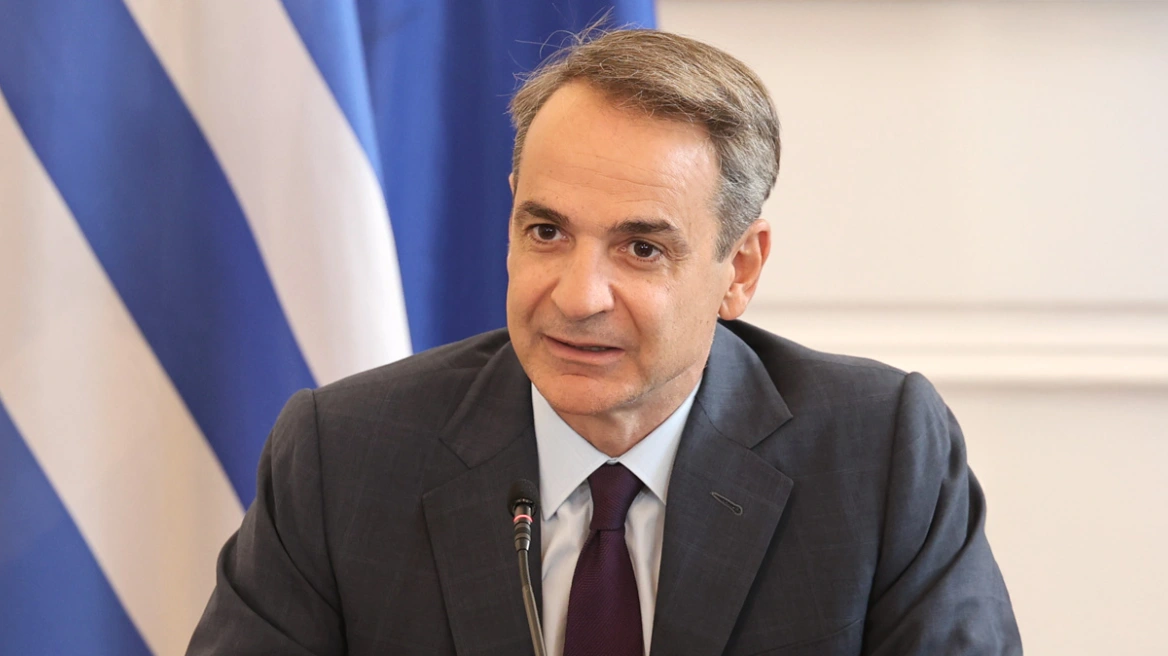





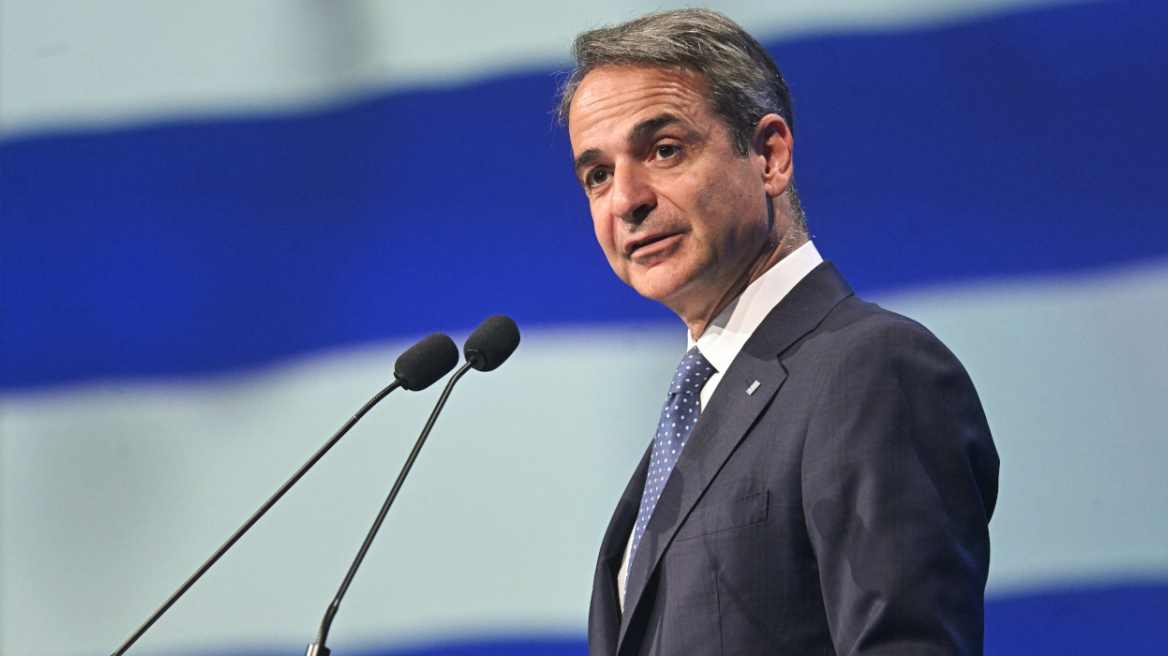
Kyriakos Mitsotakis is initiating the process for constitutional revision, triggering the drafting of the ND proposal and the formation of the Parliament’s Pre-Revision Committee.
According to verified information from THEMA, Mr. Mitsotakis is expected tomorrow, Monday, to deliver a televised message outlining his intentions, setting the agenda, and describing the goals of the revision process. On the same day, he will send a related letter to ND MPs, asking them to submit their proposals by February, while at 9 p.m., he will give an interview to SKAI and Alexis Papachelas. According to the reports, ND’s proposal is expected to be completed and presented by March, while the parliamentary process is expected to “run” from April with the formation of the Pre-Revision Committee.
A few weeks ago, THEMA had broadly analyzed both Mitsotakis’ intentions and goals, noting that he is not allowing the matter to stagnate and is accelerating related initiatives. Indeed, since last Monday, the Prime Minister has signaled his willingness to engage institutionally, announcing at the Cabinet meeting the Ministry of Interior’s initiative for postal voting for Greeks abroad and the three-member Diaspora electoral district from the next national elections in 2027, modeled on the 2024 European elections.
Already, Foreign Minister Giorgos Gerapetritis has a coordinating role in the initiative and has made relevant contacts, asking ND MPs with legal backgrounds for proposals to evaluate. Mr. Gerapetritis will work closely with the Prime Minister’s Secretary General Stelios Koutnatzi, who is also a professor of Public Law. ND’s rapporteur in the forthcoming Parliamentary Committee will be former minister Evripidis Stylianidis, who recently discussed the matter with Mitsotakis. Also involved will be the new president of ND’s Organizational Committee, and former President of the Parliamentary Assembly of the Council of Europe, Theodoros Roussopoulos, who will be in Athens from this week. Notably, Mr. Roussopoulos recently submitted a query to the Venice Commission regarding Article 86, which is expected to be central to the revision process, asking for clarification on the immunity of political figures in other European countries. From the Prime Minister’s Office, the discussion will also involve Minister of State Akis Skertsos, Deputy Minister to the Prime Minister Giorgos Mylonakis, and government spokesperson Pavlos Marinakis.
The framework of the revision
ND’s proposal is expected to be particularly ambitious, with over 70 articles of the current Constitution under scrutiny. Regarding Article 86, THEMA has noted for weeks that one possibility under discussion—but not certain—is to make mandatory the formation of the three-member advisory body of prosecutors provided under Article 5(2) of Law 3126/2003, which examines matters before the Parliament’s plenary decides on forming a Preliminary Examination Committee. In any case, Mitsotakis supports a substantial revision of the article without fully abolishing it.
ND also believes it is time to revise Article 16 following the Constitutional Court’s approval of the Pierrakakis law on non-state, non-profit universities. Other articles under review include Article 103 on civil servant tenure, Article 24 on environmental protection, Article 90 on the election of judicial leadership and possibly strengthening officials’ influence relative to Parliament and Cabinet, and Article 30 on electing the President of the Republic for a single six-year term.
ND intends to broaden the agenda, considering that the 1975 Constitution reflects the conditions of the 20th century. This requires removing outdated provisions and strengthening it in light of challenges such as climate change, artificial intelligence, and so on. According to THEMA, the majority is also considering including:
- Provisions for fiscal balance and sustainability.
- Guaranteeing the state’s obligation to ensure affordable housing.
- Allowing preventive constitutional review of passed bills to avoid delayed court rulings that overturn citizens’ justified expectations, as often happens today.
The pre-revision process is, of course, a necessary exercise in consensus, requiring 180 votes either in the proposing or the revising Parliament.
Difficult consensus
An experienced ND MP believes the opposition will find it difficult to give a strong 180-vote majority for the provisions under revision in the proposing Parliament, so that the final revision can then proceed with 151 votes. Judging by the complete failure to agree on staffing Independent Authorities, there is a real risk that the scope of this revision will be similarly limited as in 2019. Mitsotakis will, however, pass the ball to opposition parties, especially PASOK, with which there is theoretically room for agreement on several issues.
Meanwhile, institutionally, the government will attempt a quick win with postal voting for Greeks abroad. Following the cross-party meeting convened last Thursday by Interior Minister Theodoros Livanios, there appears to be room for consensus to reach the necessary 200 votes. A new session of the cross-party committee is scheduled for next Thursday.
Ask me anything
Explore related questions