




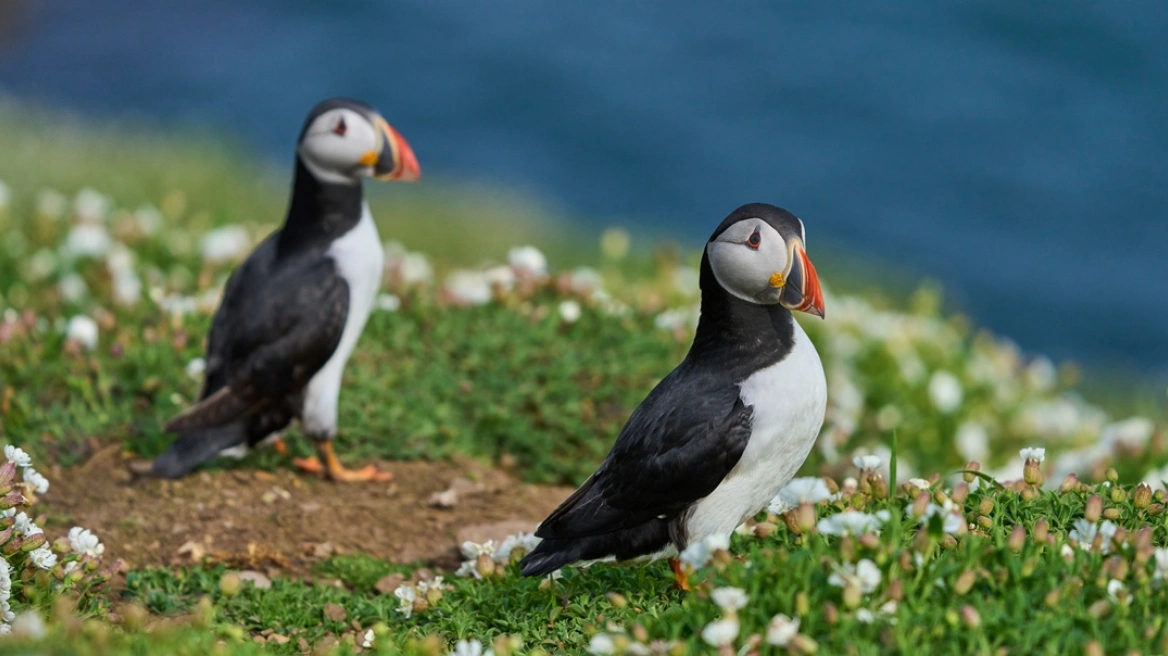
A rare opportunity is being offered in Wales for volunteers to live on an isolated, environmentally protected island in exchange for participating in programs that monitor seabirds, with a main focus on the conservation of the Atlantic puffin, a species threatened with extinction.
The island of Skomer lies about one mile off the coast of Pembrokeshire, in southwest Wales. It covers 2.92 square kilometers and is a national nature reserve. It is managed by the Wildlife Trust of South and West Wales (WTSWW), which is seeking volunteers to live and work on the island for several months during spring, summer, or autumn.
According to the island’s visitor officer, Rob Knott, puffins are “absolutely iconic birds,” and counting them is “a demanding process.” Volunteers divide the island into sectors and begin counting about two hours before sunset, when most birds are on land. Using special handheld counting devices, they record birds on the ground, in the sea, and in the air.
The positions are unpaid, but WTSWW fully covers accommodation on the island, travel costs within the UK, and provides a stipend ranging from £200 to £400. At present, three long-term volunteer positions and one seabird monitoring position are open.
The Vulnerable Status of Puffins
Atlantic puffins are listed as “vulnerable” on the IUCN Red List of Threatened Species. “This is wrong for many reasons, especially considering that their populations used to thrive,” Knott said. “We are doing everything we can to improve these numbers.”
Each year, a systematic census of seabirds is conducted on Skomer to record how many return in spring to breed. Last year, a record 43,626 puffins were counted, despite sharp global population declines. According to WTSWW, this increase is linked to abundant food supplies in the surrounding seas and the absence of predators such as rats and foxes.
Other Wildlife on the Island
The island is also home to around 350,000 breeding pairs of Manx shearwaters, as well as thousands of guillemots and razorbills, all rare seabird species in the wider Atlantic region.
- Spring: focus on puffin counts and seabird surveys from boats
- Summer: monitoring the development of chicks
- Autumn: observation of gray porpoises and other species, including rodents, reptiles, cetaceans, and moths
Living Conditions
Volunteers work for approximately three months, from late March to late September. The seabird monitoring officer position runs from May 23 to June 23. Volunteers also assist with the island’s daily operations, which receive about 25,000 visitors per year.
Skomer has no shops, and visitors must bring their own food and supplies. There are no permanent residents, but seasonal WTSWW staff live on the island for about nine months each year. Access is exclusively by boat, with frequent services from April to August and reduced schedules in September depending on demand.
Ask me anything
Explore related questions