




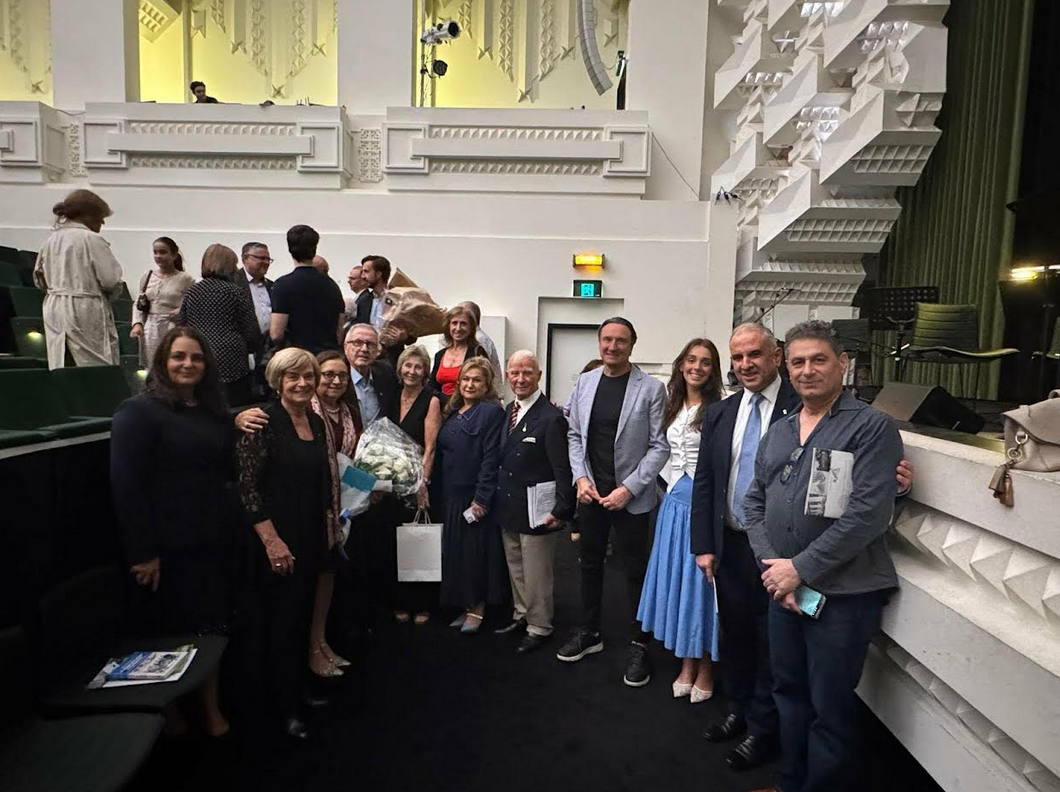
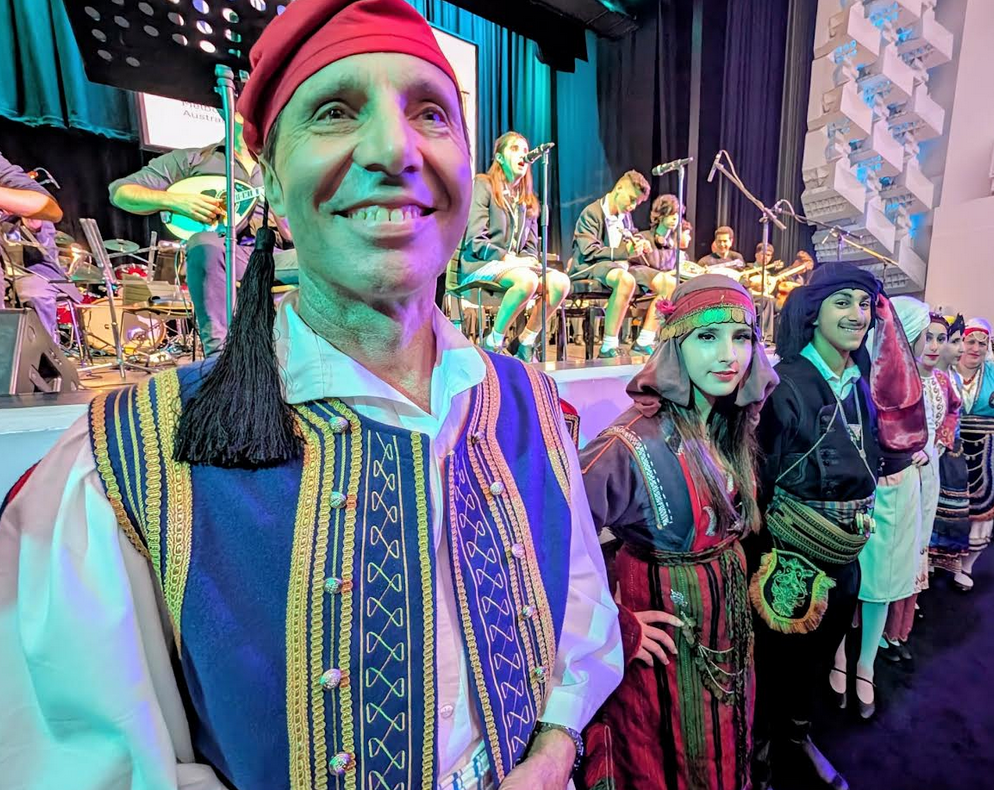
Melbourne’s historic Capitol Theater was filled to capacity on Monday night as the Greek and wider multicultural community gathered to celebrate the official recognition of UNESCO World Greek Language Day. In addition to the full house, thousands more joined a waiting list, reflecting extraordinary demand for the celebration.
The free event demonstrated a resurgence of public interest for a language that has shaped global thought for over three millennia and remains the bedrock of modern law, science, art, and philosophy.
Greek as a living, global force
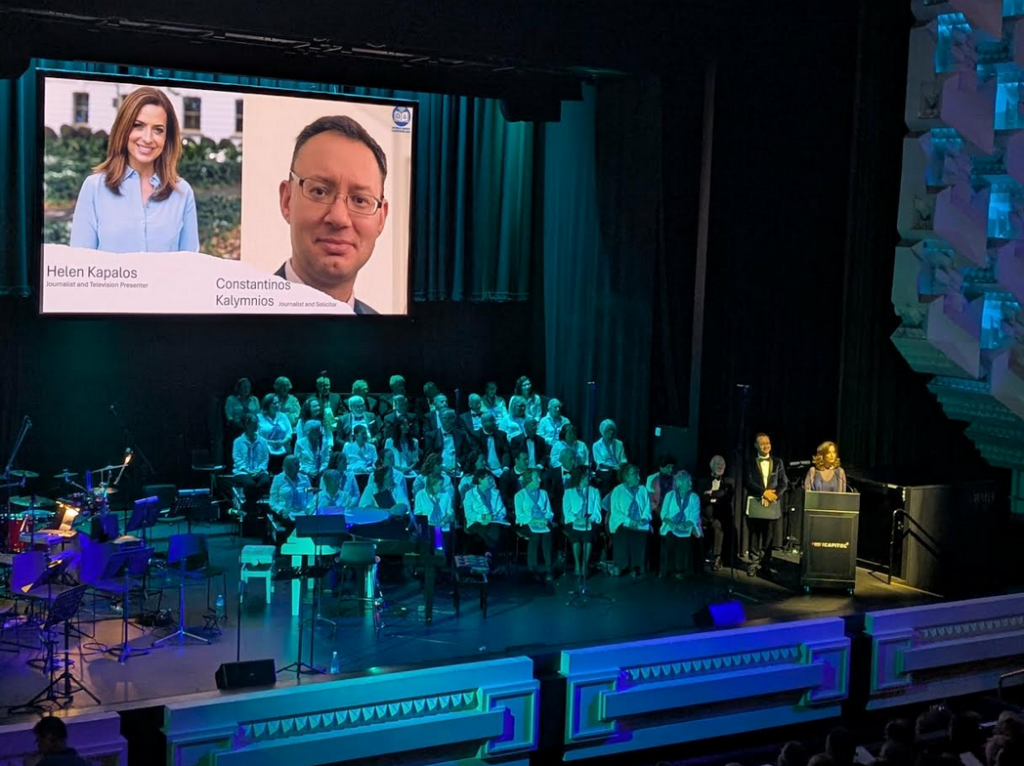
Co-hosted by lawyer Constantinos Kalymnios and journalist Helen Kapalos, the program framed Greek not as a heritage relic, but as a contemporary tool for global discourse.
The keynote address by The Hon. Judge Anthe Philippides, former justice of the Supreme Court of Queensland, explored Greek’s enduring influence on Western legal reasoning and the emergence of demokratia.
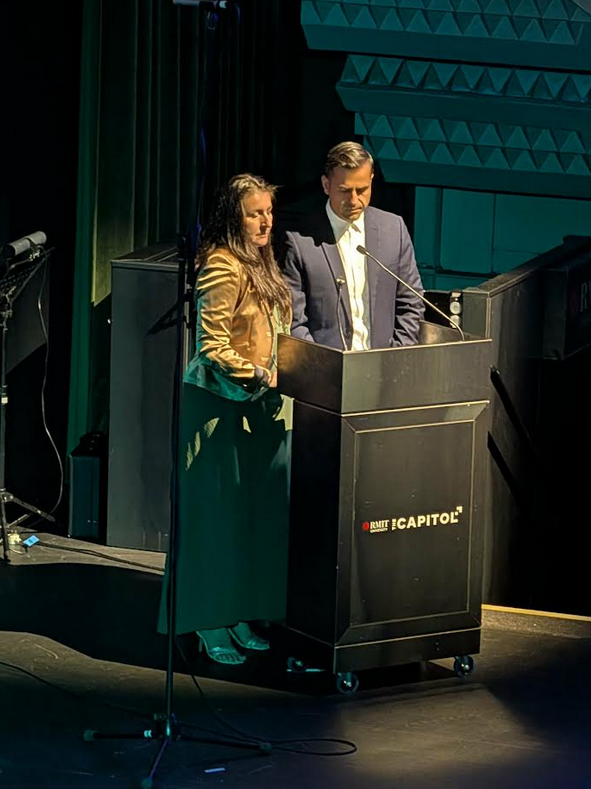
“The Greek language is not just a means of communication, it is a way of thinking,” Judge Philippides said. “In Greek, for the first time, thought learned how to write itself.”
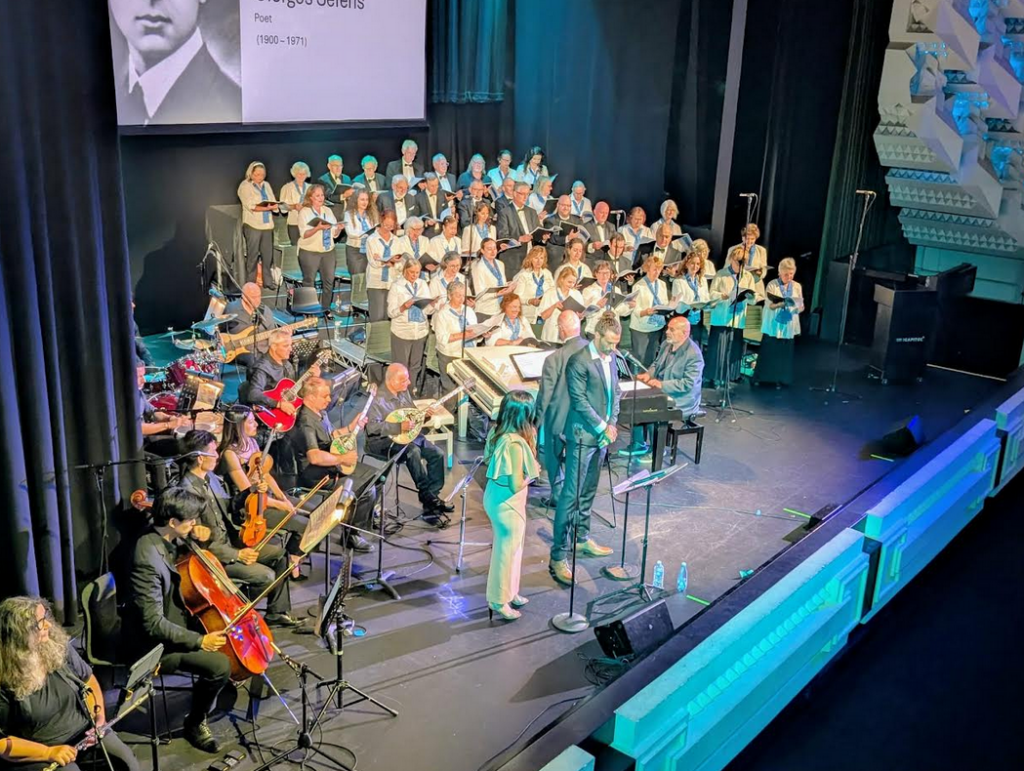
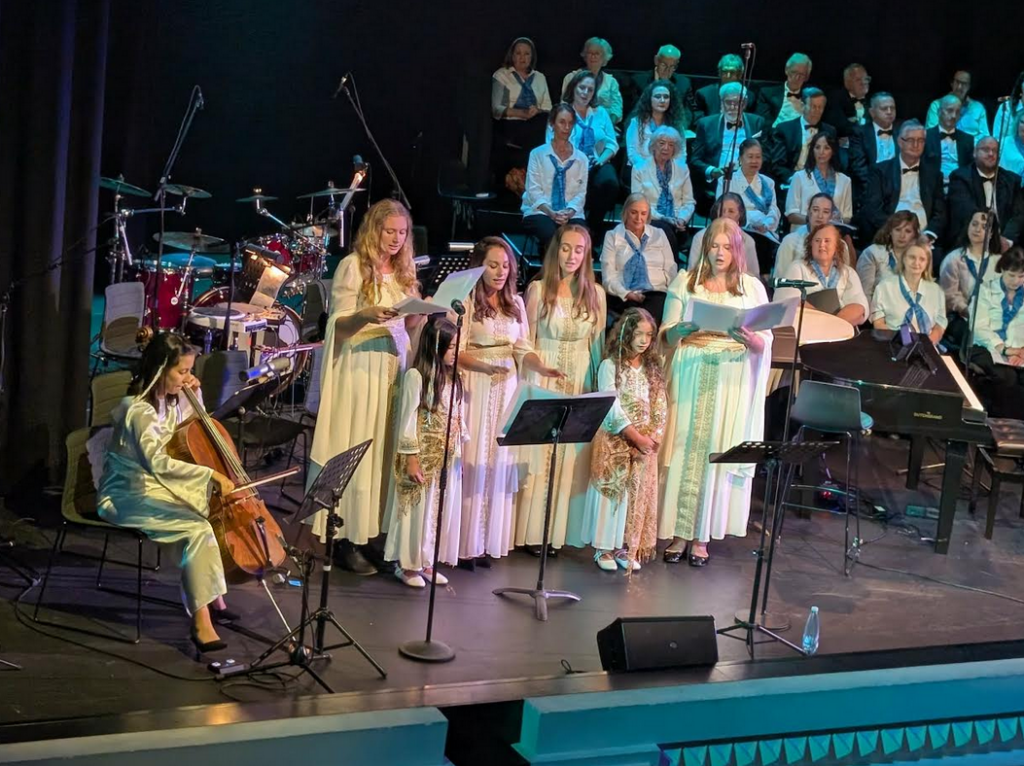
Musical performances by the intergenerational Eikon Byzantine Choir of Melbourne and the Camerata Chorus of Melbourne led by musical director Andreas Koikas, and Douglas Heywood at the podium. Stavrina Dimitriou and Giannis Spachios were joined by a 12-member ensemble in a performance that culminated into a sing-along and reinforced the bond between Greek language and song.
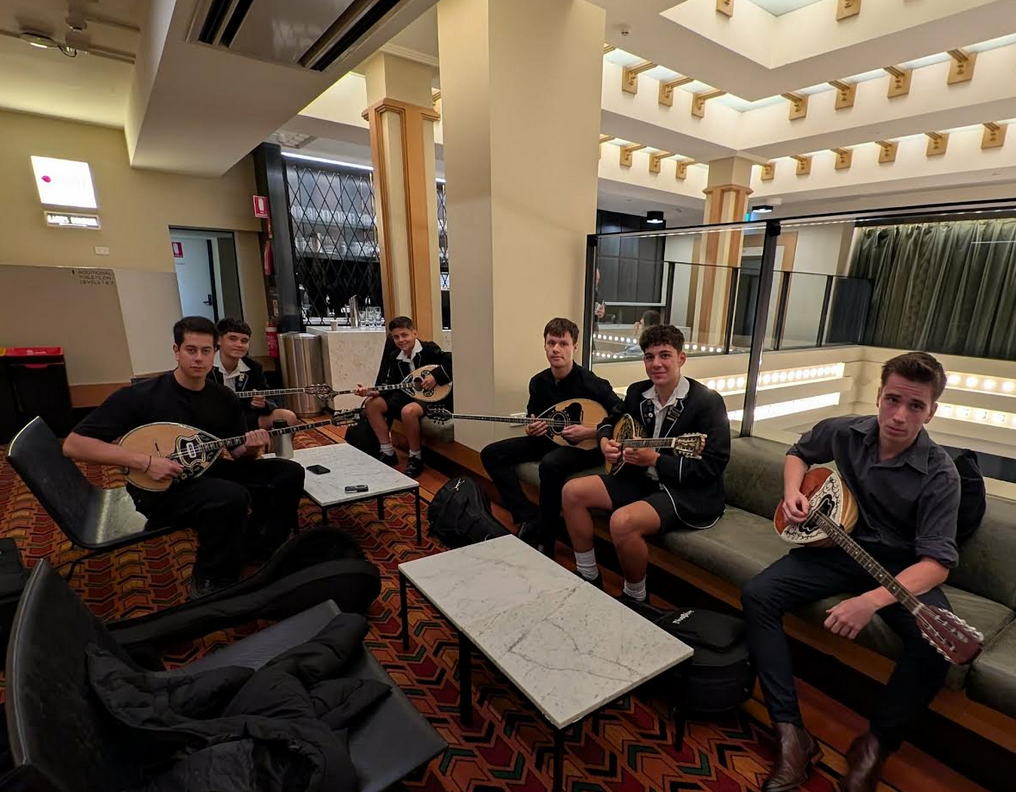
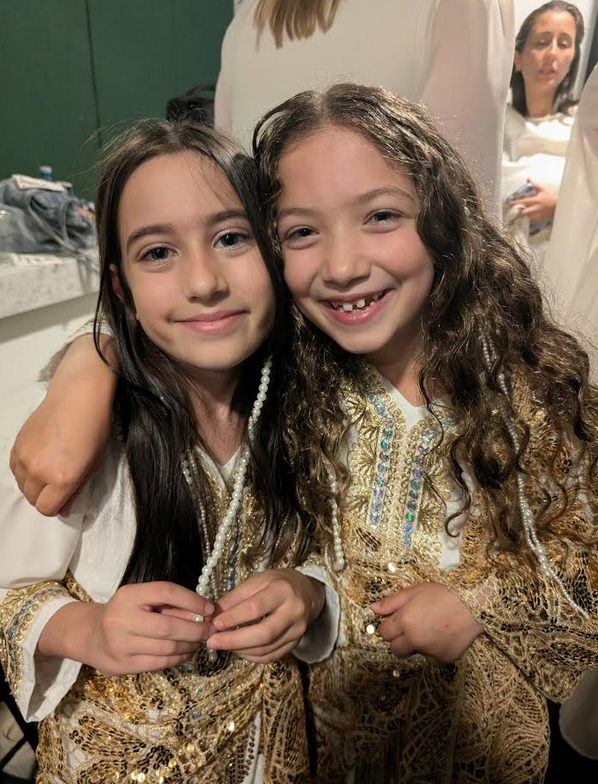
Actors Jeremy Artis and Katerina Poutachidou from Creative Drama and Arts wowed the audience with their unique rendition of Dionysis Solomos’ Hymn to Freedom.
Dr Dimitris Gonis and Betty Exindaras gave a measured a narration from Odysseas Elytis’ Nobel Prize acceptance speech, highlighting language as a defence against forgetting.
A grassroots success story
In a significant display of community self-reliance, the event was organised in less than three months, including a break over the Christmas–New Year period, by a grassroots committee representing local Greek schools and organisations such as the Australian Institute of Macedonian Studies (AIMS). The organising committee, comprising volunteers with extensive experience in events management, education, and community leadership, was chaired by Professor Anastasios Tamis and delivered the event without government funding or institutional sponsorship.
“The response shows what is possible when participation is driven by belief rather than obligation,” Professor Tamis said.
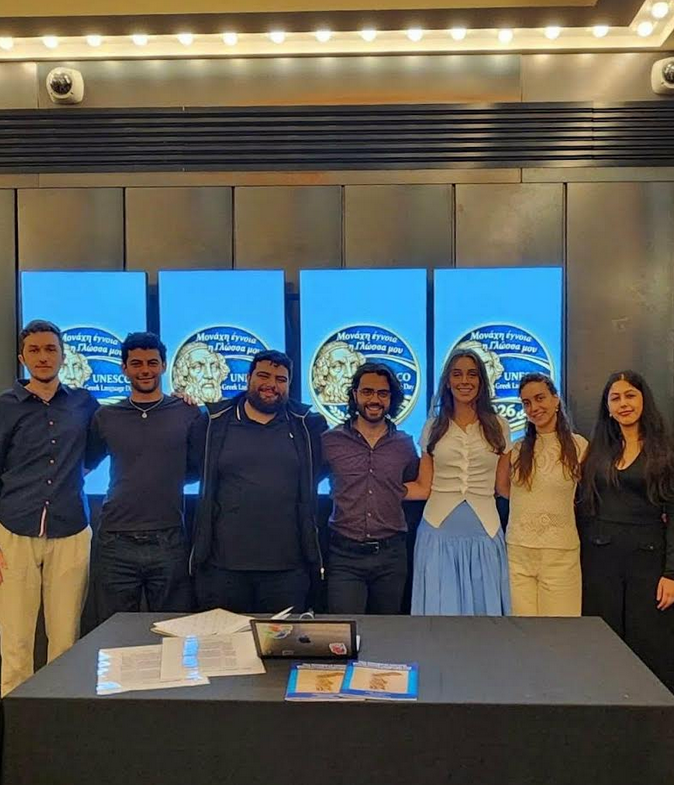
This intergenerational momentum was further amplifiedby the National Union of Greek Australian Students (NUGAS), who co-organised the event. NUGAS Co-President Demi Bourdopoulos, described the event as a milestone acknowledgement of the Greek language as a living, evolving presence in Australia. “Being part of the planning of this inaugural celebration has been an incredible honour, marking a historic moment that recognises the language’s global legacy and its living presence within our community today.”
Awards and cultural impact
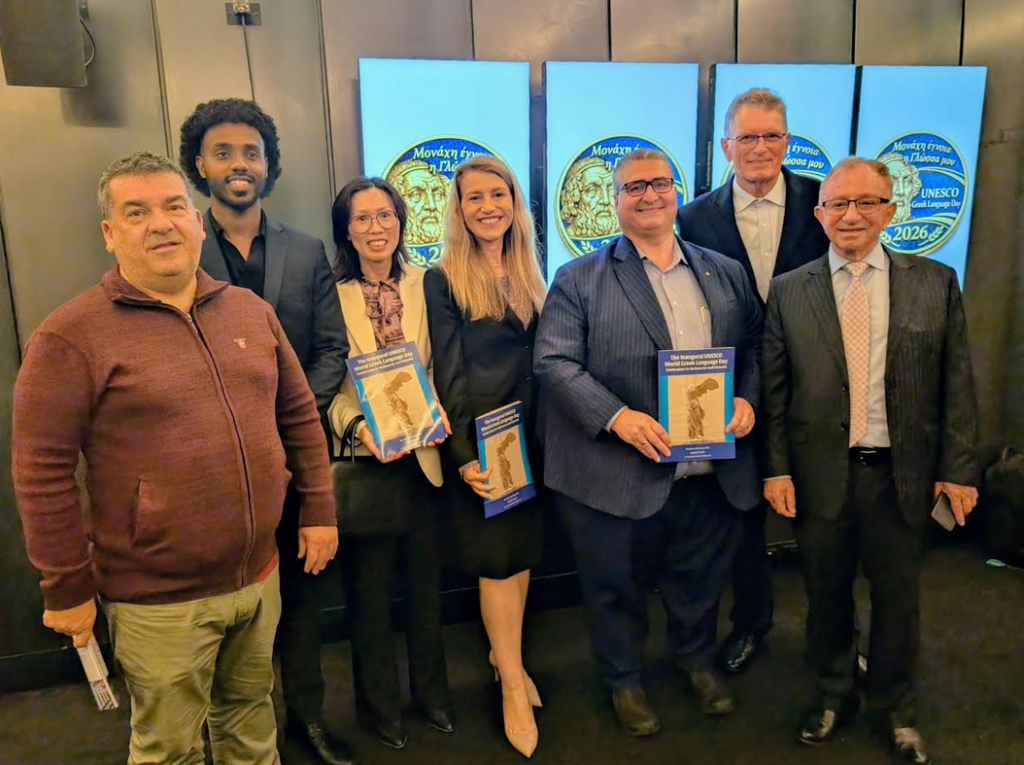
The Philhellenism Excellence Awards were presented to three distinguished scholars for their lifelong contributions to Hellenic studies and education:
- Professor Dr Jennifer Webb (Cypriot archaeology and classical scholarship).
- Mr Arthur McDevitt (Ancient Greek poetry and intercultural research).
- Professor Dr Michael John Osborne (Leadership in Greek-language education and research).
Broad diplomatic and civic representation
The guest list reflected Greek’s global reach and enduring appeal among Greeks and Philhellenes, with representation from government, diplomacy, local government, education, community organisations and media.
Attendees included Victorian Minister The Hon. Enver Erdogan MP; former Premier The Hon. Ted Baillieu AO; Lee Tarlamis MP; Vivien Ngu, Chair of the Victorian Multicultural Commission; former MPs Jenny Mikakos, Theo Theophanous and John Pandazopoulos; and former Australian Ambassador to Greece Jenny Bloomfield.
Diplomatic and consular representatives attended from Fiji, Bhutan, Latvia and Paraguay, alongside mayors and councillors from across Melbourne. Community, cultural and education leaders were represented by the Greek Community of Melbourne, the Federal Hellenic Lawyers Association, the Hellenic Medical Society Association, the Hellenic Museum, Pharos Alliance, and the education sector. Media outlets present included SBS, The Greek Herald celebrating its centenary this year, Neos Kosmos, Ta Nea, Apolis, Channel 31 and 3XY Radio.
Looking ahead to 2027
The committee has officially opened submissions for World Greek Language Day 2027, inviting educators, artists, and sponsors to join the volunteer-led effort by contacting [email protected].
For more information, visit About Us – World Greek Language Day
A full video of the event will appear on omogeneiaonlinenews.
Ask me anything
Explore related questions