Morning Orders: Survival in the Trenches
At 7:30 on a Thursday morning, the first orders arrive—not for a restaurant kitchen, but for survival in the trenches of eastern Ukraine. The lists are simple: cold cuts, oatmeal biscuits, mayonnaise, and mashed potatoes. Each item carries a weight far beyond its practical use. “Received,” replies not a chef, but a military commander, setting in motion a chain of shopping, packing, and drone delivery.
These are not luxury supplies. They are lifelines—water, coffee, cigarettes, dry food—small bridges between the normalcy of civilian life and the brutal reality of war. For soldiers stationed for days or weeks within range of Russian positions, these packages are more than sustenance; they are a morale boost, a reminder of humanity.
The Da Vinci Wolves: Humanitarian Logistics
In the Dnieper region, a group known as the “Da Vinci Wolves” has turned humanitarian support into a precise operation. Their warehouse is filled with bags, markers, and lists. Each package is personalized: location, priority, specific requests. Lesik, a 29-year-old soldier recently returned from injury, knows firsthand the value of a package of bread and soda after hours under Russian fire.
Vampire Drones: Delivering Life and Death
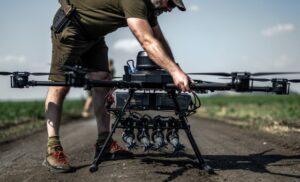
Behind the scenes, Ukrainian-made Vampire drones—nicknamed “Baba Yaga” by adversaries—play a dual role. They can carry explosives or, just as crucially, boxes of tangerines and hot sandwiches. For soldiers, the sound of an incoming Vampire no longer signals fear, but relief.
The Art of the Drop
Packing is an art. Liquids are double-bagged, soft goods are cushioned. Tangerines go in Pringles boxes to prevent bruising; sandwiches and dolmades are wrapped in cling film. Drones drop packages from height, so every item must be secured to survive the fall. If a bag is too light, it’s filled with cigarettes and sweets—small comforts for physical and mental fatigue.
A Choreography of Care
From warehouse to frontline, the process is a carefully orchestrated dance: packages are loaded in the morning, transferred by car and truck through tunnels with anti-drone nets, then handed off to ground drones and Vampire pilots for the final drop. Every step is risky, but the mission demands speed and consistency—daily drops, same-day service.
More Than Supplies
This is more than logistics. It’s an attempt to preserve human dignity in a landscape of destruction. A birthday cake, a power bank, hand warmers—these small gifts are pillars of normality. When a soldier radios thanks, the response from the command post is simple: “We love you.” It’s a human moment in a war zone, a reminder that behind the lines, people are fighting to keep a line of care open for those on the front.
A Reason to Smile
In the grim reality of war, these acts of care may seem almost exotic. Yet, years from now, they may be the reason many soldiers remember not just the horror, but also the moments of humanity that gave them a reason to smile.
Ask me anything
Explore related questions