





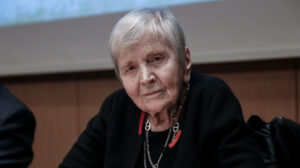
The internationally acclaimed Byzantinist, historian, and academic Eleni Glykatzi-Arveler passed away on Monday at the age of 99. She was the first woman to head the Department of History at the Sorbonne University in 1967 and later became the first female rector of the university.
Over the course of her long life, she produced an extensive body of scholarly work and remained active and outspoken until the very end. She received numerous prestigious honors. In France, among other distinctions, she was awarded the Grand Cross of the National Order of the Legion of Honour, and she was similarly decorated in many European countries.
According to information from protothema.gr, her health had deteriorated significantly over the previous 24 hours, as she was experiencing severe weakness. Her condition worsened dramatically in the final hours, leading to her passing.
A lifelong presence in letters and scholarship
Eleni Glykatzi was born in Athens in 1926 and studied History and Archaeology at the University of Athens. After World War II, she moved to France to continue her studies at the Sorbonne, dedicating her research to Byzantine history. Her doctoral dissertation on the administration of Byzantium in Asia Minor became a landmark work in international scholarship.
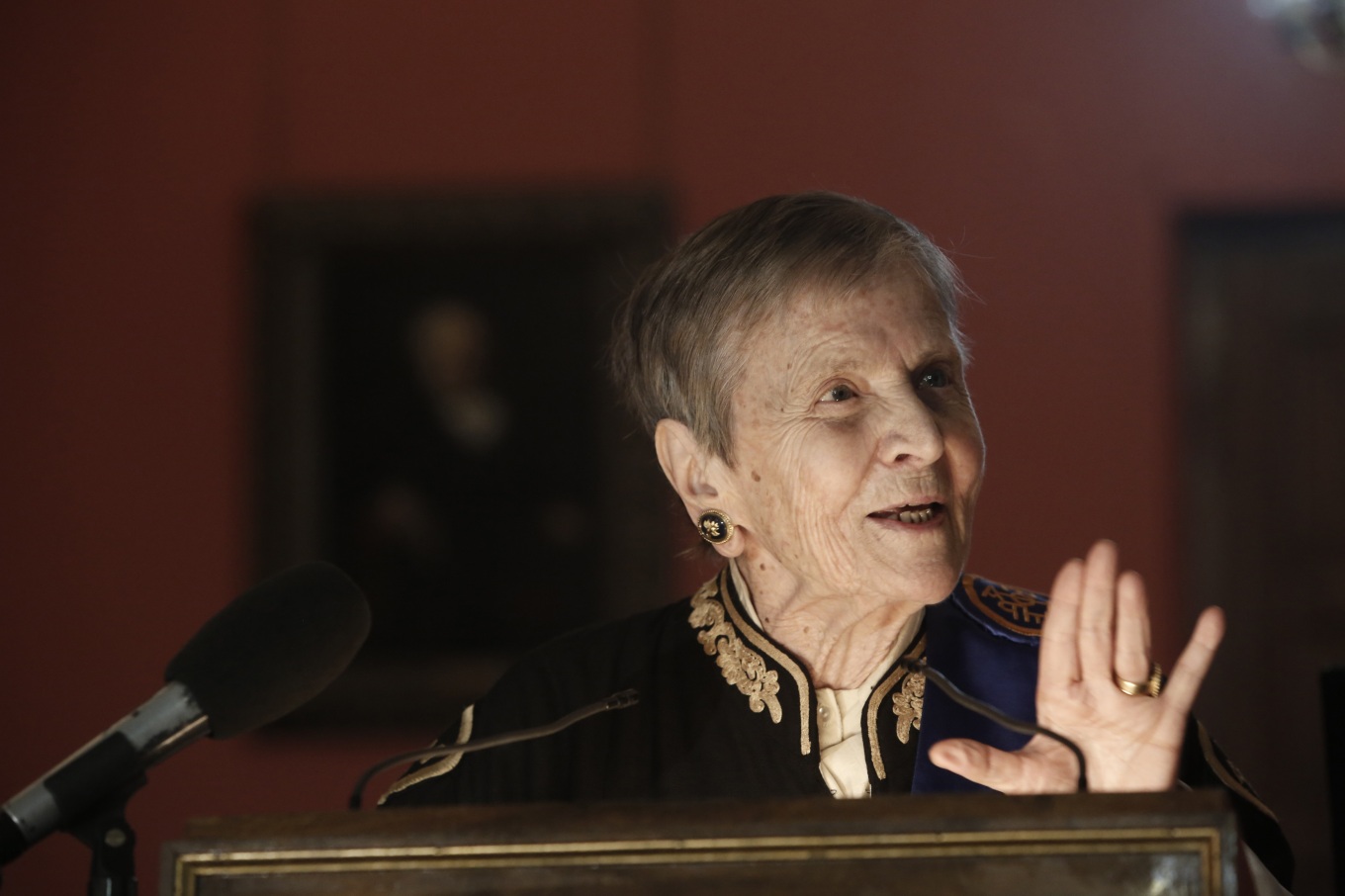
There she met her husband, Jacques Arveler, an officer in the French Navy. They had one daughter, Marie-Hélène. He passed away in 2010.
Her academic rise was swift. She taught at the University of Paris and, in 1976, was elected rector of the Sorbonne (Paris I – Panthéon-Sorbonne), a historic milestone as she was the first woman to hold the post in the institution’s 700-year history.
Alongside her academic career, she played an active role in international organizations and scholarly institutions. She served as president of the Université de l’Europe and received numerous distinctions, medals, and honorary doctorates from universities worldwide. In Greece, she also served as rector of Panteion University, with her contribution to the study of Byzantine history and Greek cultural continuity widely recognized. She was additionally a Goodwill Ambassador for UNICEF.
Her written work includes studies, essays, and interventions on Byzantium, East–West relations, the European idea, and Greece’s role in the modern world. Often sharp in tone and present far beyond academic circles, Eleni Arveler repeatedly weighed in on issues of national identity, education, and geopolitics, maintaining an active role in public debate until her final years.
Her passing marks the end of an era for Greek historiography and the European academic community. Her journey—from the lecture halls of Athens to the pinnacle of the Sorbonne—embodies a life devoted to knowledge, research, and the enduring defense of the cultural legacy of Hellenism.
Ask me anything
Explore related questions


