Will the 54-year-old wing commander who has been remanded in custody for espionage on behalf of China be the first—but not necessarily the last—case to which the new provision on revocation of citizenship is applied?
This question has been hovering intensely in recent hours over the Ministry of Defence, where the atmosphere remains heavy and checks continue in his broader professional environment.
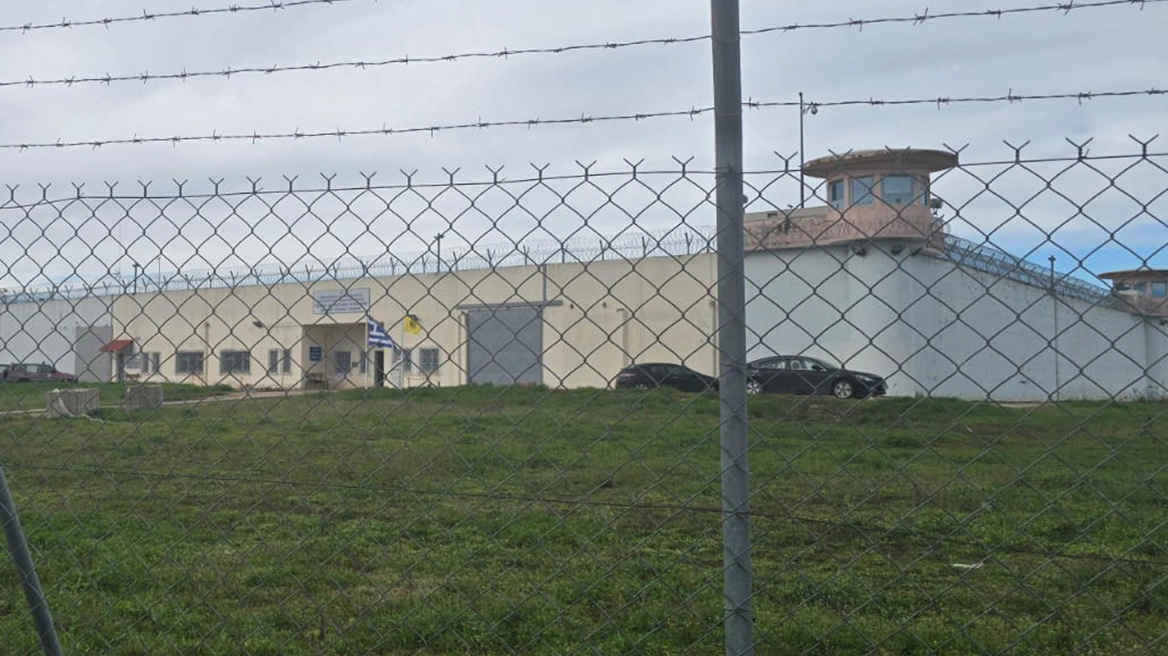
Although the wing commander, who was just short of retirement from the Hellenic Air Force, is now being held in Corinth, everything is only now beginning. And that is because he will not face only a long prison term, but also the search for… a new identity.
Specifically, military sources consider it extremely likely that the 54-year-old wing commander will become the first officer of the Armed Forces to fall under Article 298 of Law 5265/2026, which amends the Greek Citizenship Code (Law 3284/2004).
In particular, “a person may be declared deprived of Greek citizenship: (…) d. Anyone who commits the offense under Article 146 of the Penal Code (Law 4619/2019, A’ 95), concerning the violation of state secrets, or Article 144 of the Military Penal Code (Law 2287/1995, A’ 20), concerning the transmission of military secrets, provided they have been irrevocably convicted of these offenses,” the relevant law states. This means, in practical terms, that the 54-year-old spy will be stripped of his identity card, passport, and any other proof of identity by the Greek state, effectively living as a shadow person.
In such a case, he may seek citizenship in another country, if he has planned ahead, while the likelihood also increases that he could be extradited by Greek authorities to another country following a relevant request.
Indeed, extradition to a third country becomes even more likely if citizenship is revoked, with all that this entails for the course of his life from then on.
Vague provision
For those well acquainted with the matter, however, the provision that places potential spies outside the Hellenic Republic is deliberately and creatively vague, since messages are said to have reached the political leadership of the Greek Ministry of National Defence well before the passage of the omnibus bill last January.
According to information, the Pentagon had been informed at the time that retired officers of the Hellenic Air Force were providing services after retirement to a third country, though the content of those services was not clear.
This was also the reason the relevant provision reached Parliament in a deliberately “blurred” form, so that it would ultimately encompass all cases—active-duty and retired alike—where it might be applied.
In fact, when the intentions of the Minister of National Defence, Nikos Dendias, to introduce the specific provision became known, he came under fire from the opposition, whom he invited to a closed session of the Foreign Affairs and Defence Committee to present the information that had reportedly come to his attention.
Flurry of cases
Meanwhile, the outcome of the investigations is expected to complete the full case file regarding the 54-year-old wing commander so that any diplomatic steps can be set in motion, if deemed necessary, in the event of proven involvement by a third country.
In any case, the magazine Newsweek refers to a series of espionage cases involving active-duty military personnel of European states, prompted by the case of the 54-year-old, noting with regard to the Greek officer that “this is the latest in a string of espionage cases uncovered by European governments in recent weeks, but the accused is among the highest-ranking military officers alleged to have acted as agents of Chinese intelligence services.”
According to the magazine, the accused is said to have had access to classified information, including the movements of Greek, American, and NATO aircraft, highlighting the fact that the United States Air Force operates MQ-9 Reaper unmanned aerial vehicles from Larissa Air Base.
“Sophisticated network”
Citing Norway’s intelligence service in 2024, Newsweek observes that “China operates a sophisticated espionage network across Europe, with the help of Chinese political actors such as diplomats, travel delegations, private individuals, businesses, and special interest groups,” while reliable information from To Vima links the four arrests for espionage in France (two of them Chinese nationals) to the arrest of the 54-year-old wing commander, which followed 24 hours later.
Ask me anything
Explore related questions