




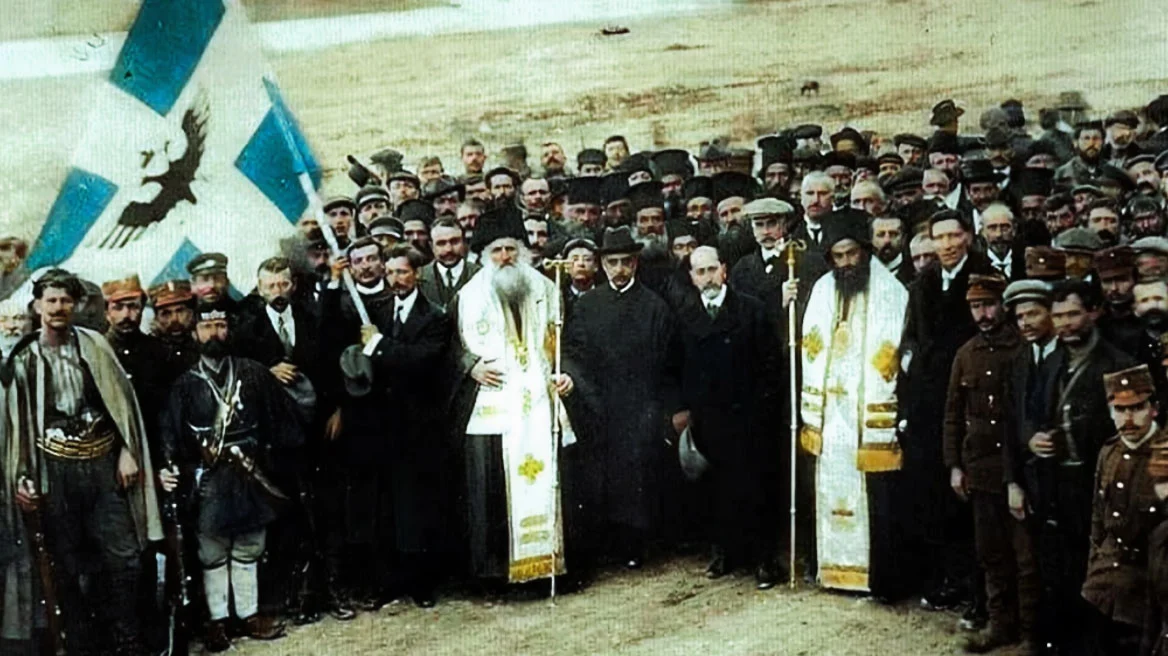
These days mark 112 years since the proclamation of the Autonomous Republic of Northern Epirus, which took place in February 1914. Historians disagree on the exact date: many write 17 or 18 February, quite a few others 28 February. What is certain is that the capital of this Autonomous Republic was Argyrokastro. The president of the government was the then General Governor of Epirus, Georgios Christakis Zografos (1863–1918), who originated from Kestorati of Argyrokastro. Its members included: Alexandros Karapanos (Minister of Foreign Affairs), Ioannis Parimenidis (Minister of Finance), Dimitrios Doulis (Minister of Military Affairs), and the Metropolitans Georgios of Korçë and Spyridon of Vella-Konitsa. Apart from Argyrokastro, the Autonomous Republic of Northern Epirus included Himara, Delvino, Agioi Saranta, and Premeti. Korçë, due to an incomprehensible action by Colonel Alexandros Kontoulis, was abandoned by the Greek troops at the mercy of the Albanians. Zografos had declared that any attempt by the Albanian gendarmerie to cross the borders of Northern Epirus would be met with arms, as it would constitute a hostile act.
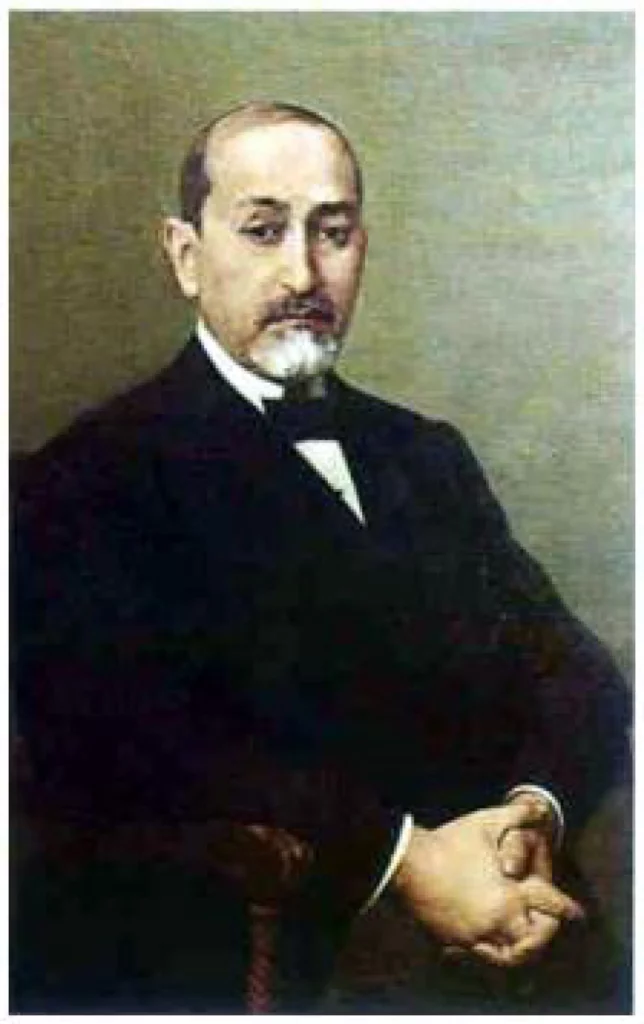
Georgios Christakis Zografos (1863–1918)
The fierce clashes between Northern Epirotes and Albanians, who were led by Dutch and Italian officers
On 13 February 1914, an ultimatum from the Great Powers was delivered to Eleftherios Venizelos, making it clear that Greece could exercise sovereignty over the islands of the Eastern Aegean (except Imbros, Tenedos, and Kastellorizo, which had not passed into Italian hands like the rest of the Dodecanese, but, having been freed from the Ottoman garrison, maintained a peculiar regime of autonomy) only if it abandoned Northern Epirus. Venizelos accepted, and it was agreed that the Greek troops would evacuate the territories they had captured with blood, gradually, from 1 to 31 March 1914. Imbros, Tenedos, and Kastellorizo would be given to Turkey.
As we have mentioned in earlier articles of ours, the Northern Epirotes refused to accept these accomplished facts and decided to resist, once again with the help of Cretan and Maniot volunteers, as well as military personnel and ordinary Greek citizens who rushed to their aid in the face of blatant injustice.
As the Greek Army began to withdraw, the Albanians, under the guidance of Dutch and Italian officers, attempted to seize the territories being evacuated. They were probably greatly surprised, however, when they found themselves confronted by armed Northern Epirote units, the “Sacred Battalions”… By an incredible coincidence, one of the first villages to come under attack was Vouno, located 8 km northwest of Himara and the village from which the mother of Albanian Prime Minister Edi Rama originated! It is (and was) a purely Greek village.
The people of Vouno were initially caught off guard, but soon launched a counterattack and repelled the Albanians. In the battle, Dimitris Spyrou and Nakos Lekkas distinguished themselves particularly (evidently, from some similar ancestral surname of Rama’s mother, the surname Koleka emerged, with the dropping of the “s”). The assistance of the village women was also extremely significant, led by Evlampia P. Spyrou, who took up arms and fought the Albanians. The utter defeat of the Albanians at Vouno was one of the main reasons why the representative of the Albanian government, the Dutch (!) Major Thomfon, requested a meeting with the Foreign Minister of Northern Epirus, Karapanos, and asked for autonomy. The Albanians (i.e., the Italians) refused. The discussions stopped, and the clashes resumed.
The new theater of operations was the area of Tepelena, particularly the villages of Kodra and Lekli, south of the city. Despite the numerical superiority of the adversaries and the fortified positions they held, the Northern Epirotes, with a fierce attack on the morning of 15 March 1914, retook Klisoura and the surrounding area. This was preceded by intense clashes near Kodra on 6 and 7 March 1914, in which the Northern Epirotes routed the Albanians and drove them northward. The operations were personally coordinated by Colonel Doulis, Minister of Military Affairs, born in Nivitsa of Dropull.
On 9 April 1914, 1,500 Albanians attacked the village of Pyliori, east of Himara. They suffered another utter defeat. Many were killed, while several were taken prisoner. During the same period, fierce clashes took place in the area between the Drino River and the village of Kurvelesi. The Northern Epirote forces repelled the Albanians and liberated the village of Pitsari, located northwest of Argyrokastro.
The Albanians continued their efforts to seize territories of Northern Epirus. On 12 April 1914, they attempted an assault against the village of Paliasa, 21 km northwest of Himara, but were repulsed. And when fire began from the artillery of the Himara headquarters, they retreated in disorder toward the Logara pass. There they fell into an ambush by the detachment of chieftains Papayannakis and Galeros, by which they were annihilated, while those who survived were taken prisoner.
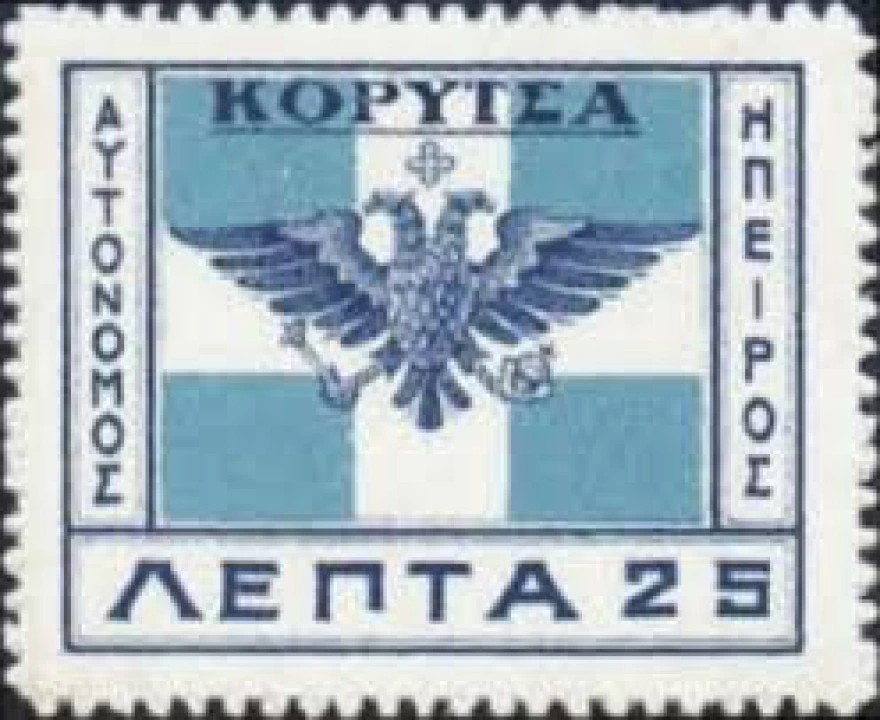
(Stamp of Koritsa, during the period of its autonomy)
After these failures, the Albanians, on the advice of their Dutch and Italian officers, decided to interrupt all communication between the Northern Epirotes of Himara and Agioi Saranta by capturing the ancient fortress of Busi, 38 km northwest of that city. On 18 April 1914, the Albanians seized the fortress, as it was defended by only a few Northern Epirotes. They were unable to hold it for long, however, because on 8 June 1914, forces of the Autonomous Army of Northern Epirus, led by Captain Vlasios and Second Lieutenant Mourelatos, retook it and fully restored communication between Himara and Agioi Saranta.
The battle at the Monastery of Tsepo that decided the struggle of the Northern Epirotes – The Albanians ask for surrender
Between Gardiki and Pitsario lies the historic Monastery of Tsepo. There, ferocious battles took place. The area is located northwest of Argyrokastro. The crushing of the Albanians in these clashes was decisive for Argyrokastro and essentially determined the fate of the autonomy struggle. After their Waterloo, the Albanians moved northward. Hard fighting also occurred in Kolonia, particularly in the area of its capital, Erseka, which had been handed over to the Albanians by Kontoulis. The latter occupied strategic points and, despite the presence of Dutch and Italian officers, committed unspeakable acts against the Northern Epirotes.
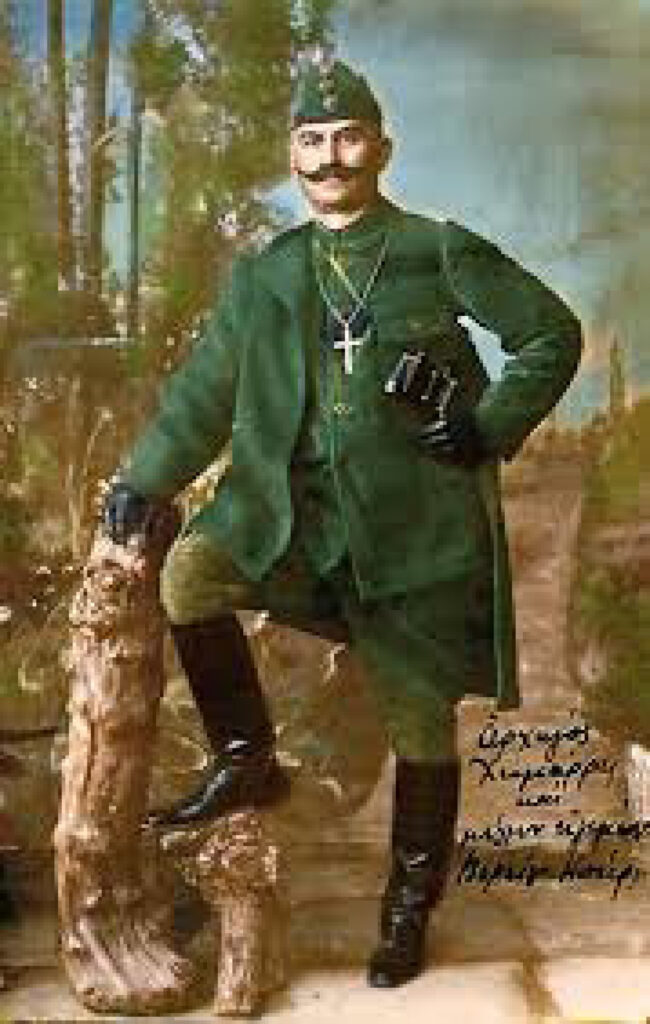
(The Himariot captain Spyromilios)
At the end of March 1914, new reinforcements arrived from Crete (2 Corps) and Aetoloakarnania (one Corps), which bolstered the General Commander of the Kolonia area, Nikolaos Tsipouras. On 23 April 1914, a body of the Albanian gendarmerie, with Dutch officers, attacked the Greek forces, reinforced by men of the Albanian chief brigand Sali Butka. The Albanians were repulsed and fled. During their withdrawal, they did not fail to commit their well-known barbarities: murders, rapes, abductions, lootings, and so on. Among their victims were the president of the village of Stika (north of Erseka), his son, and his son-in-law. It was Sali Butka who, in 1916, destroyed the historic Moschopolis, the “Athens of the Turkish yoke” (preceded by the first destruction, again by Albanians, during the Orlov Revolt), brazenly saying that these lands were Albanian! We will deal with Moschopolis in more detail soon.
Subsequently, after clashes that lasted three days, the Greeks liberated the entire Kolonia area, between Panariti and Bithikouki. The Albanians lost 500 men and their leader Naui bey Starjia. In Korçë, after its abandonment by the Greek Army, the Albanians entered the city and carried out a pogrom against the Northern Epirotes. The city was liberated for a few days, 20–24 March 1914, by the chieftains Soulios and Samaras, was recaptured by the Albanians, and was liberated, along with all of Northern Epirus, by the Greek Army a few months later.
The Albanians, despite the presence of Italians and Dutch, saw that they could not confront the Northern Epirotes. They turned to their patrons, the International Control Commission, and asked them to make concessions on the condition of stopping hostilities. Georgios Zografos accepted the proposal. Thus, we were led to the negotiations and the Protocol of Corfu (4/17 May 1914), which, among other things, provided for full autonomy for Northern Epirus, which was never implemented… The only one who refused to sign it, thinking wisely, was the Himariot Spyromilios.
Chaos in Albania – The Greek Army liberates Northern Epirus for the second time
Meanwhile, chaos prevailed in Albania, as most Albanians had Turkish national consciousness. Ismail Kemal, the first Prime Minister of Albania, and others proposed that a (Turkish) officer of the Turkish army (!), B. Grebené, be elected king of Albania. The International Control Commission rejected the request and appointed as king of Albania the German officer, Prince Wilhelm Wied, who, boarding an Austrian warship, disembarked at Durrës. Meanwhile, two governments had been created in Albania. One under Ismail Kemal, based in Vlorë, and the second under Esad Pasha Toptani in Durrës.
Toptani prevailed over Kemal. When Wied disembarked in Durrës, on European recommendations he appointed as Prime Minister the officer of the Turkish army, the Turk Turhan Pasha, originating from Thessaly. The Ministry of Military Affairs was taken over by Toptani, who two months later attempted to overthrow Wied. The latter was saved thanks to Austrian detachments that arrested Toptani and his guard and sent them to Naples in Italy. On 28 May 1914, Wied formed a new government, with himself as Prime Minister and Adif Pasho Elbasqhi as Minister of Military Affairs. Fearing for his life, Wied settled on the Italian ship “Mizurata” anchored in the port of Durrës and rarely went ashore! This is a comical situation, with a floating-amphibious king of an artificial state. For some Albanians to accuse Greece, 110 and more years after these events, as an artificial state created by the Anglo-Saxons is ahistorical and provocative. When someone has such a ridiculous “history,” it is better to remain silent…
The Albanian factions undermined Wied. Their only desire was the appointment of a Turkish ruler. On 14 June 1914, the factions controlled by the Turks rose up and rebelled. At the same time, they announced to the Great Powers that they would elect a Turkish ruler and raised Turkish flags in Vlorë, Shkodër, and elsewhere! Fierce clashes followed between these irregular hordes, composed of cadres of the old Ottoman Army and forces of the newly established Albanian gendarmerie. During them, the head of the Dutch military force, Colonel Thompson, was killed. Wied departed permanently from Albania on 3 September 1914. On 17 September 1914, Toptani returned to the country and was proclaimed president of a non-existent state… Meanwhile, the First World War broke out. The Great Powers, seeing the chaos in Albania, gave their consent to Greece (it was essentially an order, from the same ones who eight months earlier were ordering our country to do exactly the opposite) to reoccupy, in reality to liberate, Northern Epirus.
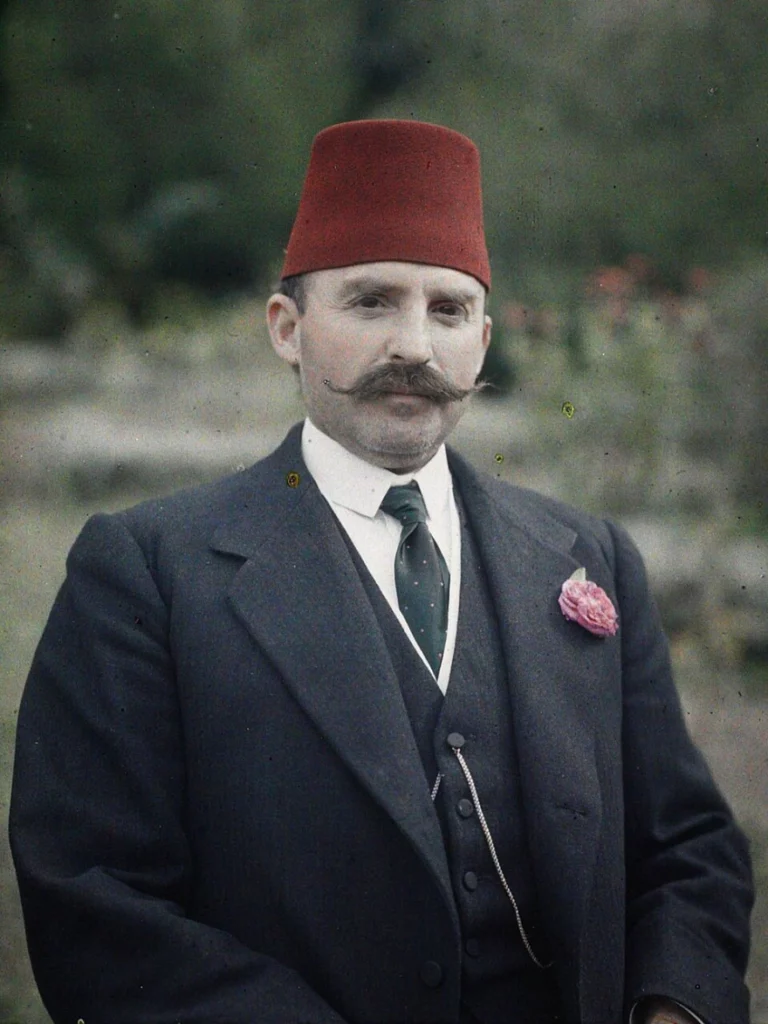
(Essad Toptani)
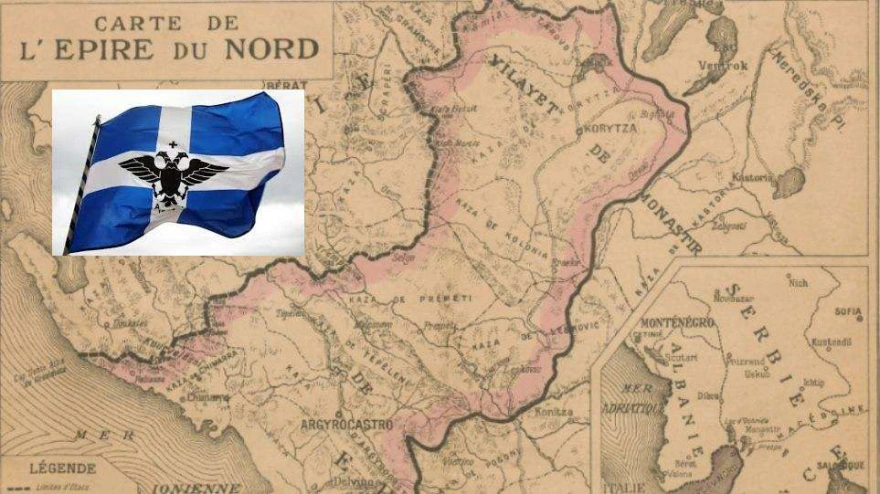
Our country, once again, complied. From 13 October 1914 to 1 November 1914, the 8th and 9th Divisions occupied a large part of Northern Epirus as you can see on the map. Agioi Saranta, Argyrokastro, Korçë, Erseka, Moschopolis, Premeti, Himara, Tepelena, Delvino, etc., were liberated, amid delirium of enthusiasm from their inhabitants, who celebrated and raised Greek flags in their homes, as well as flags of the Autonomous Northern Epirus. The Greek borders now in the northwest started from the Bay of Gramata, north of Himara, and reached approximately Pogradec, on Lake Ohrid. The Italians placed a veto on Vlorë, which they occupied, as well as Sazan, which had been given to Albania by law of the Venizelos government in May 1914. In 1915, Eleftherios Venizelos said in Parliament that only if colossal mistakes were made would Northern Epirus be lost. Unfortunately, those mistakes were made and Northern Epirus was given to Albania. Who made them and why? We will examine that in a future article. For now, let us see the tragic end of two Maniots in Northern Epirus and the incredible courage (or even audacity…) of one of them, in front of his executioners…
Berat and Captain Leontokianakos
As you can see on the map, Berat was outside the limits of the areas that were captured. However, the Northern Epirote forces advanced, captured the village of Ostrovitsa and the Klisoura straits. Heading toward Batska, he located the bodies of many Greeks who had been murdered by Albanian gangs. On 14 September, the Greek Army liberated Berat. The Albanian gendarmerie fled in haste to Durrës, while 50 Turco-Albanians who were stationed in the city surrendered to Second Lieutenant Kapetan-Fovera, who had only 8 men. Together with 150 men of Captain Antonios Leontokianakos, they forced the Albanian commander of the city to “willingly concede,” unconditionally, Berat. As Dr. Ioannis Papafloratos writes, the interpreter for the Greeks was the doctor Ioannis Kagiannas. The Greeks and Christians of Berat welcomed the Greek troops with enthusiasm and raised Greek flags in their homes.
The action of Leontokianakos took place without informing his superiors. Thus, the next day, when the political and military Commander of the area, Th. Mantouvalos, requested reinforcements, Zografos and Doulis replied to him that the city must be abandoned immediately for “supreme national reasons” (obviously it was outside the limits indicated by the Europeans). Leontokianakos did not obey. With 150 men and his adjutant, deputy, and cousin G. Stefanakos, they remained there. On 18 September they came under attack from a multitude of Albanians under Musa Kiazim, Colonel of the Albanian army. The latter disobeyed the orders of Esad Pasha, who had agreed with the Greek Army not to give battle in Berat, and clashed with Leontokianakos’s forces. Almost all the Greeks were killed, while some were taken prisoner. Leontokianakos and Stefanakos were captured and, after being interrogated, were led to the command headquarters of Berat.
On the way, the Albanians of Berat spat at them… In front of the Command Headquarters there were two trees. Under them, the Albanians had placed a chair and opposite it a machine gun. Stefanakos was ordered to sit. The bursts of the machine gun mowed him down. Leontokianakos followed. He kissed his dead cousin and placed him on the ground. He sat down, with one leg over the other, and smoked! Astonished, Kiazim and the Mufti of Durrës, Hadji Kaimil, watched the unruffled Maniot. Kiazim said to him: “Shout ‘Long live Albania’ and I will spare your life.” Leontokianakos replied: “You are dishonorable, both you and Albania. Long live Greece.” Furious, Kiazim ordered the execution of the Maniot, who continued to smoke! Although twenty bullets were fired toward him, Leontokianakos did not die, as he had not been hit critically!
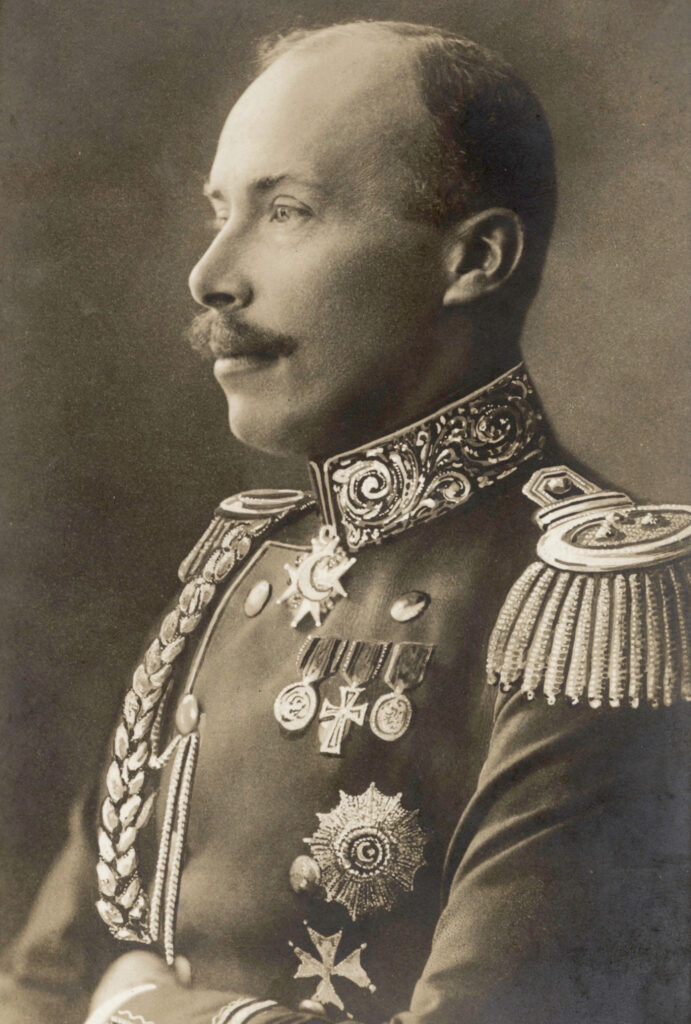
(Wilhelm Wied)
He even continued to curse the Albanians. Beside himself, Kiazim drew his revolver and fired five bullets into his head, almost at point-blank range, while another Albanian struck him in the back of the neck with a kama (a double-edged, double-pointed knife)… That was the end of yet another Greek who died like a hero…
Kiazim and Kaimil did not live long. They declared Esad deposed and proclaimed autonomy! Where, one wonders? In Berat? Esad pursued them. To escape, they fled to Serbian territory. But the Serbs arrested them and handed them over to Esad. He hanged them in front of those they had taken prisoner in Berat… (More details in the book by Periklis Sp. Drellias, “The Northern Epirote Struggle, 1914-1915, Occupation of Berat,” Athens 1990.
Epilogue
We close the article with what the French Prime Minister (1906-1909 and 1917-1920) Clemenceau wrote in the newspaper “L’Homme Libre” of Paris, as soon as he learned of the cession of Northern Epirus to Albania: “Here are 350,000 true Greeks distributed in villages whose very names declare their Greek origin. They managed to preserve their nationality against the Turks, and when the Greek troops arrived to liberate them from the Ottoman yoke, they told them and repeated to them that now their definitive restoration to the homeland was assured. Because initially the issue for the government of Athens and its diplomacy was the return of the whole of Epirus to Greece. And suddenly, without any preparation, without any guarantee for these unfortunate populations… good night, dear compatriots, and good luck with the Albanian bandits!!!” These words of Clemenceau we have written before. Unfortunately, during the critical period for Northern Epirus, this great politician was not Prime Minister of his country…
Sources:
VAS. GEORGIOU, “NORTHERN EPIRUS,” the continuing national tragedy,” RIGAS PUBLICATIONS
Dr. Ioannis S. Papafloratos, “HELLENISM OF NORTHERN EPIRUS THROUGH UNKNOWN DOCUMENTS,” 1st Edition, PELASGOS PUBLICATIONS, 2018.
“EPIRUS 4,000 YEARS OF GREEK HISTORY AND CIVILIZATION,” ATHENS PUBLISHING S.A., 1997
Ask me anything
Explore related questions