





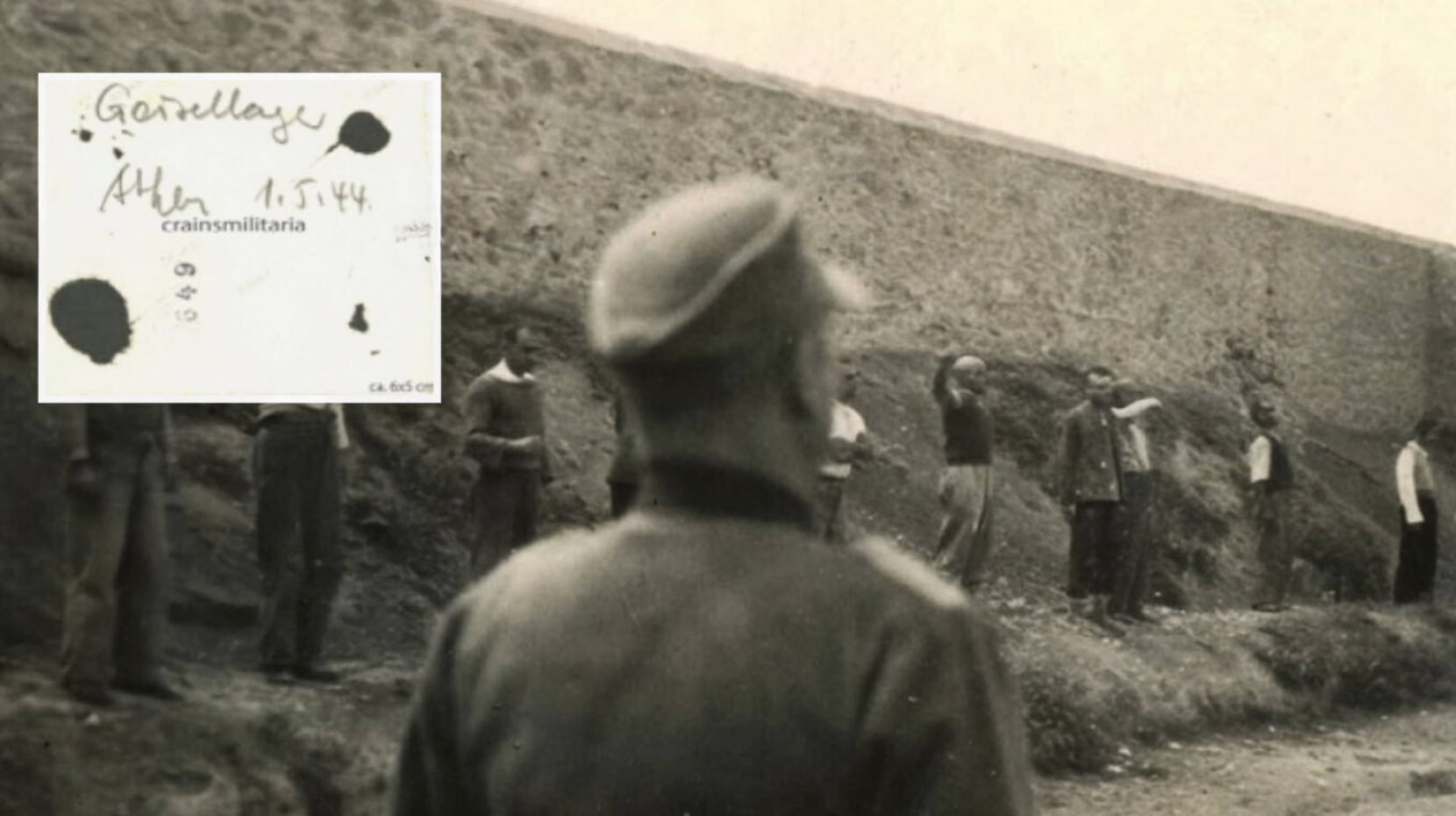
The entire collection of photographs documenting the mass execution of 200 Greeks—overwhelmingly communists—in Kaisariani on May Day 1944 has been proposed for designation as a monument due to its exceptional historical value. The collection constitutes evidence of how images were used by the propaganda apparatus of the Occupation forces in Greece during the Second World War. The recommendation was made at today’s session of the Central Council for Modern Monuments and was immediately ratified by the Minister of Culture, Lina Mendoni.
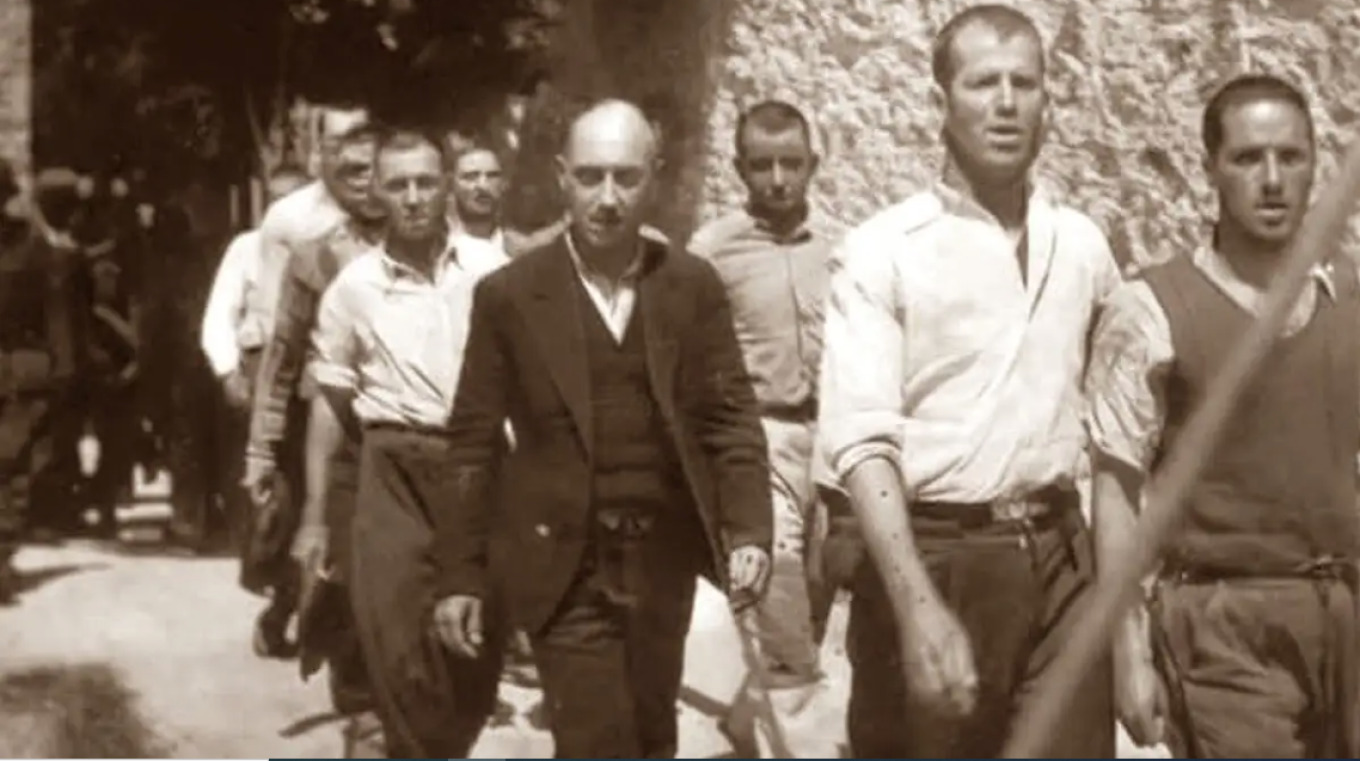
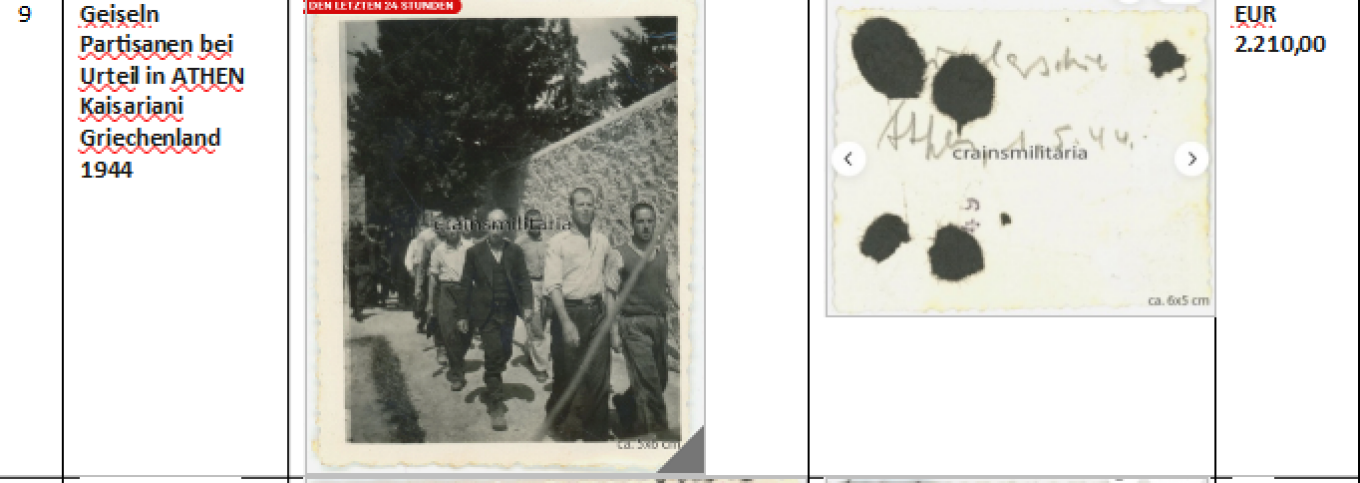
This officially opens the path for the Ministry of Culture to acquire not only the 12 photographs from Kaisariani that were put up for auction on Saturday, 14 February, by collector Tim de Craene through his company Crain’s Militaria and later withdrawn—whose authenticity is confirmed by the date written on their reverse—but also the collector’s entire archive belonging to Hermann Hoyer, a Wehrmacht lieutenant. The collection includes more than 160 photographs from occupied regions of Europe, including Greece. Hoyer, now deceased, had been ordered to observe the execution of the 200 Greek detainees transferred from Haïdari Camp to the Kaisariani Shooting Range.
As noted during the Council’s meeting, “the 12 photographs are priceless, as they give image and face to the historical testimonies of the ethos, morale, and patriotism of the Greeks who were executed, while the remaining photographs are also very important because they allow us to frame the tragedy of occupied Greece through the eyes of the occupier.”
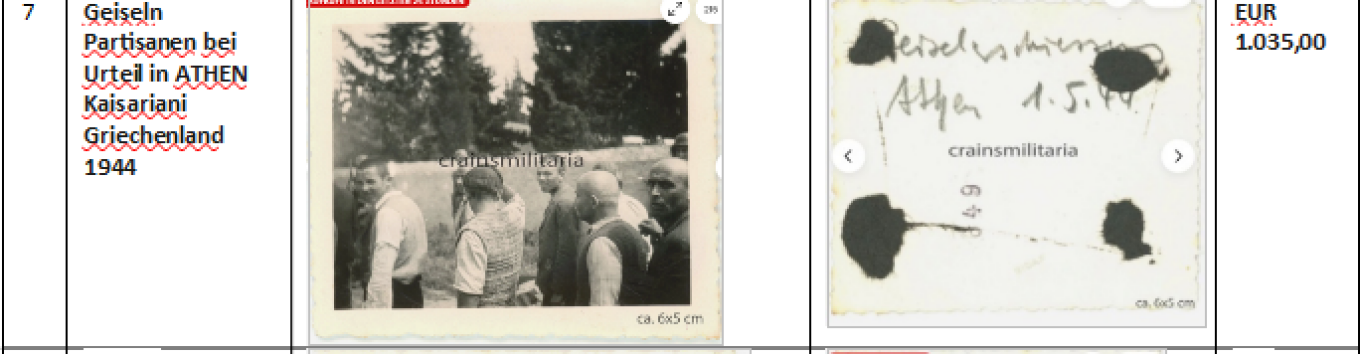
“The 12 photographs that came to light and depict Greek patriots shortly before their execution in Kaisariani on May 1, 1944, are exceptionally important documents of modern Greek history,” said Minister Mendoni. “They give ‘a face’ to historical testimonies of their ethos and patriotism moments before their execution and are therefore invaluable. The remaining photographs are also highly significant, as they allow us to contextualize the drama of occupied Greece from the perspective of the occupier. The propaganda machine set up by Joseph Goebbels exploited the cutting-edge information technologies of the time—cinema and photography—to create staged ‘proofs’ of ‘success’ and dissemination as tools of influence.”
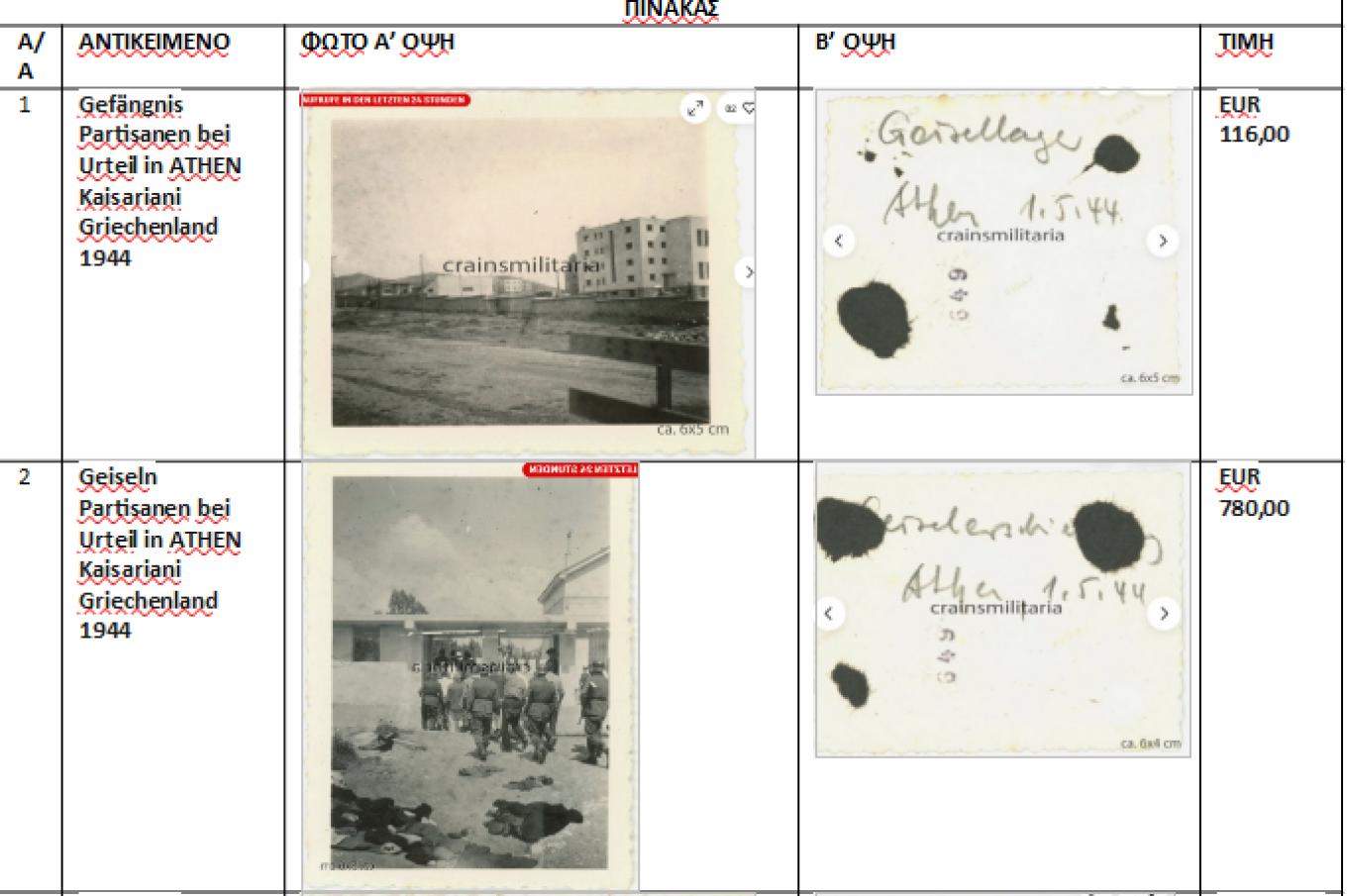
She added that once the Ministry of Culture was informed, instructions were issued for the potential acquisition of the photographs. The competent Directorate of Modern Cultural Heritage contacted the collector, and experts are traveling on Friday to Evergem, Belgium, to examine the collection firsthand and meet with him. With today’s designation of the collection as a monument, the Ministry acquires the legal basis to claim and acquire it on behalf of the Greek state.
Photography in the service of Nazi propaganda
Photography was a central weapon of Nazi propaganda. Goebbels emphasized that “every soldier has a non-negotiable duty to put his camera to work,” having designed the Propaganda Units. He stressed that the propaganda unit member was not a conventional reporter but a soldier, carrying—alongside weapons—his camera (often a Leica), pencil, and notebook, trained among soldiers and sharing their experiences.
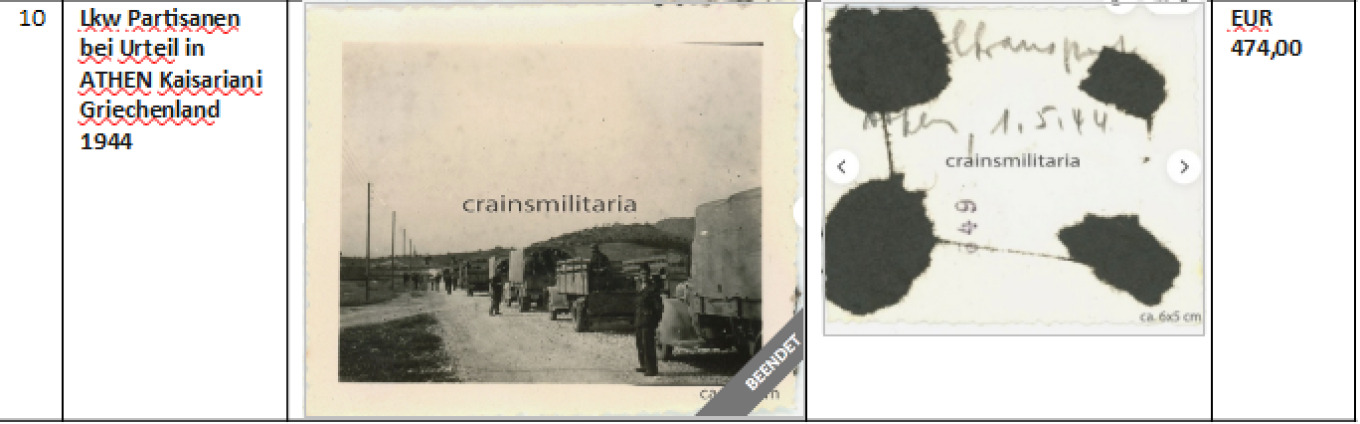
Propaganda Unit 960, responsible for coverage in the Balkans and Greece, involved many photographers, professional and amateur alike. Not all images of the German occupation in Greece were produced by this unit: SS units had their own press and image agency with darkroom and printing facilities. Thus, photographs of massacres and war crimes against the Greek population were taken either by members of PU 960 or by SS soldiers who were not necessarily professional photographers. Notably, images depicting atrocities were not intended for publication but for documentation, while images published by propaganda units typically showcased landscapes and the wealth of occupied countries.
Ask me anything
Explore related questions


