




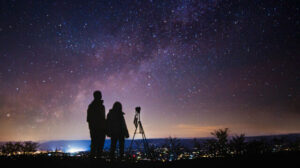
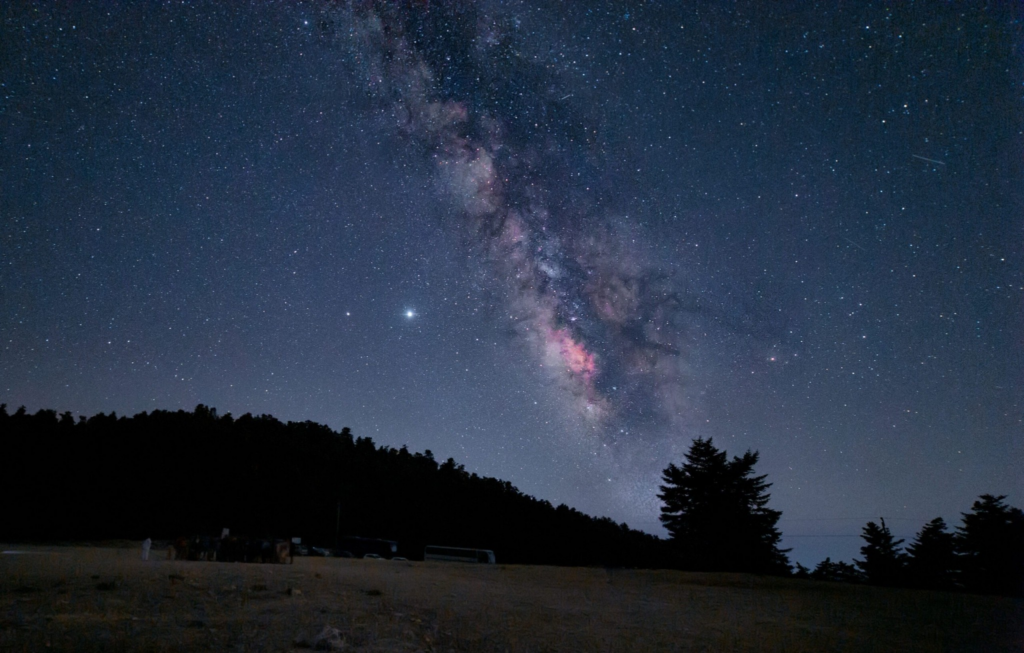
At an altitude of 1,600 meters in Aenos, Kefalonia, a group of thirty people stand in silence. There is no signal, no car, no lamp for miles around. Only darkness. And then, the Milky Way. Like a slit in the sky, like spilt milk on black velvet, the clichéd description you can’t avoid because, quite simply, that’s what you see.
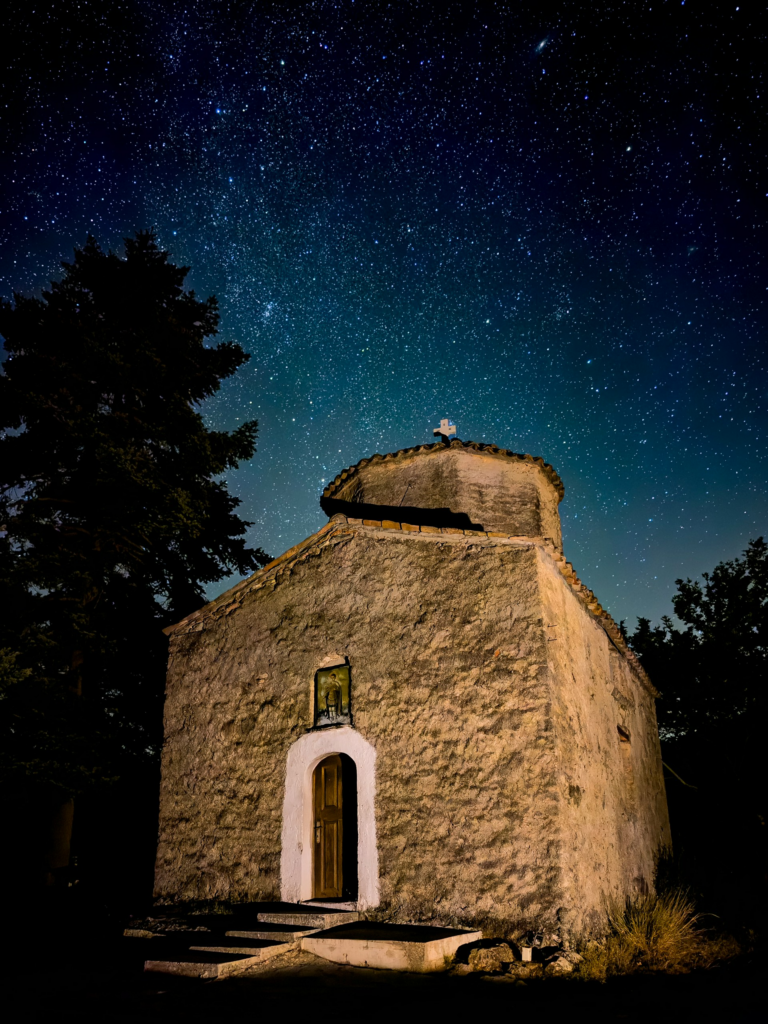
Somewhere on Mount Ainos, Kefalonia, at an altitude of 1,600 meters, a group of thirty people stand in silence. There is no signal, no car, no lamp for kilometers around. Only darkness. And then, the Milky Way. Like a tear in the sky, like spilled milk on black velvet—the cliché description you can’t avoid because, quite simply, that’s exactly what you see.
Astrotourism in Greece began like this: without a plan, without a budget, without a campaign. Just a few people carrying telescopes up mountains. Now, for the first time, it’s becoming policy.
The Sky Sells: Greece’s Top Astrotourism Destinations
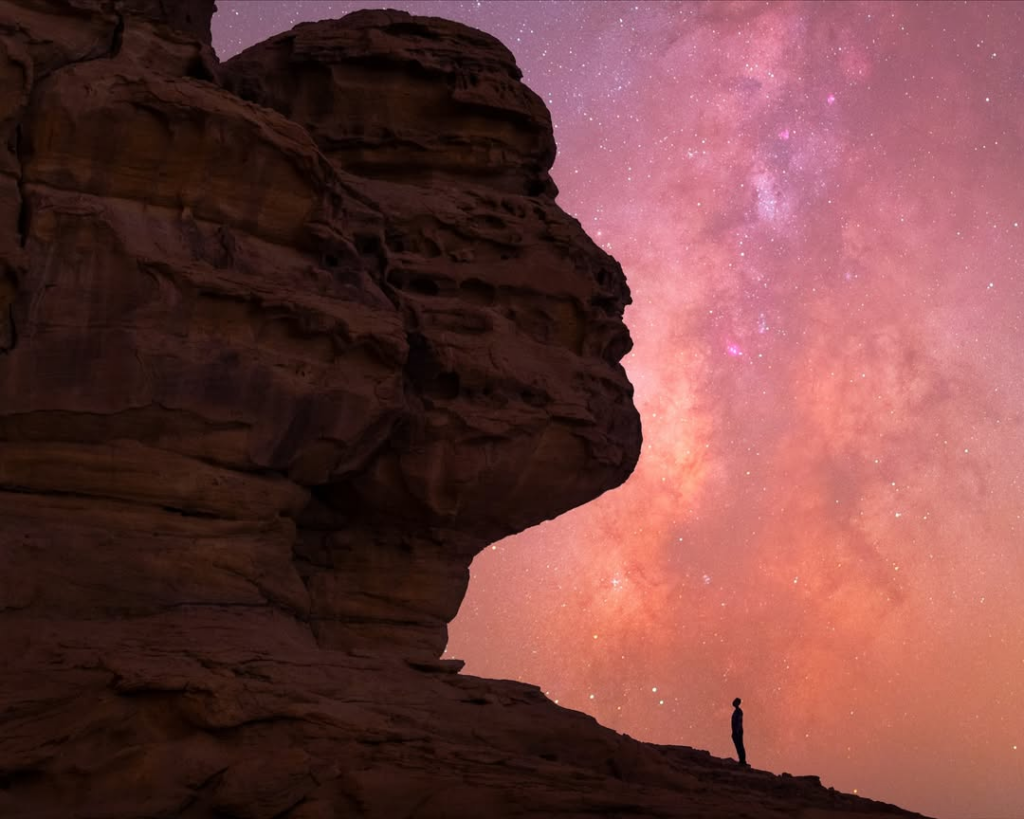
The night sky over AlUla, a landscape of ancient rocks and desert. Saudi Arabia is investing $35 billion in Vision 2030, with AlUla at the forefront. Photo: @experiencealula/Instagram
The idea of the night sky as a natural resource sounds strange—until you see the numbers. The astrotourism market, focused on dark skies rather than space travel, is valued at $250 million, with projections to reach $400 million in the next four years. Northern Lights tourism alone surpassed $834 million in 2023. Saudi Arabia is pouring $35 billion into Vision 2030, with AlUla, now a certified Dark Sky Reserve, leading the charge. On a planet drowning in light pollution, darkness is becoming a rare commodity. And like any rare commodity, it gains value.
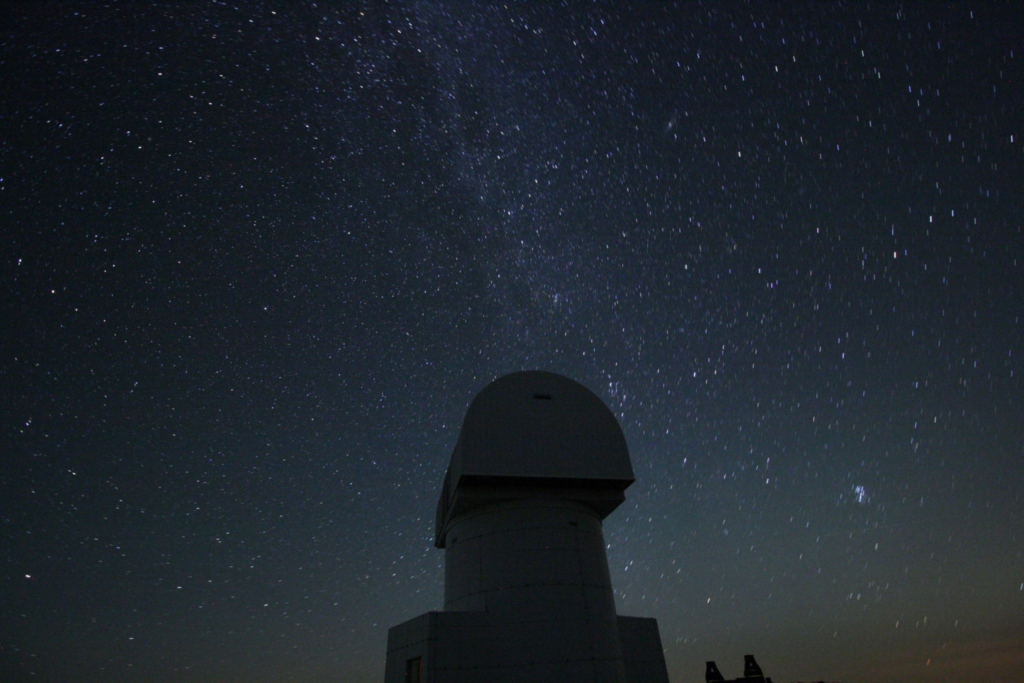
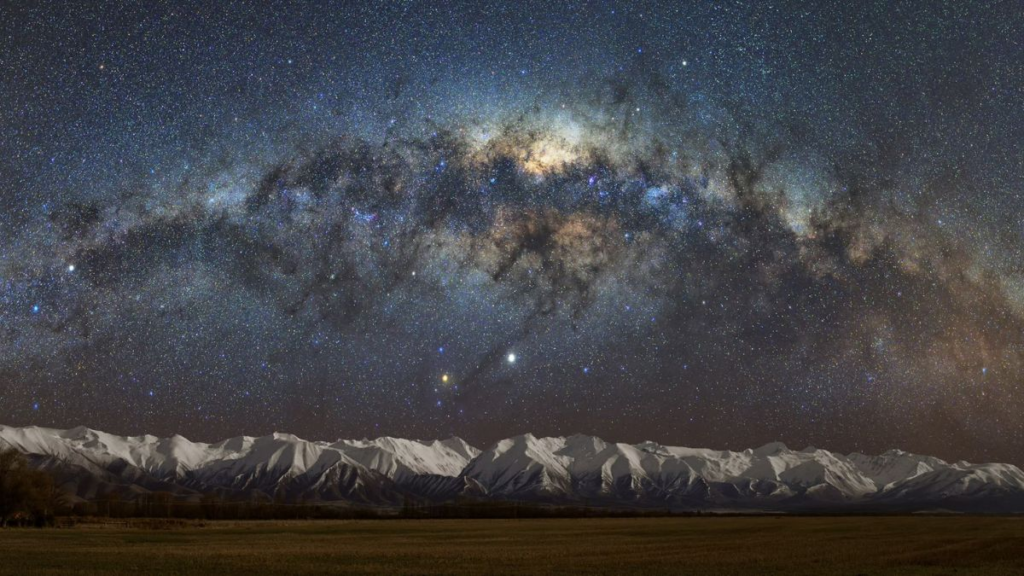
Chile transformed the Coquimbo region into an astrotourism hotspot, attracting 150,000 visitors annually and operating year-round. New Zealand followed, with Aoraki-Mackenzie bringing over $320 million to the local economy each year. The formula is the same everywhere: Dark Sky International certification, targeted infrastructure, educational programs. Then, the money follows.
Ainos: The Beginning
In June 2023, Ainos National Park became Greece’s first International Dark Sky Park. The certification isn’t just symbolic—it requires measurable sky quality, shielded lighting below 3,000K, public nighttime access, and at least four educational events per year. Darkness alone isn’t enough; a plan is needed. The “Ainos Star Nights” have become an institution: telescopes at the “Thea” viewpoint, green lasers mapping constellations, visitors discovering that Kefalonia is more than Myrtos and Antisamos beaches.
At “Chionistra,” the “Eudoxos” observatory operates. The mountain’s biodiversity—Kefalonian firs, wild horses, owls that need darkness to hunt—becomes part of the story. This isn’t just about astronomy. It’s about an ecosystem that thrives only in the dark.
Crete: Where Geoparks Look to the Sky
In eastern Crete, as part of the cross-border Geostars program linking Sitia, Psiloritis, and Troodos in Cyprus, a planetarium and astroschool are planned for the village of Sykia. The facility will include an 8-meter dome with 46 seats, solar telescopes, and a total budget of €780,000. The project isn’t just for visitors, but also for students, academics, and amateur astronomers, laying the groundwork for year-round astrotourism in an area that currently operates mainly in summer.
On Psiloritis, the Skinakas Observatory remains a well-kept secret. Its 1.3-meter telescope offers some of the highest-quality astronomical images in Europe, and during “Public Days,” it opens its doors to anyone who wants to experience the sky from a different perspective. It’s an active research institution with a strong outreach mission.
The “Aristarchos” at Helmos
In Kalavryta, at 2,340 meters, stands “Aristarchos,” the second-largest optical telescope in continental Europe. The ESA chose it as the first ground station for ScyLight, using laser communications between Earth and satellites. In the summer of 2025, it participated in NASA’s Psyche mission for deep-space Earth communication. Touristically, Helmos already has infrastructure: a ski resort, mountain refuges, the Diakoftó-Kalavryta railway. With dark sky certification and educational programs, it could become a year-round destination without reinventing the wheel.
Before ministries and certifications, there were the amateurs. The Panhellenic Amateur Astronomy Expeditions take place every summer on mountaintops above 1,000 meters. Parnonas is considered a top European stargazing destination. The 17th expedition, in 2025, moved to Drymonas Thermou, putting Aetolia-Acarnania on the map. Workshops in astrophotography, sky mapping, and observations until dawn. Mountain municipalities see tourism in months that would otherwise be dead. Astrotourism is already doing, spontaneously, what the “Greek Tourism 2030” plan aims for: temporal and geographical expansion.
There’s also the extreme version: the umbraphiles, or “eclipse chasers,” a term derived from the Latin umbra (shadow) and the Greek philia (love). Psychologist Kate Russo describes a sequence of emotions that begins with awe and ends in addiction. 59% self-identify as addicted. 67% say the activity defines who they are. These aren’t just psychological findings; they’re consumer behavior. Trips booked years in advance, to remote locations, at significant cost. Greece can already attract them, through annular eclipses, meteor showers, and comet sightings.
The Sky Won’t Wait
The “Aristarchos” Observatory faces staff shortages, while light pollution on the islands continues to rise. Meanwhile, there’s no national regulatory framework—unlike France and Croatia, which already have such policies—and even the spatial planning framework for tourism makes no mention of astrotourism. Yet, the necessary tools exist: certified accommodations, apps for predicting night sky conditions, specialized astronomy guides. All that’s missing is political will.
Greece has all the natural and cultural advantages: favorable latitude, clear atmosphere, mountain ranges, isolated islands, and an ancient astronomical tradition from Hipparchus to Aristarchus of Samos. At the same time, countries like Saudi Arabia, Chile, and New Zealand are racing ahead in developing astrotourism. The question, then, isn’t whether astrotourism suits Greece, but why it hasn’t yet become a national priority.
Ask me anything
Explore related questions