

×
GreekEnglish

×
  • Politics
  • Diaspora
  • World
  • Lifestyle
  • Travel
  • Culture
  • Sports
  • Cooking
Wednesday
14
Jan 2026
weather symbol
Athens 9°C
  • Home
  • Politics
  • Economy
  • World
  • Diaspora
  • Lifestyle
  • Travel
  • Culture
  • Sports
  • Mediterranean Cooking
  • Weather
Contact follow Protothema:
Powered by Cloudevo
> Science

This NASA photo of Saturn’s moon shows clouds you’ve never seen on Earth

Each pixel of the image equals roughly 2 miles!

Newsroom May 11 11:30

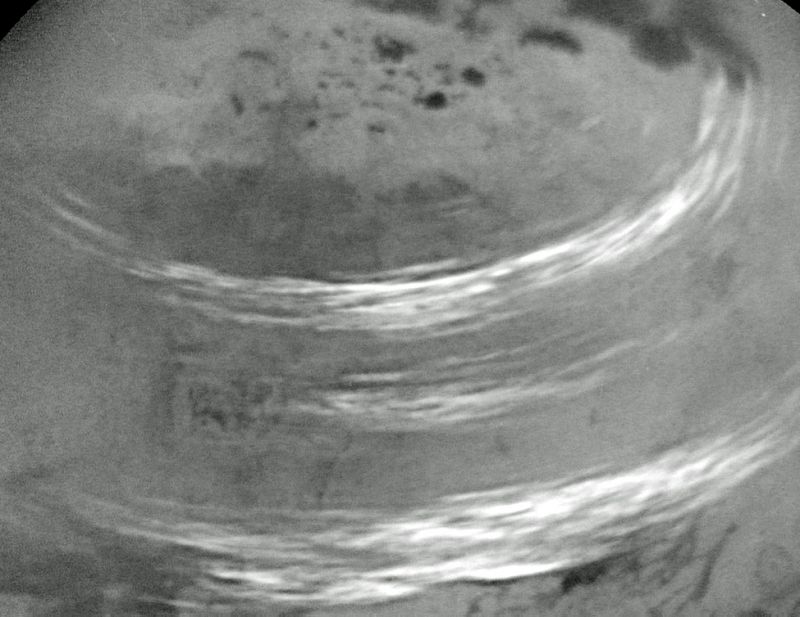
NASA’s Cassini spacecraft is currently conducting a series of elaborate dives in which it repeatedly comes closer to Saturn than ever before. But during its slower periods, NASA is still using the craft’s fantastic photography equipment to grab images of Saturn’s nearby bodies, such as the moon Titan. The latest photo from the agency shows Titan in all its glory, complete with some very volatile cloud cover.

pia21450_combo

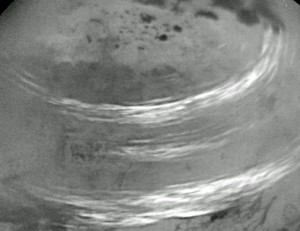
The new images, which were captured by Cassini on May 7th but not released immediately, show Titan in impressive detail, with long, feathery streaks of clouds obscuring portions of the landscape. But unlike the clouds we’re used to here on Earth — which are made of extremely tiny water droplets or bits of crystalized ice — the clouds you see in the Titan photos are actually made of methane.

In addition to Titan’s wealth of atmospheric methane, the planet also has vast lakes thought to be primarily made up of liquid ethane and methane, along with nitrogen. That’s an extremely hostile combination, at least in terms of Earth-like life. However, NASA isn’t ruling out the possibility that there may actually be methane-based life on the large moon, and even has some theories as to how it might survive.
>Related articles

Erich von Däniken, Swiss bestselling author who linked ancient civilizations to extraterrestrials, dies at 90

Sick astronaut on mission – NASA considers early return of International Space Station crew

Who were the predators on Earth before the dinosaurs

methane

According to NASA, these new photos were snapped at a distance of about 316,000 miles, which means that each pixel of the image equals roughly 2 miles. With that scale in mind, take a look at the dark splotches dotting the top of the image. Those are the huge methane-filled seas, which may or may not be home to huge, methane-filled whales.

Source

Ask me anything

Explore related questions

#Cassini#earth#methane#nasa#nature#Saturn
> More Science

Follow en.protothema.gr on Google News and be the first to know all the news

See all the latest News from Greece and the World, the moment they happen, at en.protothema.gr

> Latest Stories

Arrested 22-year-old man who was running at 167 km on the National Road of Thessaloniki – Moudania

January 14, 2026

Karystianou: Out of the Tempi Victims’ Association, with criticism toward relatives over finances: “I remain silent so as not to expose you”

January 14, 2026

Critical White House meeting on Greenland amid Trump’s threats to take over the island

January 14, 2026

The development plan for buildings on Alexandra Avenue has been launched

January 14, 2026

At least 2,571 people killed in repression of protests in Iran, according to human rights organisations

January 14, 2026

Natalia Kapodistria, the last descendant: “The film was extraordinary — It took my breath away”

January 14, 2026

Trump warns Iran of ‘very strong action’ if protester executions proceed

January 14, 2026

Sunshine till Friday – Weather unsettles over the weekend

January 14, 2026
All News

> World

Critical White House meeting on Greenland amid Trump’s threats to take over the island

Danish and Greenlandic Foreign Ministers to meet with Rubio and Vance

January 14, 2026

At least 2,571 people killed in repression of protests in Iran, according to human rights organisations

January 14, 2026

Trump warns Iran of ‘very strong action’ if protester executions proceed

January 14, 2026

Spain aims to control deepfakes created with AI

January 13, 2026

Le Pen’s party’s appeal to decide her presidential future begins

January 13, 2026
Homepage
PERSONAL DATA PROTECTION POLICY COOKIES POLICY TERM OF USE
Powered by Cloudevo
Copyright © 2026 Πρώτο Θέμα