×
GreekEnglish

×
  • Politics
  • Diaspora
  • World
  • Lifestyle
  • Travel
  • Culture
  • Sports
  • Cooking
Thursday
15
Jan 2026
weather symbol
Athens 16°C
  • Home
  • Politics
  • Economy
  • World
  • Diaspora
  • Lifestyle
  • Travel
  • Culture
  • Sports
  • Mediterranean Cooking
  • Weather
Contact follow Protothema:
Powered by Cloudevo
> technology

This worm grew a second head after a trip to space

In 18 years of working with these worms, this specific research team has never encountered the phenomenon

Newsroom June 14 01:05

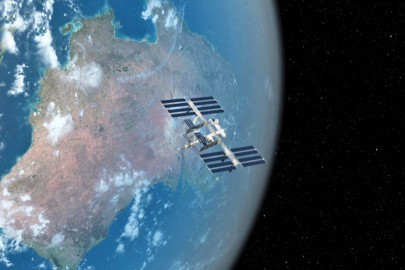
There are all kinds of experiments going on aboard the International Space Station, but they all probably don’t produce results as strange as this one. An article published today in the journal Regeneration details a recent experiment in which an amputated flatworm grew two heads — twice.

Planarian flatworms are known to have extraordinary regenerative properties. They can regrow complex organs, including a central nervous system, from small pieces of their bodies. In order to study how space travel might affect these regenerative abilities, the scientists sent a group of worms up to the International Space Station; half were amputated, with their heads and tails cut off, and half were normal.

The worms stayed aboard the ISS for five weeks, after which they were observed for 20 months on Earth. This was when scientists noticed something very strange: One of the 15 amputated worms actually grew two heads. While this has occurred in fully Earth-bound worms, it’s incredibly rare — in 18 years of working with these worms, this specific research team has never encountered the phenomenon.

>Related articles

Elon Musk: Don’t save for retirement – It won’t matter

Sick astronaut on mission – NASA considers early return of International Space Station crew

NASA published a new map of the universe; the “SPHEREx” space telescope changes the data landscape

The team once again amputated the worm (seriously, what did this worm ever do to them?) and it grew another double head from the cut end. This has led the scientists to hypothesize that space travel has made some fundamental change to the worm’s regeneration abilities.

It’s not quite clear yet what implications this study has for humans, though it does support the idea that our bodies are permanently changed by space travel. These worms will help further examine the risks of space travel, but even more important than that, they may help scientists discover how to extend worms’ regenerative properties to humans. After all, being able to regrow a limb would be pretty useful in deep space travel.

Source

Ask me anything

Explore related questions

#ISS#nasa#nature#science#space#technology#worm
> More technology

Follow en.protothema.gr on Google News and be the first to know all the news

See all the latest News from Greece and the World, the moment they happen, at en.protothema.gr

> Latest Stories

The ordeal of a 28-year-old Greek man in Australia: He went on holiday to visit relatives, was injured at a beach, and is at risk of quadriplegia

January 15, 2026

Princess Irene dies at the age of 83

January 15, 2026

Scientists uncover why the moon has a “two-faced” nature

January 15, 2026

Grief in Crete for the loss of Yannis Xylouris

January 15, 2026

“A Picasso for 100 euros” — Christie’s for a million-euro painting

January 15, 2026

Plyta in Pagkrati: Food for everyone in the atmosphere of a traditional café

January 15, 2026

Commander Ioannis Kizanis leads Greece’s newest Frigate “Kimon”

January 15, 2026

Hydrocarbon contracts in Parliament, Greece as an energy hub with Saudi Arabia and investments in the background

January 15, 2026
All News

> Greece

Princess Irene dies at the age of 83

Princess Irene, the younger sister of Queen Sofía of Spain, has passed away at the age of 83

January 15, 2026

Commander Ioannis Kizanis leads Greece’s newest Frigate “Kimon”

January 15, 2026

Naxos is on the list of the best destinations in the world for 2026

January 15, 2026

The most powerful passports in the world for 2026, the important position of Greece

January 15, 2026

Snow cover in Greece surpasses the seasonal average in January 2026

January 15, 2026
Homepage
PERSONAL DATA PROTECTION POLICY COOKIES POLICY TERM OF USE
Powered by Cloudevo
Copyright © 2026 Πρώτο Θέμα