

×
GreekEnglish

×
  • Politics
  • Diaspora
  • World
  • Lifestyle
  • Travel
  • Culture
  • Sports
  • Cooking
Sunday
18
Jan 2026
weather symbol
Athens 7°C
  • Home
  • Politics
  • Economy
  • World
  • Diaspora
  • Lifestyle
  • Travel
  • Culture
  • Sports
  • Mediterranean Cooking
  • Weather
Contact follow Protothema:
Powered by Cloudevo
> Culture

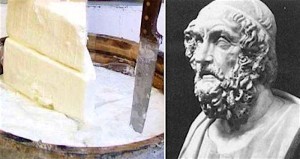
The Ancient Greek roots of Feta Cheese

Given that the “Odyssey” was written in 8th century BC, the origin of feta is indisputably Greek

Newsroom January 30 09:31


As Greece fights to maintain the name of feta cheese as a Protected Designation of Origin (PDI) product, the Real Greek Feta website provides great evidence that the first mention of the famous cheese is as old as Homer’s “Odyssey”.

When Odysseus and his men enter the cave of Cyclops Polyphemus, the first thing they notice is the smell and sight of the rich, white cheese made with goat and sheep milk in brine. Homer writes:

“We entered the cave, but he wasn’t there, only his plump sheep grazed in the meadow. The woven baskets were full of cheese, the folds were full of sheep and goats and all his pots, tubs and churns where he drew the milk, were full of whey. When half of the snow-white milk curdled he collected it put it in the woven baskets and kept the other half in a tub to drink. Why my good ram are you the last to leave the fold? You have never been left behind by the flock before. You were always first walking ahead to graze the tender sheets of grass”.

>Related articles

President of Air Traffic Controllers: Another communications blackout possible in the near future

X is down, thousands report problems

Less alcohol and lower speeds with the new Highway Code and strict fines

According to myth, Cyclops Polyphemus made the cheese that was later to be called feta by accident. Transporting the milk that he collected from his sheep in skinbags made of animal stomachs, one day he realized that the milk had curdled and had taken a solid, tasty and conservable form. Given that the “Odyssey” was written in 8th century BC, the origin of feta is indisputably Greek.

The ancient Greeks called the product that came from the coagulation of milk “cheese”. The name Feta, literally meaning “slice,” originated in the 17th century, and probably refers to the practice of cutting the cheese in slices to be placed into barrels. The name Feta prevailed in the 19th century, and since then has characterized a cheese that has been prepared for centuries using the same general method, and whose origin is lost in time.

Source: Philip Chrysopoulos/greekreporter.com

Ask me anything

Explore related questions

#ancient greece#feta cheese#gastronomy#greece#Greek cuisine#history#Homer#Odyssey
> More Culture

Follow en.protothema.gr on Google News and be the first to know all the news

See all the latest News from Greece and the World, the moment they happen, at en.protothema.gr

> Latest Stories

Politico: Europe for the first time considers tough response to Trump on Greenland tariffs, what is the Anti-Brexit Act

January 18, 2026

The backstory behind Trump’s decision not to attack Iran: The camps in the White House, the SMS from Tehran, and the calls from Arab allies

January 18, 2026

Mitsotakis: Greece will not be challenged by anyone with the Belharra frigates – Our goal is to support farmers with transparent subsidies

January 18, 2026

Akylas receives rave reviews for his Eurovision 2026 Greek final entry: “We might actually win with this little gem,” Fans write

January 18, 2026

What Trump is seeking with the extra tariffs on eight European countries for Greenland, the trade deal with the EU is in the air

January 18, 2026

The global era of Messinia: How the film Odyssey and the lists of major media praise it for 2026

January 18, 2026

Greek exports broke records with a record 37 billion euros

January 18, 2026

Sakkari delivers the ‘point of the year’ as she advances at the Australian Open

January 18, 2026
All News

> World

Politico: Europe for the first time considers tough response to Trump on Greenland tariffs, what is the Anti-Brexit Act

The Europeans are under pressure to abandon the soft approach they have adopted so far towards Trump

January 18, 2026

The backstory behind Trump’s decision not to attack Iran: The camps in the White House, the SMS from Tehran, and the calls from Arab allies

January 18, 2026

What Trump is seeking with the extra tariffs on eight European countries for Greenland, the trade deal with the EU is in the air

January 18, 2026

War, diplomacy, or insurrection: What’s next in Iran

January 17, 2026

New tensions in the Middle East as Trump invites regional leaders to the Gaza Peace Council

January 17, 2026
Homepage
PERSONAL DATA PROTECTION POLICY COOKIES POLICY TERM OF USE
Powered by Cloudevo
Copyright © 2026 Πρώτο Θέμα