





European households and businesses will have to recycle at least 55% of their municipal waste by 2025, according to stricter new rules passed by the European Parliament on Wednesday (18 April).
The legislation is part of a review of a series of directives agreed with the member states to improve the European economy’s ‘green credentials’. After the Parliament’s plenary vote, the Council will have to give its final consent.
After 2025, the recycling target will increase 1 percentage point every year to reach 65% in 2035.
The EU produced 2.5 billion tonnes of waste in 2014. One-third came from the construction sector and only 8% from household consumption.
Member states’ practices vary enormously. Only 8% of household waste is recycled in Malta, while in Germany the figure is as high as 66%.
But on the whole, Europeans are recycling more. For comparison, Western EU countries (EU15) recycled 55.6% of their packaging in 2004 and 67.8% in 2013.
The legislative package also includes a proposal for packaging and packaging waste, for landfill of waste, and dumped vehicles, waste batteries and waste electrical and electronic equipment.
As part of the lengthy negotiations with the Council, MEPs pushed for more ambitious targets for recycling packaging materials and landfilling.
Specific targets
As of 2025, 65% of packaging materials would have to be reused, and 5% more in 2030. The legislation includes specific targets for different packaging materials, including paper and cardboard, plastics, glass, metal and wood.
There will be also a 10% limit by 2035 to the waste cities send to the landfill.
In this case, the differences among member states are more striking. Austria, Belgium, Denmark, Germany, the Netherlands, Finland and Sweden send almost no waste to landfills.
On the opposite side, Malta sends almost all its waste (92%) to the junkyard, and Cyprus, Greece and Romania more than 80%.
The Parliament’s rapporteur Simona Bonafe said it was a “great victory” that MEPs had succeeded in improving the targets.
But she told reporters that the “challenge is more ambitious”. It is about changing the economic model – from linear, where consumers throw away most of their waste, to circular, in which materials go back to the economic cycle.
The EU wants to position itself as a world leader in circular economy, where products, materials and resources are maintained in the economy for as long as possible.
New goals
The revision of the EU rules also introduced new requirements.
Households’ textiles and hazardous waste will thus have to be collected separately by 2025. By 2024, biodegradable waste will also have to be either collected separately or recycled at home through composting.
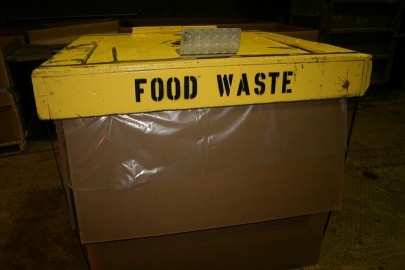
The EU also aims to reduce food waste by 30% by 2025, and then cut it by half by 2030. In order to reach that goal, EU countries should offer incentives for the collection of unsold food and its redistribution.
MEPs also noted the need to clarify further the difference between “use by” and “best before” labels on products.
Industry and environmental organizations broadly welcomed the new rules.
Mauro Anastasio of the European Environmental Bureau (EEB) said the new laws “could have been more ambitious, but their successful implementation will help governments consolidate this progress with benefits for the people and society as a whole.”
The EEB praised Netherlands, Sweden, Austria and Belgium for their efforts to raise the standards during the three-year drafting process.
But the bureau criticised Germany, the UK, Spain, Portugal, Hungary and the Czech Republic for weakening the targets.
The organization was unhappy to note that the new rules fall short of supporting the use of technologies that would reduce harmful pollution coming from waste incineration.
EUROPEN, which groups multinationals in various sectors, welcomed the introduction of minimum requirements in the legislation for packaging.
“It will increase transparency, cost-efficiency, accountability, and enforcement of Extended Producer Responsibility obligations at the national level,” said its chairman Hans van Bochove (Coca-Cola European Partners).
“We regret, however, the remaining unclear demarcation of producers’ financial obligations, which could potentially be extended beyond producers’ roles and responsibilities at the national level,” he added.
Source: euractiv
Ask me anything
Explore related questions