





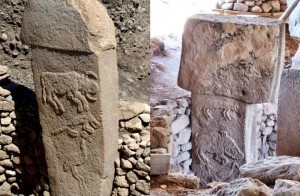
Around 12,800 years ago, the Earth suddenly dipped into a mini ice age, and nobody really knows why. One of the leading theories is that the cataclysm was triggered by a comet striking the planet, and now, archaeologists believe they’ve found a first-hand account of the story recorded in the remains of an ancient Turkish temple.
At the end of the Pleistocene period, the Earth’s temperatures took a nosedive for about 1,300 years, particularly in the Northern Hemisphere. This “Big Freeze” is known to scientists as the Younger Dryas, and it’s generally believed to have begun when the natural ocean currents in the North Atlantic were shut down by a sudden influx of cold, fresh water.
But a competing theory says that a cosmic collision could be the culprit. The rocks and ice that make up the surface of the Earth are a pretty reliable time capsule of the planet’s geological and climatic history, and in 2014 researchers found a layer of tiny diamonds in the layer corresponding to the Younger Dryas period. These nanodiamonds could only be forged in extreme temperatures and pressures – like that of a comet striking the Earth. The only other known nanodiamond layer in the record sits at the Cretaceous-Tertiary boundary, when an asteroid wiped out the dinosaurs.
So what does all this have to do with an ancient temple in modern-day Turkey? Surprisingly, carvings found there may help settle the debate. Archaeologists studying the site of Göbekli Tepe believe they’ve found a record of the apocalyptic event carved in a pillar known as the Vulture Stone, which seems to be “stamped” with a date very close to that of the cataclysm. Evidence suggests the site was used as an observatory, and other symbols give some insight into the possible devastating effects on human populations at the time.
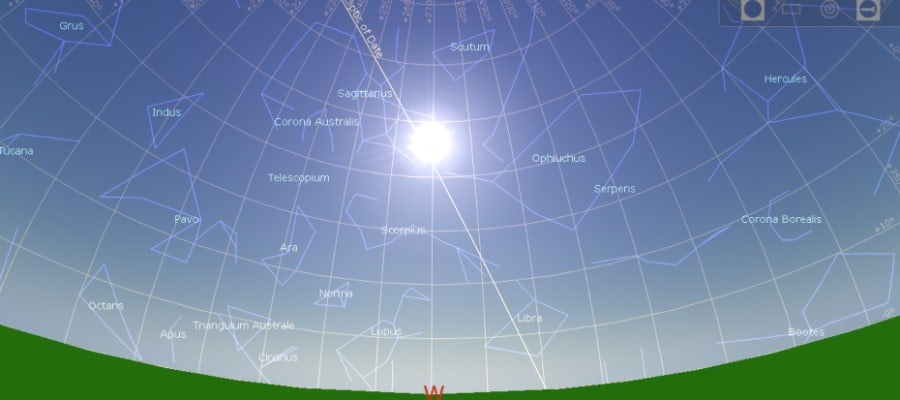
The stone is adorned with images of animals that seem to line up with the constellations of the Zodiac. With that in mind, a strange set of symbols along the top of the pillar appear to point to a specific point in time, according to when the sun was “in” those constellations, and using star-tracking software called Stellarium, the researchers were able to track what the sky looked like in the time Göbekli Tepe was in use.
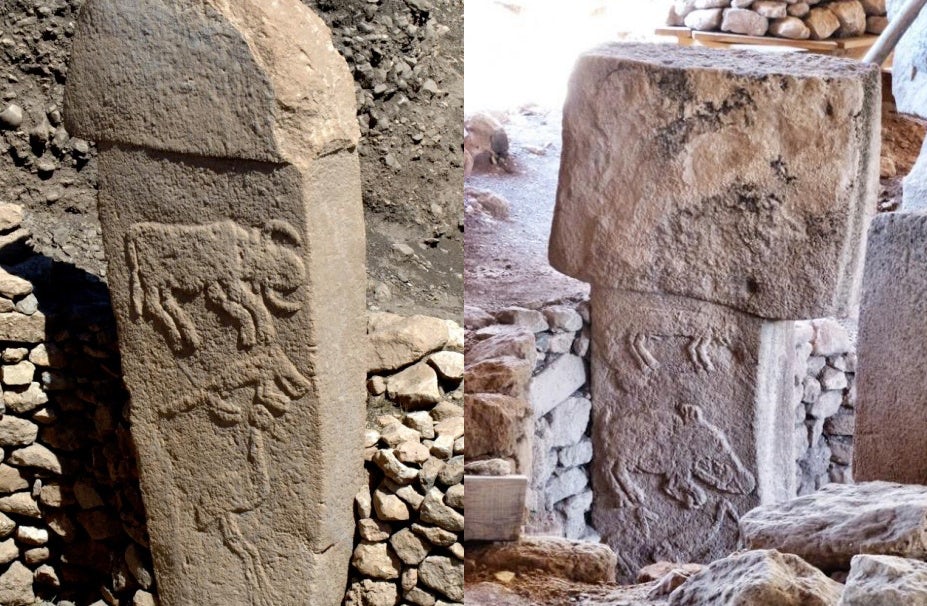
If their interpretation is correct, the date that the Vulture Stone mentions is about 10,950 BCE – which closely lines up with the estimated beginning of the Younger Dryas period, 10,890 BCE.
Previous research has linked the ancient site to comets and meteors, and there’s a particular symbol that the researchers say looks like a comet striking the ground. There’s a headless man depicted elsewhere on the column, and the researchers believe this could represent the loss of human life that the collision and subsequent climate change would have caused. Comet or not, it’s generally believed that the Younger Dryas event would have greatly disrupted the progress of humans at the time.
“It appears Göbekli Tepe was, among other things, an observatory for monitoring the night sky,” explains Martin Sweatman, an author of the study. “One of its pillars seems to have served as a memorial to this devastating event – probably the worst day in history since the end of the ice age.”
While it’s certainly an interesting hypothesis, the story does rely on a lot of speculation and creative interpretation, so it’s best to take the ideas with a grain of salt.
Source: newatlas
Ask me anything
Explore related questions