

×
GreekEnglish

×
  • Politics
  • Diaspora
  • World
  • Lifestyle
  • Travel
  • Culture
  • Sports
  • Cooking
Sunday
18
Jan 2026
weather symbol
Athens 7°C
  • Home
  • Politics
  • Economy
  • World
  • Diaspora
  • Lifestyle
  • Travel
  • Culture
  • Sports
  • Mediterranean Cooking
  • Weather
Contact follow Protothema:
Powered by Cloudevo
> World

How Jesus died: Extremely rare evidence of 2.000-year-old Roman crucifixion discovered (PHOTO)

The discovery marks only the second time direct evidence of the practice has been found

Newsroom June 8 06:36

The 2,000 year old corpse of a man buried in northern Italy shows signs he may have been nailed to a wooden cross and crucified in the same manner as the Bible describes Jesus Christ died.

Although crucifixion in the Roman Empire was a common form of capital punishment, the discovery marks only the second time direct evidence of the practice has been found, reports Live Science.

The remains were discovered near Venice in 2007 but a new study by researchers at two universities in Ferrara and Florence reveal tell-tale, albeit inconclusive, signs the man had been nailed to a cross.

The study revealed a lesion and unhealed fracture on one of the heel bones suggesting his feet were nailed to a cross, but the skeletal remains were in poor condition and the other heel bone is missing.

The researchers were unable to find evidence the man’s wrists were nailed up in the same way Jesus was executed. However, his arms may have been tied to the cross using rope, another method common at the time.

“A depressed, unhealed fracture in the heel bone suggested a metal nail had been driven through it, from the inside to the outside of the right foot, either directly onto the wood of a cross or into a wooden footrest attached to a cross,” reports Live Science.

Medical anthropologist Emanuela Gualdi, lead researcher in the study, said, “We found a particular lesion on the right calcaneus [heel bone] passing through the entire bone.”
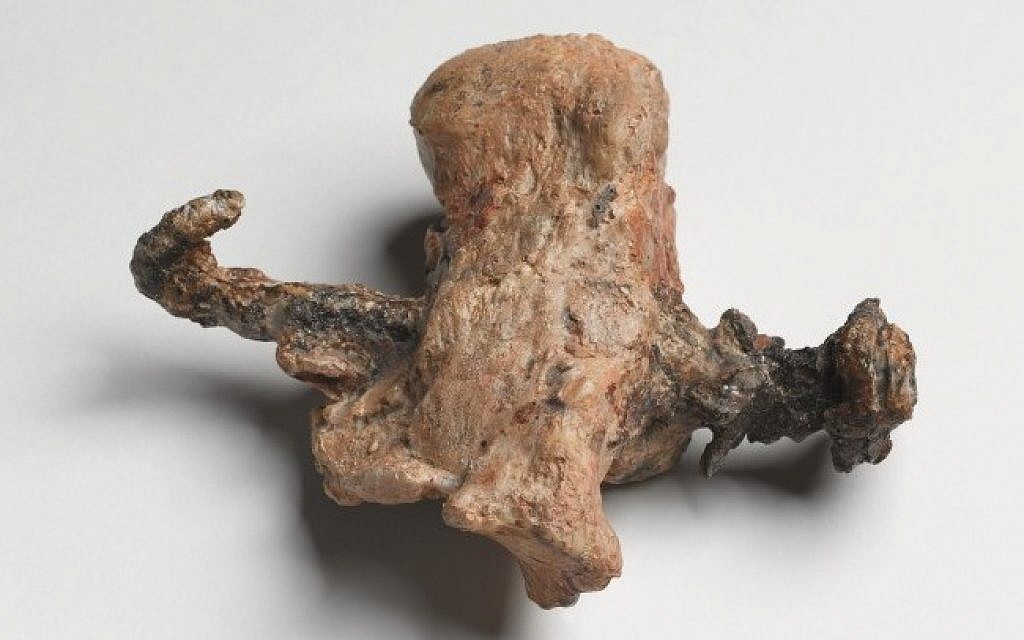
Heel-bone-and-nail-from-the-ossuary-of-‘Yehohanan-son-of-Hagkol”-Jerusalem-1st-century-CE-1024x640

(Nail through a heel bone found in 1968)

The body was found about 25 miles southwest of Venice during an excavation before workers prepared to lay a pipeline. The researchers published their findings on April 12 in the journal Archaeological and Anthropological Sciences.

Genetic testing showed the short, slim man was between 30 and 34 years old when he died and was buried directly in the ground, rather than the usual Roman burial method of being placed in a tomb or accompanying the body with goods and artifacts.

The nature of the burial and his slight stature suggests the man may have been a malnourished slave. The Romans learned crucifixion from the Carthaginians and used it as a form of punishment for over 1,000 years until Emperor Constantine banned the practice in the 4th Century A.D.

>Related articles

“All cash”: Netflix is preparing a strategic move to accelerate its $83 billion deal with Warner Bros.

Why Gen Z is returning to religion: what new research in the United Kingdom shows

Natalia Kapodistria, the last descendant: “The film was extraordinary — It took my breath away”

The only other time evidence of a crucifixion has been discovered occurred in Jerusalem in 1968. During an excavation archeologists found a 7-inch-long metal nail driven through the heel bone of a body found in a tomb. The nail was attached to a piece of olive wood.

Despite the large number of crucifixions that occurred during the time, evidence is hard to come by because metal nails were often salvaged after death, the remains are often in poor condition, and the type of lesions usually caused bones to easily fracture, making scientific interpretation of the injuries more difficult.

Source: dangerous

Ask me anything

Explore related questions

#agrophotovoltaics#archaeology#christianity#crucified#crucifixion#culture#discovery#evidence#excavations#history#israel#italy#Jesus Christ#religion
> More World

Follow en.protothema.gr on Google News and be the first to know all the news

See all the latest News from Greece and the World, the moment they happen, at en.protothema.gr

> Latest Stories

Mitsotakis: Greece will not be challenged by anyone with the Belharra frigates – Our goal is to support farmers with transparent subsidies

January 18, 2026

Akylas receives rave reviews for his Eurovision 2026 Greek final entry: “We might actually win with this little gem,” Fans write

January 18, 2026

What Trump is seeking with the extra tariffs on eight European countries for Greenland, the trade deal with the EU is in the air

January 18, 2026

The global era of Messinia: How the film Odyssey and the lists of major media praise it for 2026

January 18, 2026

Greek exports broke records with a record 37 billion euros

January 18, 2026

Sakkari delivers the ‘point of the year’ as she advances at the Australian Open

January 18, 2026

New legal migration rules for 90,000 pending residence permits

January 18, 2026

Weather: Why the new cold wave brings little snow until Tuesday – Stronger weather deterioration expected from Wednesday

January 18, 2026
All News

> World

What Trump is seeking with the extra tariffs on eight European countries for Greenland, the trade deal with the EU is in the air

The BBC calls it an unprecedented move, the Guardian calls it a devastating blow to the 2025 summer agreement

January 18, 2026

War, diplomacy, or insurrection: What’s next in Iran

January 17, 2026

New tensions in the Middle East as Trump invites regional leaders to the Gaza Peace Council

January 17, 2026

The horror of the “Tariff of the Dead”: how the Iranian regime prices the bodies of protesters

January 17, 2026

Greenland as the first line of defense for the U.S. and NATO: See the maps that explain Trump’s keen acquisition

January 17, 2026
Homepage
PERSONAL DATA PROTECTION POLICY COOKIES POLICY TERM OF USE
Powered by Cloudevo
Copyright © 2026 Πρώτο Θέμα