




On the eastern bank of the Euphrates River, Kurdish militiamen aligned with American troops burrow into sandbagged positions and eye their foes across the water.
On the other side, Arab rebels backed by Turkey shoot at anyone who nears the river.
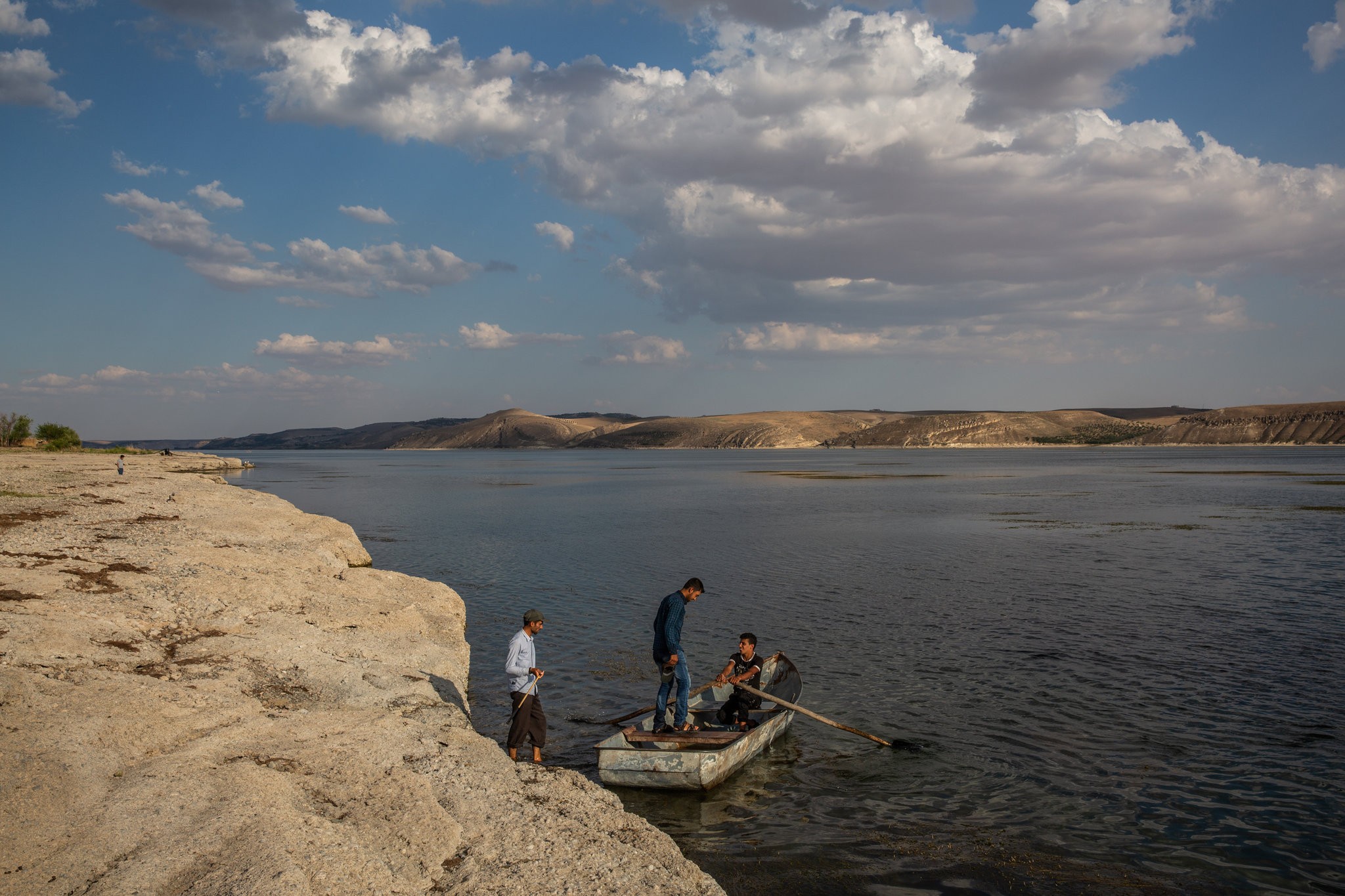
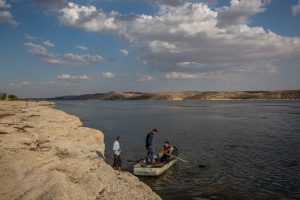
For millenniums, the Euphrates has given farmers in the village of Zour Maghar water to irrigate fields of wheat, eggplant and sunflowers. Generations of families have sprawled on its banks for picnics, the older children teaching the younger to swim.
But after seven years of war, the river that has fed life in Syria’s parched east has become a hostile front, separating warring sides as it travels north to south. Deprived of its water, families have fled Zour Maghar, abandoning their mud-brick homes and leaving their fields idle.
“The river was everything for us,” said Muhammad Bozan, 35, a farmer who can no longer work his waterfront land. “We used to live from the river and now we can’t.”
Syria’s war has taken hundreds of thousands of lives, displaced millions and left entire cities in smoking ruins. It has also ensnared the Euphrates, an arc of the Fertile Crescent that is considered a cradle of civilization.
On a recent trip along the river, we found a wasteland dotted with depopulated towns, gutted factories and civilians struggling to get by.
We mostly stayed on the east bank, an area out of Damascus’s hands that is effectively stateless and boxed in by hostile powers. The only way in was to cross the Tigris River from Iraq in a shaky, seatless motorboat.
As the government of President Bashar al-Assad has focused its military power on defeating rebels in the north and south, the river has emerged as the collision point for the great powers and their local allies struggling for influence in the east.
On the eastern bank are mostly American-backed Kurdish-led militias. On the west, along the northern part of the river, are Turkish-backed rebels. Farther south are Syrian forces supported by Russia and Iran. The Islamic State still holds a pocket along the river near the border with Iraq.
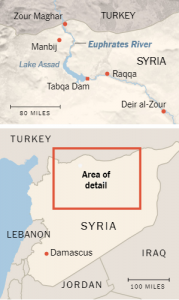
For now, the division is holding because none of the other powers wants to confront the United States, which has about 2,000 soldiers on the eastern side and whose fighter jets control the skies there.
Most of the world has accepted that Mr. Assad will continue to rule Syria, but the standoff and shattered landscape along the Euphrates raise questions about whether he can ever stitch the whole country back together.
The immediate question is how long the United States will stay. President Trump has said he wants to pull out the troops, who lead an international coalition against the Islamic State. If he does, the United States’ local allies fear the worst.
“The mere presence of the coalition in the region gives a message to the regime and to the Turks not to interfere: ‘This is where you stop,’ ” said Muhammad Kheir Sheikho, a member of the civil council in Manbij. “The withdrawal of the coalition forces, and at their head the American forces, would cause complete chaos in the area.”
Read more HERE
Ask me anything
Explore related questions