

×
GreekEnglish

×
  • Politics
  • Diaspora
  • World
  • Lifestyle
  • Travel
  • Culture
  • Sports
  • Cooking
Wednesday
21
Jan 2026
weather symbol
Athens 9°C
  • Home
  • Politics
  • Economy
  • World
  • Diaspora
  • Lifestyle
  • Travel
  • Culture
  • Sports
  • Mediterranean Cooking
  • Weather
Contact follow Protothema:
Powered by Cloudevo
> World

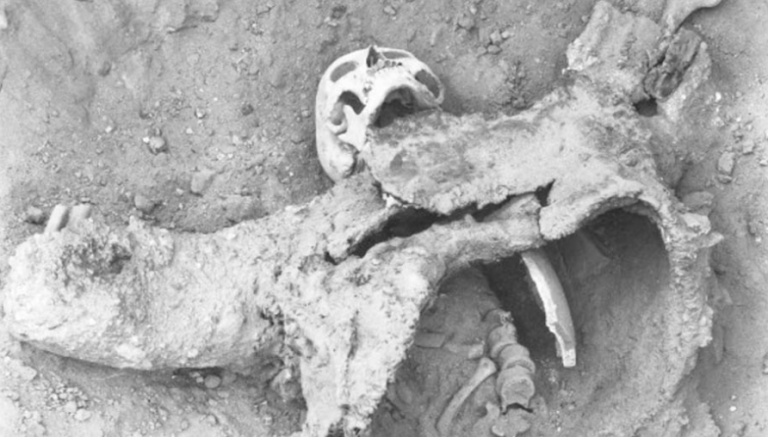
Archaeological evidence for 1.700-year-old Chemical Warfare

In India the use of poisons during warfare can be found in both the Mahabharata and the Ramayana

Newsroom June 21 04:41

One of the distinguishing features of the First World War was the widespread use of chemical weapons. Chemical gases of various lethality, including mustard gas, phosgene and tear gas, were used to disable and kill enemy defenders. Although chemical weapons played a major role during the Great War, its usage can be dated to a much earlier period of history.

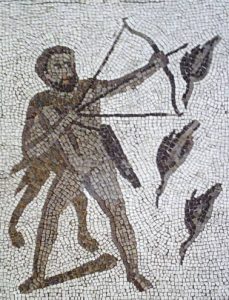
One of the earliest references to the use of chemical weapons in western literature can be found in the Greek myth of Heracles, in which the hero dips his arrows in the blood of the Hydra to make them toxic. It has also been claimed that poisoned arrows were mentioned by Homer in both his epics, the Iliad and the Odyssey.
>Related articles

European Parliament freezes ratification of the EU–US trade agreement

Guterres will not travel to Davos for the World Economic Forum due to a “severe cold”

Syria: Kurds say negotiations with Damascus have completely collapsed

(Hercules killing the Stymphalian birds with toxic arrows. Detail of The Twelve Labours Roman mosaic from Llíria -Valencia, Spain-)

Records of the use of chemical weapons also appear in the ancient civilizations of the East. In India, for instance, the use of poisons during warfare can be found in both the Mahabharata and the Ramayana. Moreover, recipes for poisonous weapons can be found in Kautilya’s Arthashastra, which dates to India’s Mauryan period. In China, there are writings that describe the use of toxic gases by defenders of a city. The toxic fumes, produced by burning balls of mustard or other toxic vegetables, are pumped into tunnels dug by a besieging army using bellows.

Read more HERE

Ask me anything

Explore related questions

#archaeology#chemical warfare#civilization#culture#history#war#world
> More World

Follow en.protothema.gr on Google News and be the first to know all the news

See all the latest News from Greece and the World, the moment they happen, at en.protothema.gr

> Latest Stories

German exports to the US down by 9.4% in the first eleven months of 2025

January 21, 2026

Trump unveils a file of “achievements” as he floats Venezuela move and claims peace successes

January 20, 2026

Generation X: The ‘contemporaries’ of PASOK, MTV, fast food, ONE, the drachma, the Euro, and adaptability to change

January 20, 2026

Pierrakakis: ‘We cannot face enormous geopolitical challenges and delay important institutional decisions’

January 20, 2026

Political dialogue between Greece-Türkiye: Bilateral relations at the centre of today’s meeting

January 20, 2026

European Parliament freezes ratification of the EU–US trade agreement

January 20, 2026

Extremely dangerous rainfall tomorrow and schools closed in Attica: The 7 areas set to receive large volumes of rain – see maps

January 20, 2026

Athens reluctant to take part in Trump’s Peace Council – Most Europeans leaning toward “no,” except Orban

January 20, 2026
All News

> World

Trump unveils a file of “achievements” as he floats Venezuela move and claims peace successes

At a wide-ranging press conference marking one year into his second term, the US president focused on domestic priorities, boasted of ending wars, and revived controversial rhetoric on migration, trade, and geopolitics

January 20, 2026

European Parliament freezes ratification of the EU–US trade agreement

January 20, 2026

No state has the right to occupy the territory of another, says Kaya Callas

January 20, 2026

Inside the opulent world of Iran’s elite families, as citizens faced deadly repression

January 20, 2026

Guterres will not travel to Davos for the World Economic Forum due to a “severe cold”

January 20, 2026
Homepage
PERSONAL DATA PROTECTION POLICY COOKIES POLICY TERM OF USE
Powered by Cloudevo
Copyright © 2026 Πρώτο Θέμα