×
GreekEnglish

×
  • Politics
  • Diaspora
  • World
  • Lifestyle
  • Travel
  • Culture
  • Sports
  • Cooking
Monday
12
Jan 2026
weather symbol
Athens 4°C
  • Home
  • Politics
  • Economy
  • World
  • Diaspora
  • Lifestyle
  • Travel
  • Culture
  • Sports
  • Mediterranean Cooking
  • Weather
Contact follow Protothema:
Powered by Cloudevo
> World

Qassem Suleimani & how Nations decide to kill: Analysis

A new frontier in the use of assassination

Newsroom February 7 05:15

hen nation-states engage in the bloody calculus of killing, the boundary between whom they can target and whom they can’t is porous. On January 3rd, the United States launched a drone strike that executed Major General Qassem Suleimani, the chief of Iran’s élite special-forces-and-intelligence unit, the Quds Force. He was one of Iran’s most powerful leaders, with control over paramilitary operations across the Middle East, including a campaign of roadside bombings and other attacks by proxy forces that had killed at least six hundred Americans during the Iraq War.

Since the Hague Convention of 1907, killing a foreign government official outside wartime has generally been barred by the Law of Armed Conflict. When the Trump Administration first announced the killing of Suleimani, officials declared that he had posed an “imminent” threat to Americans. Then, under questioning and criticism, the Administration changed its explanation, citing Suleimani’s role in an ongoing “series of attacks.” Eventually, President Trump abandoned the attempt at justification, tweeting that it didn’t “really matter,” because of Suleimani’s “horrible past.” The President’s dismissal of the question of legality betrayed a grim truth: a state’s decision to kill hinges less on definitive matters of law than on a set of highly malleable political, moral, and visceral considerations. In the case of Suleimani, Trump’s order was the culmination of a grand strategic gamble to change the Middle East, and the opening of a potentially harrowing new front in the use of assassination.

The path to Suleimani’s killing began, in effect, with another lethal operation, more than a decade ago—on a winter night in February, 2008, in an upscale residential district of Damascus, Syria. The target was Imad Mughniyeh, a bearded, heavyset Lebanese engineer in his mid-forties, who could have passed for a college professor. Mughniyeh was the architect of military strategy for Hezbollah, the armed force that dominates Lebanon and is supplied with weapons and money by Iran. Mughniyeh had been blamed for some of the most spectacular terrorist strikes of the past quarter century, including the bombings that killed nearly two hundred and fifty Americans in Beirut, in 1983, and a suicide attack at the Israeli Embassy in Argentina, in 1992, in which twenty-nine people died. Robert Baer, a former C.I.A. officer, said, of Mughniyeh, “We hold him responsible for doing more damage to the C.I.A. than anybody ever has—period.” Mughniyeh was also known for his success in evading surveillance. In 1985, the C.I.A. learned that Mughniyeh was passing through Paris, but when a French paramilitary team rappelled down the wall of his hotel and burst through the window, they found only a startled Spanish family enjoying an afternoon snack. “He was an artist in keeping himself below the radar,” Ehud Olmert, the former Israeli Prime Minister, said recently, at his office in Tel Aviv.
Read more: new yorker

Ask me anything

Explore related questions

#analysis#assassination#intelligence services#Iranian general Qassem Soleimani#kill#mossad#murder#politics#war by proxi#world
> More World

Follow en.protothema.gr on Google News and be the first to know all the news

See all the latest News from Greece and the World, the moment they happen, at en.protothema.gr

> Latest Stories

Motorcycle rider arrested in Thessaloniki for driving 128 km/h in residential area

January 12, 2026

Mattel releases the first Barbie with autism, watch video

January 12, 2026

Farmers’ unions cancel meeting with Mitsotakis, plan escalation with new roadblocks

January 12, 2026

Shark attack on woman in Brazil: ‘I knew it had bitten me’, watch video

January 12, 2026

The 15 Greek islands that stand out for holidays in 2026, according to Conde Nast Traveller

January 12, 2026

Agatha Christie’s 1958 visit to the Acropolis captured in unpublished photo

January 12, 2026

Russia declares war on the Ecumenical Patriarch: “He is dismantling the Body of the Church, has nationalist and neo-nazi allies”

January 12, 2026

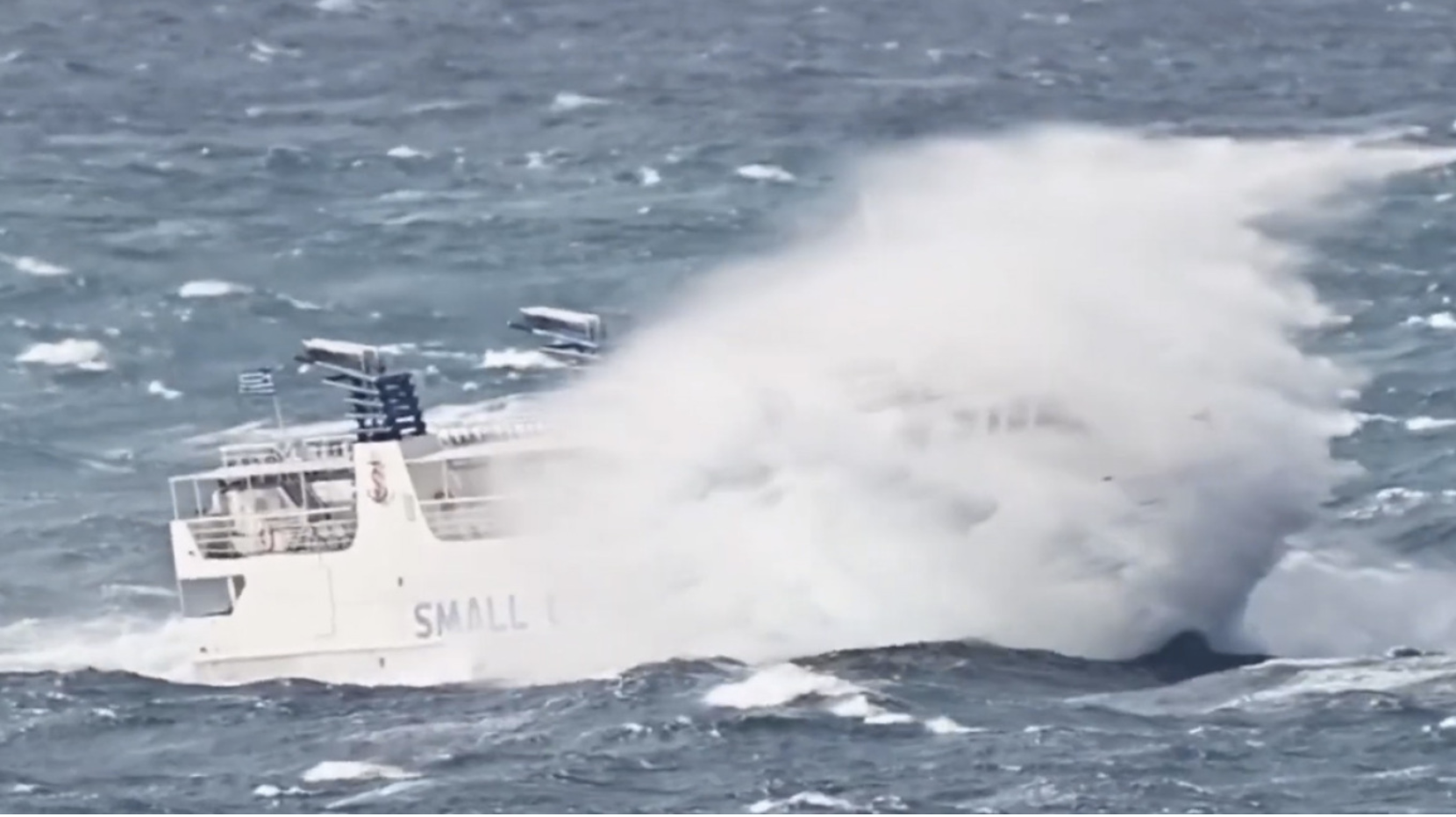
Video: The “battle” of the Skopelitis with the waves in the Aegean

January 12, 2026
All News

> Greece

Motorcycle rider arrested in Thessaloniki for driving 128 km/h in residential area

The Thessaloniki Traffic Police also arrested another motorcyclist for performing dangerous maneuvers

January 12, 2026

Farmers’ unions cancel meeting with Mitsotakis, plan escalation with new roadblocks

January 12, 2026

The 15 Greek islands that stand out for holidays in 2026, according to Conde Nast Traveller

January 12, 2026

Video: The “battle” of the Skopelitis with the waves in the Aegean

January 12, 2026

Coordination Committee of Thessaly’s “hardline” roadblocks meets; Trip to Athens for meeting with Mitsotakis in doubt

January 12, 2026
Homepage
PERSONAL DATA PROTECTION POLICY COOKIES POLICY TERM OF USE
Powered by Cloudevo
Copyright © 2026 Πρώτο Θέμα