After decades of speculation about the future of the U.S.-Turkish alliance, Washington and Ankara have finally reached a fork in the road. The day after Turkish President Recep Tayyip Erdoğan announced plans to deepen defense cooperation with Russia, his government formally submitted a request to the United States for 40 new Block 70 model F-16 aircraft and upgrade kits for 80 F-16s already in service with the Turkish Air Force. The U.S. Congress may well block the sale. And even if it goes through, Erdoğan may well decide to buy more Russian weapons anyways.
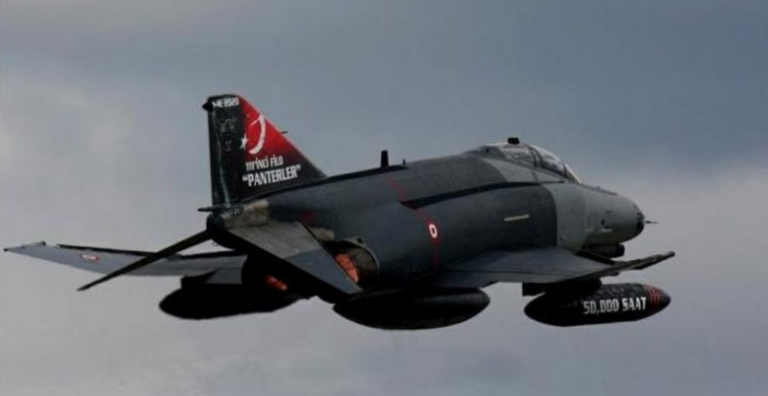
This impasse was the inevitable result of Ankara’s 2017 decision to purchase the Russian S-400 air defense system and Washington’s subsequent decision to impose sanctions and remove Turkey from the F-35 fighter program. As a result, the Turkish Air Force faces a serious issue in the near future. Ankara remains steadfast in its commitment to deploy the S-400, a system that Washington and major NATO allies have deemed a threat to Western tactical aviation. Absent a compromise on the deployment and location of the S-400, Ankara could be left without a fighter to replace aging F-16s. Turkey has made clear that it intends to develop its own fighter, dubbed TF/X, but the project is marred by issues with engine procurement and, at best, will not be produced at scale until the mid-2030s.
In the meantime, the Turkish government has sought to leverage its ties with Russia to coerce Washington into making concessions on the F-16 sale. In late September, following his visit to New York for the United Nations General Assembly, Erdoğan expressed his irritation with U.S. President Joe Biden. He accused Washington of supporting terrorists in Syria, and suggested that the United States could not be trusted to provide the equipment to upgrade and sustain Turkish F-16s. As part of this effort, Erdoğan then travelled to Sochi, Russia in late September, where he met with Russian President Vladimir Putin. It was after this meeting that he announced the two countries could deepen defense cooperation to include work on fighter engines, submarines, and rocket motors. Erdoğan has also signaled that Ankara may, in fact, push ahead and import a second S-400 regiment from Russia.
Albania ready to launch two satellites into space in 2022; PM Edi Rama mocked
The United States has an interest in selling Turkey these F-16s. The Turkish government is a member of NATO and ancillary tensions over Syria should not negatively impact the sale of fourth-generation aircraft. But with trust so badly broken, it is unwise for Ankara to assume that U.S. policymakers will sign off on the export over concerns about “losing Turkey.” Playing the Russia card may not have its intended effect. The reality is that whatever Washington does, the United States and Turkey are rapidly reaching the last stage in their defense industrial decoupling. Legacy cooperation is now ending in favor of an autarkic Turkish effort to develop indigenous systems and find non-U.S. suppliers.
The S-400 Impasse
Turkey’s cooperation with American defense firms is not as easy as it once was. In 2017, the U.S. Congress responded to Russia’s election interference by passing the Countering America’s Adversaries Through Sanctions Act. This legislation placed sanctions on Russia, but also threatened sanctions against third countries that purchased weapons from Russian state-owned defense industries. Turkey met the significant-transaction threshold when it purchased the S-400 missiles and then received the system in July 2019. But the Trump administration delayed imposing the sanctions. The delay prompted speculation that he and Erdoğan were enmeshed in an authoritarian bromance, wherein Erdoğan’s autocratic personality won over an equally dictatorially minded U.S. president. There is some truth to this. Then-President Donald Trump, according to author interviews with U.S. officials, would often quip, “I always like the tough ones,” during and after phone calls with the Turkish leader. The delay in imposing sanctions, however, was a pyrrhic victory for Turkey.
Read more: War on the Rocks
Ask me anything
Explore related questions