

×
GreekEnglish

×
  • Politics
  • Diaspora
  • World
  • Lifestyle
  • Travel
  • Culture
  • Sports
  • Cooking
Wednesday
14
Jan 2026
weather symbol
Athens 8°C
  • Home
  • Politics
  • Economy
  • World
  • Diaspora
  • Lifestyle
  • Travel
  • Culture
  • Sports
  • Mediterranean Cooking
  • Weather
Contact follow Protothema:
Powered by Cloudevo
> World

In violation of Einstein, Black Holes might have…”hair”, according to Greek scientist’s theory

A new study shows that extreme black holes could break the famous “no-hair” theorem, and in a way that we could detect

Newsroom October 27 04:08

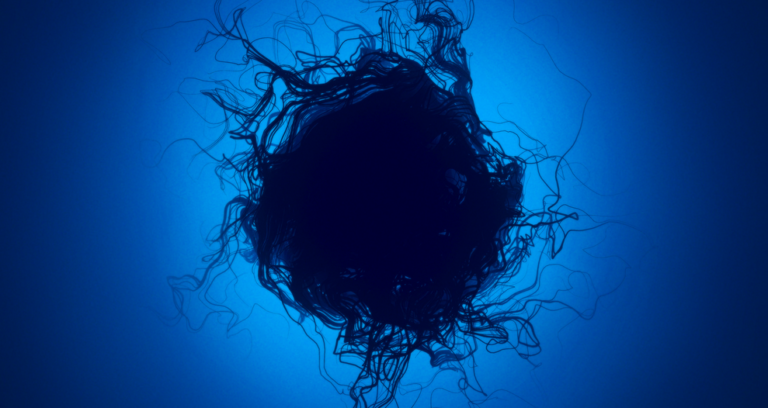
Identical twins have nothing on black holes. Twins may grow from the same genetic blueprints, but they can differ in a thousand ways — from temperament to hairstyle. Black holes, according to Albert Einstein’s theory of gravity, can have just three characteristics — mass, spin and charge. If those values are the same for any two black holes, it is impossible to discern one twin from the other. Black holes, they say, have no hair.

“In classical general relativity, they would be exactly identical,” said Paul Chesler, a theoretical physicist at Harvard University. “You can’t tell the difference.”

Yet scientists have begun to wonder if the “no-hair theorem” is strictly true. In 2012, a mathematician named Stefanos Aretakis — then at the University of Cambridge and now at the University of Toronto — suggested that some black holes might have instabilities on their event horizons. These instabilities would effectively give some regions of a black hole’s horizon a stronger gravitational pull than others. That would make otherwise identical black holes distinguishable.

See Also:

Greek Parliament approves 2022 state budget

>Related articles

Tuesday the 13th: Why everyone thinks it’s bad luck

South Korea prosecutors seek death penalty for former President Yoon Suk Yeol

Parliamentary elections set for April 12 in Hungary as Orbán appears weakened in polls

However, his equations only showed that this was possible for so-called extremal black holes — ones that have a maximum value possible for either their mass, spin or charge. And as far as we know, “these black holes cannot exist, at least exactly, in nature,” said Chesler.

But what if you had a near-extremal black hole, one that approached these extreme values but didn’t quite reach them? Such a black hole should be able to exist, at least in theory. Could it have detectable violations of the no-hair theorem?

Read more: Quanta Magazine

Ask me anything

Explore related questions

#Albert Einstein#astrophysics#black hole#greek#hair#physics#science#stefanos aretakis#technology#world
> More World

Follow en.protothema.gr on Google News and be the first to know all the news

See all the latest News from Greece and the World, the moment they happen, at en.protothema.gr

> Latest Stories

What farmers gained from the meeting with Mitsotakis: The package for electricity, fuel, and income support – The message to the “hardliners” at the roadblocks

January 13, 2026

“Digital noise” from outdated technology caused chaos in the Athens FIR – What the committee’s findings say

January 13, 2026

JPMorgan: Greece one of the most attractive markets for the Emerging Europe category

January 13, 2026

Kimon arrives at Faliro as Europe’s heavily armed frigate enters Greek waters

January 13, 2026

ELSTAT: Inflation up to 2.6% in December

January 13, 2026

Spain aims to control deepfakes created with AI

January 13, 2026

Le Pen’s party’s appeal to decide her presidential future begins

January 13, 2026

Pyrgos: man attacked his wife with a knife and then threatened to kill himself

January 13, 2026
All News

> Culture

Tuesday the 13th: Why everyone thinks it’s bad luck

Bad luck and tradition: Why we are afraid of Tuesday and 13, the historical and folkloric interpretation

January 13, 2026

Agatha Christie’s 1958 visit to the Acropolis captured in unpublished photo

January 12, 2026

Erich von Däniken, Swiss bestselling author who linked ancient civilizations to extraterrestrials, dies at 90

January 12, 2026

Golden Globes: Paul Thomas Anderson’s ‘One Battle After Another’ and Netflix’s ‘Adolescence’ dominate the awards

January 12, 2026

Bob Weir, co-founder of the Grateful Dead, dies at 78

January 11, 2026
Homepage
PERSONAL DATA PROTECTION POLICY COOKIES POLICY TERM OF USE
Powered by Cloudevo
Copyright © 2026 Πρώτο Θέμα