×
GreekEnglish

×
  • Politics
  • Diaspora
  • World
  • Lifestyle
  • Travel
  • Culture
  • Sports
  • Cooking
Wednesday
14
Jan 2026
weather symbol
Athens 8°C
  • Home
  • Politics
  • Economy
  • World
  • Diaspora
  • Lifestyle
  • Travel
  • Culture
  • Sports
  • Mediterranean Cooking
  • Weather
Contact follow Protothema:
Powered by Cloudevo
> World

The next generation of lunar rovers might move like flying saucers

The new look may be a familiar one

Newsroom January 4 11:41

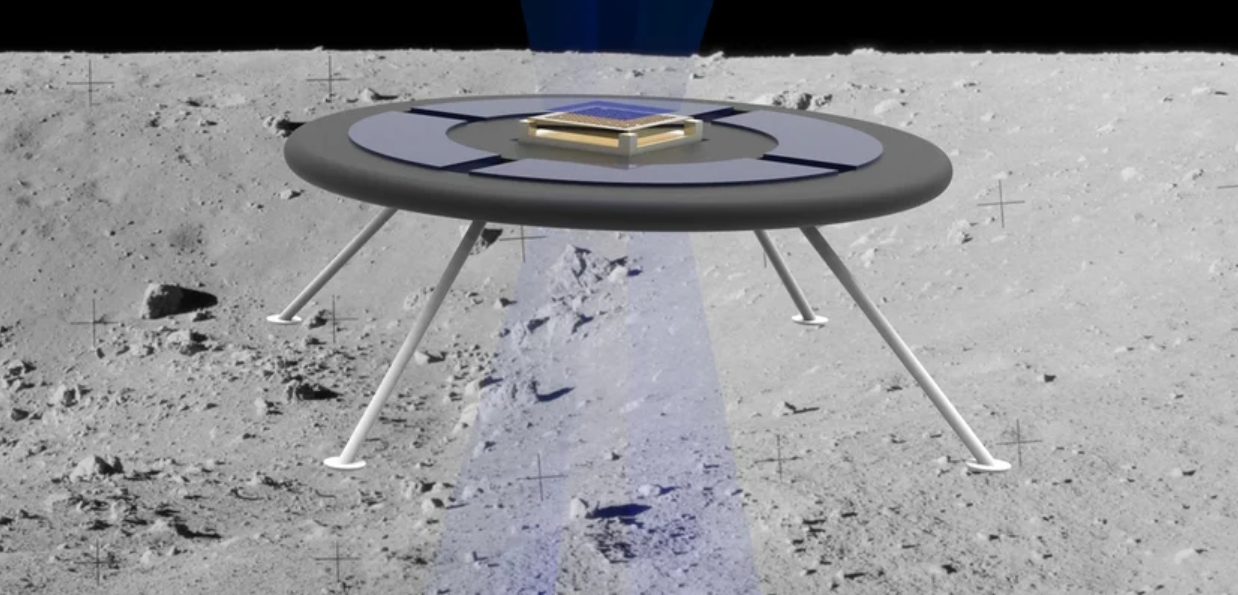
Could the next generation of lunar rovers resemble UFOs? To some, the idea isn’t as far-fetched as it sounds.

Researchers at MIT have recently tested a new concept for a ‘hovering rover,’ a spacecraft that instead of relying on a traditional wheels-on-the-ground approach, will use the moon’s natural electric field to levitate over its surface.

Because celestial bodies like the moon and other asteroids lack atmospheres, they’re unable to deflect solar wind, and thus are able to build up electric fields through direct exposure to the sun and surrounding plasma. The resulting charge is strong enough to lift dust particles in the air, a phenomenon that most closely resembles the way static electricity might make someone’s hair stand on end.

The hovering rover works by utilizing a cheap, yet effective power source: miniature ion thrusters. Typically used to propel spacecraft through space, in this case, small ion beams are used to charge the vehicle and boost the surface’s natural charge, which creates a powerful force that repels the vehicle from the ground.

See Also:

>Related articles

Tuesday the 13th: Why everyone thinks it’s bad luck

South Korea prosecutors seek death penalty for former President Yoon Suk Yeol

Parliamentary elections set for April 12 in Hungary as Orbán appears weakened in polls

Frozen ship delivers ice-covered cars to Russia port in frigid cold (photos)

Oliver Jia-Richards, a graduate student at MIT and lead author of the paper, says that the team’s idea for the project originally stemmed from NASA’s research into dust levitation, which is the study of how static electricity and dust behave in an airless environment like the moon, and how the combination might affect mechanical and electrical systems—those that allow rovers to function. That led him to wonder if it was possible to apply the concept to space exploration and engineering.

Read more: Popsci

Ask me anything

Explore related questions

#flying saucer#rover#science#technology#world
> More World

Follow en.protothema.gr on Google News and be the first to know all the news

See all the latest News from Greece and the World, the moment they happen, at en.protothema.gr

> Latest Stories

What farmers gained from the meeting with Mitsotakis: The package for electricity, fuel, and income support – The message to the “hardliners” at the roadblocks

January 13, 2026

“Digital noise” from outdated technology caused chaos in the Athens FIR – What the committee’s findings say

January 13, 2026

JPMorgan: Greece one of the most attractive markets for the Emerging Europe category

January 13, 2026

Kimon arrives at Faliro as Europe’s heavily armed frigate enters Greek waters

January 13, 2026

ELSTAT: Inflation up to 2.6% in December

January 13, 2026

Spain aims to control deepfakes created with AI

January 13, 2026

Le Pen’s party’s appeal to decide her presidential future begins

January 13, 2026

Pyrgos: man attacked his wife with a knife and then threatened to kill himself

January 13, 2026
All News

> Culture

Tuesday the 13th: Why everyone thinks it’s bad luck

Bad luck and tradition: Why we are afraid of Tuesday and 13, the historical and folkloric interpretation

January 13, 2026

Agatha Christie’s 1958 visit to the Acropolis captured in unpublished photo

January 12, 2026

Erich von Däniken, Swiss bestselling author who linked ancient civilizations to extraterrestrials, dies at 90

January 12, 2026

Golden Globes: Paul Thomas Anderson’s ‘One Battle After Another’ and Netflix’s ‘Adolescence’ dominate the awards

January 12, 2026

Bob Weir, co-founder of the Grateful Dead, dies at 78

January 11, 2026
Homepage
PERSONAL DATA PROTECTION POLICY COOKIES POLICY TERM OF USE
Powered by Cloudevo
Copyright © 2026 Πρώτο Θέμα